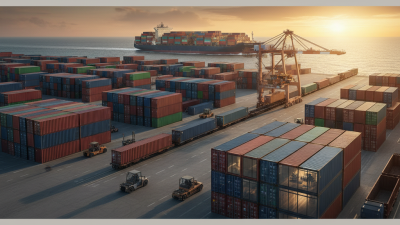
China has become a major source of 40ft shipping container equipment for global logistics networks. Its manufacturers serve shipping lines, leasing companies, freight forwarders, construction firms, and industrial buyers. However, “top” should not mean the largest factory alone. It should also reflect product consistency, export experience, inspection systems, and after-sales support.
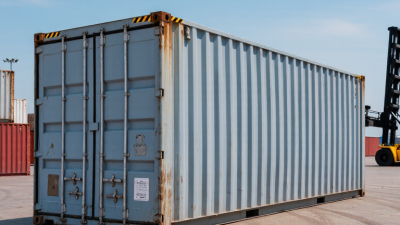
Malcolm McLean, the pioneer of containerized shipping, once said, “I would build a ship around these boxes, and take it anywhere.” His words still explain the container’s value. A reliable 40ft shipping container must survive repeated lifting, ocean exposure, uneven roads, and long periods in storage. Buyers should examine weather-resistant steel, corner castings, door alignment, flooring, weld quality, paint thickness, and rubber seals. Small defects matter. A poorly fitted door can damage cargo before anyone notices.
This guide introduces leading Chinese manufacturers and the practical differences between them. It considers factory capacity, ISO compliance, CSC certification, customization options, production lead times, and inspection procedures. It also looks at standard dry containers, high-cube models, one-trip units, and specialized designs. No ranking is perfect. Supplier performance can change with materials, labor, management, and order volume. That is why this overview should support, not replace, independent verification. Request recent inspection records, production photographs, technical drawings, and sample documentation. Visit the factory when possible. A polished website is not enough. The strongest supplier is the one that delivers consistent containers, clear communication, and evidence behind every promise.
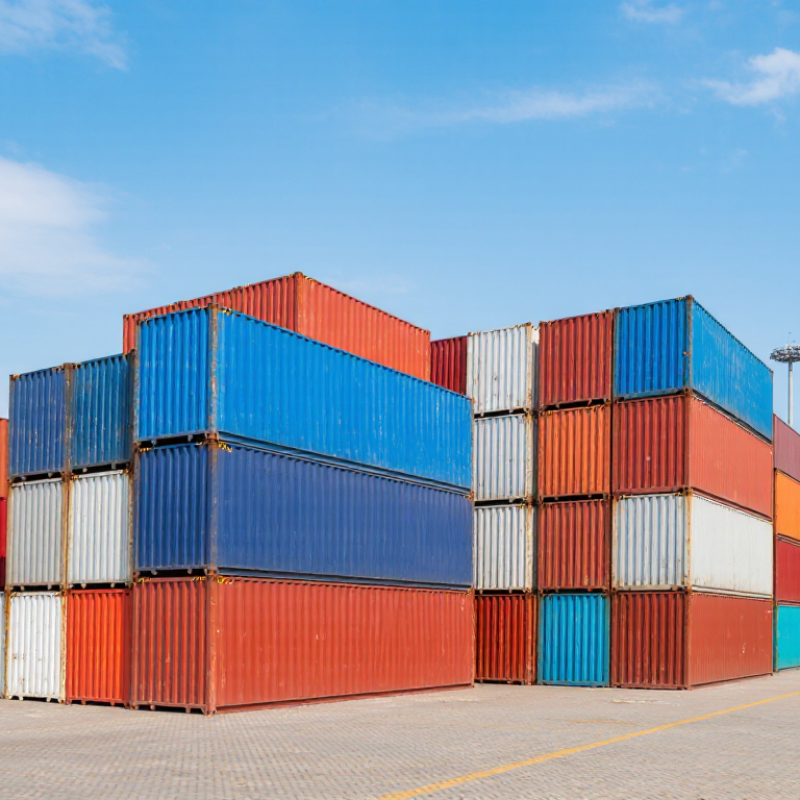
A leading 40ft shipping container manufacturer is defined by controlled performance, not factory size. China remains the main production base for standard dry containers, supporting a vast logistics network. UNCTAD’s Review of Maritime Transport 2024 reports that container-ship capacity grew 8.6% in 2023. That expansion increases demand for dependable equipment. Not just cheap steel.
A serious manufacturer follows ISO 668 dimensions and CSC safety requirements. Its engineers verify corner castings, door alignment, weld penetration, floor loading, and corrosion protection. During a factory visit, buyers should inspect calibrated tools, coating-thickness records, and serial-number traceability. Photos are useful. Test records are better. Independent pre-shipment inspections should confirm dimensions and gross mass before release.
Experience also appears in small details. A door gasket sits evenly, locking bars turn without force, and flooring stays dry after a hose test. UNCTAD states that shipping carries over 80% of world trade by volume, so weak equipment can disrupt multiple routes. A dependable supplier provides repair guidance, spare-part continuity, and clear claims handling. No factory is flawless. Buyers should accept isolated defects, but not repeated defects without corrective action. That distinction separates a low quote from a leading manufacturer.
China’s major 40ft container manufacturers serve shipping lines, logistics companies, and equipment leasing firms. Many operate near coastal steel and port industries, which supports faster material sourcing and export handling. Their standard units usually follow ISO 668 dimensions, with an external length of 12.192 meters and a width of 2.438 meters.
Typical production uses weather-resistant steel, marine plywood flooring, cargo doors, locking bars, and standardized corner castings. Experienced factories control plate cutting, welding, painting, and dimensional checks in separate stages. Inspectors may measure door alignment, floor flatness, coating coverage, and water resistance before dispatch. Small details matter.
A reliable manufacturer should provide material records, production photographs, inspection reports, and clear technical drawings. Buyers should also confirm payload, tare weight, ventilation design, and required certification before ordering. A low quotation may reflect thinner steel, weaker floor treatment, or limited quality inspection. That risk is easy to underestimate. No factory is flawless, and even established producers can experience paint defects or transport damage. Independent inspection remains sensible, especially for large orders or unfamiliar suppliers. Terms, replacement procedures, and delivery responsibilities should appear in writing, not remain as informal promises.
China Top 40ft Shipping Container Manufacturers?
Key Product Types and Specifications for 40ft Containers
A 40ft dry container is the common choice for boxed cargo, machinery, and palletized goods. Its external dimensions are about 12.19 meters long, 2.44 meters wide, and 2.59 meters high. A 40ft high-cube model adds roughly 30 centimeters of height. Internal capacity usually reaches 67 cubic meters for standard units and 76 cubic meters for high-cube units.
Typical tare weight ranges from 3.7 to 4.2 tons. Maximum payload may approach 28 to 30 tons, but transport regulations can reduce the usable limit. Construction normally includes weathering steel panels, hardwood or composite flooring, galvanized door hardware, and ISO-standard corner castings. Door seals deserve close inspection. They often reveal poor maintenance first.
Specialized types serve different loading problems. Reefer containers use insulated walls and powered refrigeration systems for temperature-sensitive cargo. Open-top containers suit tall machinery that cannot pass through standard doors. Flat racks handle oversized equipment, while side-opening models improve access for long or difficult loads. Some specifications vary between production batches. I would verify drawings, tare weight, floor rating, coating thickness, and inspection records before ordering. A small detail matters. Container measurements also need confirmation against the actual shipping route, handling equipment, and destination weight rules.
| 40ft Container Product Type | Typical ISO Designation | External Dimensions (L × W × H) | Internal Dimensions (Approx.) | Door Opening (Approx.) | Internal Volume | Typical Maximum Gross Mass | Typical Tare Mass | Key Construction or Application Features |
|---|---|---|---|---|---|---|---|---|
| Standard 40ft Dry Container | 40' GP / ISO 1CC | 12,192 × 2,438 × 2,591 mm | 12,032 × 2,352 × 2,393 mm | 2,340 × 2,280 mm | Approximately 67.7 m³ | Up to 30,480 kg | Approximately 3,600–4,000 kg | Weather-resistant corten-steel construction, marine plywood or equivalent flooring, and rear double cargo doors. Used for general packaged cargo. |
| 40ft High Cube Dry Container | 40' HC / ISO 1A | 12,192 × 2,438 × 2,896 mm | 12,032 × 2,352 × 2,698 mm | 2,340 × 2,585 mm | Approximately 76.4 m³ | Up to 30,480 kg | Approximately 3,800–4,300 kg | Provides about 305 mm more internal height than a standard 40ft container. Suitable for high-volume, lightweight, or tall cargo. |
| 40ft High Cube Reefer | 40' HC RF / ISO 1A | 12,192 × 2,438 × 2,896 mm | Approximately 11,590 × 2,290 × 2,545 mm | Approximately 2,290 × 2,480 mm | Approximately 67.5 m³ | Commonly up to 34,000 kg, subject to CSC plate | Approximately 4,800–5,500 kg | Insulated panels, stainless-steel interior, T-floor, and integrated refrigeration machinery. Used for temperature-controlled food, pharmaceutical, and chemical cargo. |
| 40ft Open-Top Container | 40' OT / ISO 1U | 12,192 × 2,438 × 2,591 mm | Approximately 12,050 × 2,350 × 2,350 mm | Approximately 2,340 × 2,280 mm | Approximately 66.5 m³ | Up to 30,480 kg | Approximately 4,000–4,800 kg | Removable soft roof or hard roof and door-header arrangement allow loading by crane or grab equipment. Common for oversized or heavy bulk cargo. |
| 40ft Flat Rack Container | 40' FR / ISO 1AA | 12,192 × 2,438 × 2,591 mm | Platform length approximately 12,080 mm | Not applicable | Not enclosed | Often 34,000–45,000 kg, depending on design | Approximately 5,000–6,500 kg | Heavy-duty base with fixed or collapsible end walls. Used for machinery, steel products, vehicles, and cargo exceeding standard container dimensions. |
| 40ft Platform Container | 40' Platform / ISO platform | 12,192 × 2,438 mm platform footprint | Open platform | Not applicable | Not enclosed | Varies by certified payload and lashing design | Typically higher than a dry container | Flat load-bearing platform without side walls or end walls. Designed for project cargo, heavy-lift cargo, and out-of-gauge shipments. |
| 40ft Side-Opening Container | 40' Side Door / special equipment | 12,192 × 2,438 × 2,591 mm | Approximately 12,032 × 2,352 × 2,393 mm | Side opening length varies by configuration | Approximately 67.7 m³ | Usually up to 30,480 kg | Approximately 4,200–5,500 kg | Includes one or more full-length side doors in addition to end doors. Useful for retail displays, bulky cargo, and loading where side access is required. |
| 40ft Double-Door Container | 40' Tunnel / Double-End Door | 12,192 × 2,438 × 2,591 mm | Approximately 12,032 × 2,352 × 2,393 mm | Doors at both ends; each approximately 2,340 × 2,280 mm | Approximately 67.7 m³ | Usually up to 30,480 kg | Approximately 3,800–4,300 kg | End doors at both sides improve access, loading flow, and cargo segregation. Exact door configuration should be confirmed before purchase. |
| 40ft Insulated or Thermal Container | 40' Insulated / special equipment | Usually based on 12,192 × 2,438 × 2,591 mm | Reduced by insulation thickness | Varies with panel and door design | Typically lower than 67.7 m³ | Subject to CSC plate and floor rating | Higher than a standard dry container | Insulated walls and roof help reduce heat transfer but do not necessarily provide active refrigeration. Suitable for temperature-sensitive cargo with defined thermal requirements. |
China’s 40-foot container sector combines large-scale output with strict international controls. Drewry’s Container Census 2024 reported that Chinese factories produced roughly 96% of new dry-freight containers in 2023. This scale supports shorter lead times, standardized components, and competitive pricing. However, production volume alone cannot prove consistent quality.
Reliable manufacturers build containers under ISO 668 dimensional requirements and ISO 1496-1 performance tests. Each compliant unit should carry valid CSC safety approval under the International Convention for Safe Containers. ISO 9001 supports process control, while ISO 14001 and ISO 45001 address environmental and workplace systems. Buyers should request current certificates, factory audit records, weld inspection results, and material traceability documents.
Production capability matters on the workshop floor. Look for automated welding lines, controlled steel preparation, calibrated torque tools, and documented leak testing. A standard 40-foot dry container commonly uses corrosion-resistant weathering steel and supports a maximum gross mass near 30,480 kilograms, depending on its approved design. Floor strength, door alignment, paint thickness, and corner casting accuracy deserve physical inspection.
A polished certificate is not proof of every weld. Some suppliers still present outdated reports or incomplete test samples. Independent pre-shipment inspection remains valuable. The best evaluation combines factory experience, laboratory evidence, production records, and random container checks. Small inconsistencies often reveal larger control problems.
China Top 40ft Shipping Container Manufacturers?
How to Compare and Select a Chinese 40ft Container Manufacturer
A reliable comparison starts with standards, not factory photos. ISO 668 defines a standard 40ft container as 12.192 meters long and 2.438 meters wide. Its typical maximum gross mass reaches 30,480 kilograms. Ask for current test records, material certificates, and a valid CSC safety approval. UNCTAD’s Review of Maritime Transport 2024 confirms that maritime shipping carries over 80% of global merchandise trade by volume. Small structural failures can therefore create serious delays.
Inspect the production process closely. Check steel thickness, weld penetration, door alignment, floor treatment, and coating performance. Request salt-spray results and independent inspection reports. A useful factory audit should trace steel coils from delivery to final assembly. It should also compare the quoted specification with the actual drawing. Cheap quotes often exclude flooring upgrades, corner fittings, or inland delivery. That omission matters.
Do not rely on capacity claims alone. Compare monthly output, quality-control staffing, lead times, spare-part support, and documented export experience. Ask for a sample unit before placing a large order. Measure its doors and inspect every weld line. No audit catches everything. I would keep a contingency for repainting or minor rework, even after a successful inspection. The best supplier is not always the largest; it is the one that explains limitations clearly and accepts measurable accountability.
If for some reason you did not find the service or product you need, you can always leave a request for a free consultation and get an answer.