Top 10 Cargo Container Types for Global Buyers?
Global trade depends on equipment that looks simple but performs a complex job. The right cargo container must protect goods, fit handling systems, and survive repeated transfers between vessels, railways, trucks, and storage yards. UNCTAD’s Review of Maritime Transport reports that more than 80% of global merchandise trade by volume moves by sea. That figure explains why container selection affects supply continuity, cargo safety, and total logistics cost.
This guide examines the top 10 cargo container types used by global buyers, from standard dry containers to refrigerated, open-top, flat-rack, and tank designs. Each type solves a different problem. A 20-foot container may suit dense machinery, while a 40-foot high-cube unit provides extra space for lightweight products. A reefer needs steady power and temperature monitoring. Small details matter, including door clearance, floor loading, ventilation, and verified dimensions.
John Fossey, Drewry’s container equipment specialist, has emphasized that buyers should match equipment to cargo, route, and operating conditions rather than price alone. That principle remains practical. No ranking is perfect. Availability changes by port, season, and trade lane. Industry data also shows that container fleets continue expanding, yet equipment imbalances still create delays and repositioning costs. Buyers should therefore compare specifications, certifications, lifecycle condition, and local depot support. The best cargo container is not always the newest or cheapest. It is the one that protects the shipment and performs reliably across its actual journey.
ISO 668 and CSC Standards for Ranking the Top 10 Container Types
Top 10 Cargo Container Types for Global Buyers?
ISO 668 provides the technical language for container dimensions, corner fittings, and size categories. CSC approval confirms that a container has passed essential structural safety checks. These standards should guide any serious ranking, not marketing claims. Based on common cargo needs, the top ten are general-purpose, high-cube, refrigerated, open-top, flat-rack, platform, tank, ventilated, bulk, and insulated containers. General-purpose units remain the practical baseline for boxed cargo. High-cube units add valuable internal height for lightweight, bulky goods.
Refrigerated containers support temperature-sensitive cargo, but buyers must verify power requirements and temperature records. Open-top units suit tall or crane-loaded cargo. Flat-racks handle dense machinery, although lashing points need careful inspection. Platform containers provide flexible support for oversized loads. Tank containers require strict technical checks and suitable cargo compatibility. Ventilated units help reduce moisture buildup. Bulk containers can improve loading efficiency for approved dry materials. Insulated units moderate temperature changes without active cooling.
A useful ranking changes with route, cargo weight, and port equipment. ISO 668 does not prove that every container fits every operation. CSC plates also need current examination details, readable markings, and matching identification data. Inspect corner posts, floor condition, door seals, and roof damage before purchase. Small defects matter.
My own buying preference is to rank compliance before capacity. That may sound less efficient, but repairs can erase the original savings. The tenth choice may outperform the first in a difficult route. That is the part many rankings miss.
Dry Vans, High Cubes and Side-Door Units: 20ft, 40ft and 40ft HC
Dry vans remain the practical baseline for global cargo. They protect cartons, machinery, and palletized goods from weather. A 20ft unit suits dense, heavy cargo because floor loading is limited by weight first. A 40ft dry van offers more linear space for lighter shipments. This distinction matters. More volume does not always mean more usable capacity.
UNCTAD’s Review of Maritime Transport reports that shipping carries over 80% of global merchandise trade by volume. That scale explains why standard dimensions matter. A 40ft high cube adds about 30 centimeters of internal height over a standard 40ft container. The extra space helps with tall packaging, stacked furniture, and irregular cargo. However, buyers should check door height, payload ratings, floor condition, and inspection records. A high cube can look excellent outside and still hide damage inside.
Side-door units provide access along the container’s long wall. They can reduce handling time at narrow sites, construction areas, and temporary storage locations. Yet availability is less consistent than standard dry vans, especially across smaller ports. Drewry’s Container Census tracks the continuing dominance of standard dry containers in the worldwide fleet, which supports easier repositioning and resale. In practice, 20ft, 40ft, and 40ft HC choices depend on cargo density, route balance, and unloading space. My own procurement view is cautious: specifications can appear simple, but local equipment shortages often change the cheapest option.
Reefers and Insulated Containers: Temperature Control at −30°C to +30°C
Reefers and insulated containers are among the most important choices in the top ten cargo container types for global buyers. Reefers actively control temperature, commonly across approximately −30°C to +30°C, depending on equipment and cargo requirements. Insulated containers slow temperature change but do not create cold. This distinction is often overlooked.
The range looks reassuring, but it can mislead. Fresh seafood may require a frozen setting near −18°C, while chilled produce needs different conditions. Buyers should confirm pulp temperature, ventilation, humidity, and loading limits before booking. Pre-cooling the cargo matters more than simply lowering the thermostat. No setting can repair warm loading. Temperature data loggers should sit near likely hot spots, not only beside the container door.
The Global Cold Chain Alliance’s 2020 Global Cold Storage Capacity Report recorded about 719 million cubic metres of cold-storage capacity worldwide, showing the scale of temperature-controlled demand. Yet capacity does not guarantee cargo quality. The FAO’s State of Food and Agriculture 2019 estimated that 14% of food is lost between harvest and retail, with inadequate handling among the contributing factors. A practical buying checklist should include a recent pre-trip inspection, verified setpoints, airflow clearance, door-seal condition, and contingency power planning. I would not treat −30°C to +30°C as a promise. It is an operating envelope, not a guarantee.
Open-Tops, Flat Racks, Platforms and Tanks for Oversized or Liquid Cargo
Top 10 Cargo Container Types for Global Buyers?
For oversized cargo, standard dry containers often create expensive compromises. Open-top containers suit tall machinery, stone blocks, and industrial components loaded by crane. Their removable canvas roof provides vertical access. However, cargo height still affects route clearance, terminal handling, and surcharge calculations.
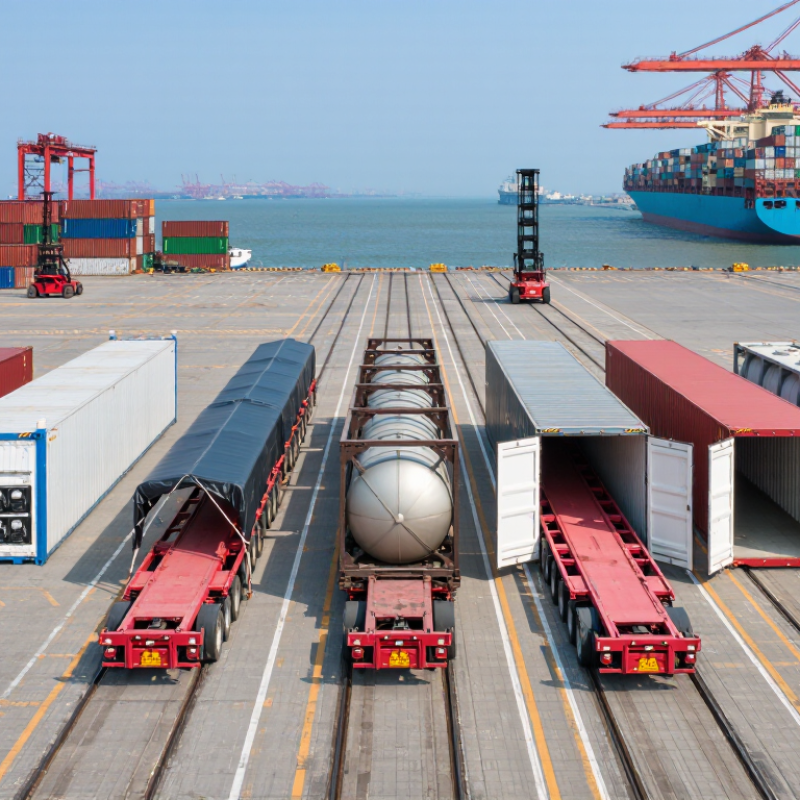
Flat racks offer stronger end walls and exposed loading space. They are practical for excavators, pipes, boilers, and other wide units. Platform containers remove the end walls completely. This helps with exceptionally long or heavy cargo. Secure lashing remains critical. A small measurement error can cause rehandling at the terminal.
Liquid cargo needs a certified tank container, not an improvised alternative. The ITCO Global Tank Container Fleet Survey 2024 reported approximately 801,800 tank containers worldwide. Tank selection depends on capacity, pressure rating, insulation, and product compatibility. UNCTAD’s Review of Maritime Transport 2024 placed global container fleet capacity at roughly 30 million TEU, showing the scale of available equipment. Yet availability is not equal everywhere. Buyers should confirm tare weight, payload, corner fittings, cargo dimensions, center of gravity, and lifting points before booking. A perfect equipment match is uncommon. That deserves honest checking.
Bulk Containers and Buyer Metrics: TEU, Payload, CSC and UNCTAD Fleet Data
Global buyers often compare ten cargo container types, yet bulk containers deserve a metric-based review. A TEU measures space, not carrying capacity. One TEU equals the reference volume of a twenty-foot container. A forty-foot unit counts as two TEUs, although its payload may not double. That distinction prevents attractive but weak comparisons. For dry bulk cargo, inspect internal volume, discharge design, liner compatibility, and cleaning access. Small details matter.
Payload is the cargo mass allowed after subtracting tare weight from permitted gross mass. Always verify the door plate, technical file, and route restrictions before booking equipment. A dense commodity may reach the payload limit while leaving unused cubic space. A lightweight commodity can fill the container first. This is where buyer spreadsheets often fail. I would also compare loading time, residue risk, inspection records, and equipment availability near the origin. The cheapest unit can create expensive delays.
The CSC safety approval plate provides a practical checkpoint for international movement. Check its validity, identification details, and maximum gross weight against shipping documents. UNCTAD fleet data helps buyers understand global container supply, age trends, and fleet composition. It offers useful market context, not a substitute for inspecting one specific unit. No metric is perfect. Fleet statistics may look reassuring while local availability remains poor. A careful purchase records every assumption, including uncertain payload figures and seasonal supply changes.