en es

What Is a 10ft Shipping Container?

A 10ft shipping container is the compact member of the standard intermodal container family. It usually measures about 2.99 metres long, 2.44 metres wide, and 2.59 metres high externally. Its internal capacity often reaches 16 to 18 cubic metres, depending on the manufacturer and container type. Small, but capable.

The unit is designed for multimodal transport. It can move by ship, rail, and truck when equipment and local rules permit. ISO container standards support consistent corner fittings, lifting points, and handling practices. However, dimensions and payload ratings can vary. Buyers should inspect the specification plate, floor condition, door seals, and CSC safety approval before making a decision.

UN Trade and Development reported that maritime transport carries more than 80% of global merchandise trade by volume. Its Review of Maritime Transport 2024 also recorded continued growth in seaborne trade, while warning about route disruptions, congestion, and rising operational uncertainty. These pressures make smaller containers useful for limited-volume cargo, site storage, modular projects, and businesses that cannot justify a 20ft unit.

Lars Jensen, CEO of Vespucci Maritime, has described container shipping as “a highly cyclical business.” That observation matters here. Prices, availability, and leasing conditions can change quickly. A 10ft shipping container may reduce unused space, yet it may cost more per cubic metre than a larger unit. Details matter.

This guide explains its dimensions, capacity, applications, transport limits, and buying considerations. Some assumptions may fail in practice. Local handling access, crane availability, and delivery distance can change the final value significantly.

What Is a 10ft Shipping Container?

Definition and Key Features of a 10ft Shipping Container

What Is a 10ft Shipping Container?

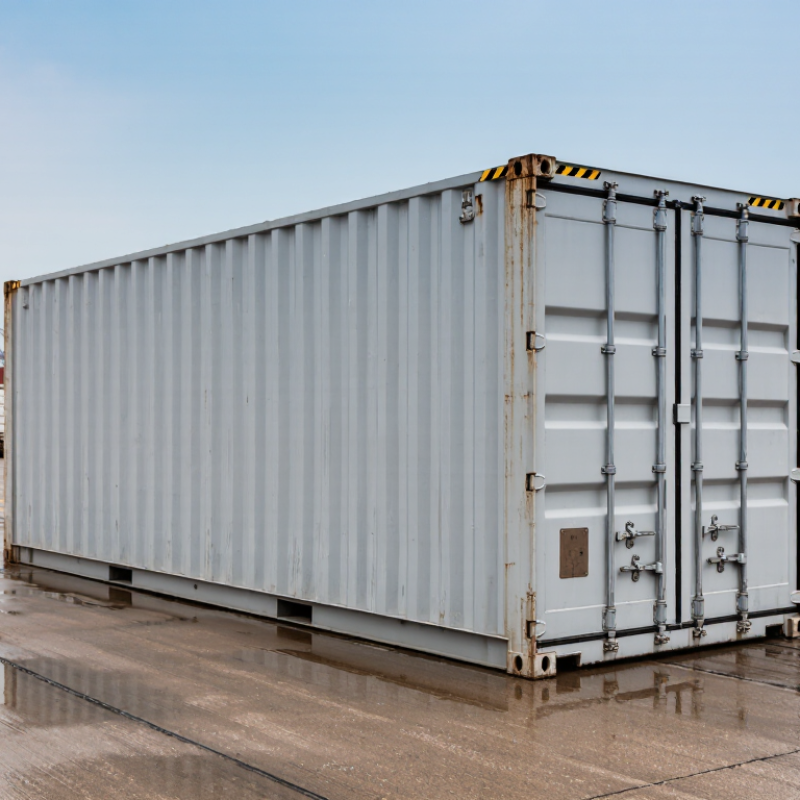
A 10ft shipping container is a compact steel storage unit measuring about 10 feet long. Its external width is usually 8 feet, while its height is commonly 8 feet 6 inches. Internal measurements are smaller because of insulated walls, doors, and structural frames. Exact dimensions can vary by manufacturer and container type.

Definition and Key Features of a 10ft Shipping Container

Its strong corrugated steel panels protect stored items from rain, wind, and everyday impact.

Double cargo doors usually open across one short end, allowing easier loading than a single narrow door. A wooden or steel floor supports boxes, tools, equipment, and light machinery.

Corner castings help with lifting and stacking, but stacking capacity depends on the container’s design and condition. Ventilation openings reduce condensation, although they may not prevent moisture in changing climates.

A common mistake is assuming every 10ft container has the same usable space.

Tips: Measure the doorway, floor area, and access route before delivery. Inspect the roof, door seals, locking bars, and floor for corrosion or damage. Ask for the container’s tare weight, maximum payload, and verified internal dimensions. Leave airflow around stored items. A dry container is not automatically climate-controlled. Placement also matters; uneven ground can stress the doors and frame. Check the details twice.

Standard Dimensions, Weight, and Interior Capacity

What Is a 10ft Shipping Container?

Standard Dimensions, Weight, and Interior Capacity

A 10ft shipping container is a compact steel unit designed for shorter cargo runs, storage, and restricted sites. ISO 668:2020 defines the nominal external length as 10 feet. Standard external dimensions are about 10ft long, 8ft wide, and 8ft 6in high. That footprint fits many urban yards, but site access still needs checking.

Inside, usable space is smaller than the outside suggests. Typical internal measurements are approximately 9ft 2in long, 7ft 8in wide, and 7ft 10in high. The resulting capacity is near 562 cubic feet, or 15.9 cubic metres. These figures align with technical data in the Container Handbook, published by the German Insurance Association. Door openings reduce practical loading space further. Measure the opening.

Empty weight, called tare mass, commonly ranges from 1,300 to 2,200 kilograms. Construction, flooring, doors, and repairs create the difference. A typical maximum payload may fall between 8,000 and 10,000 kilograms, but the CSC safety plate controls the legal limit for each unit. ISO 668:2020 specifies the container’s rating framework, not one universal payload. That distinction matters. A dense load can exceed floor or axle limits before the container looks full. Check the plate, floor condition, and local transport rules before loading. Real measurements are sometimes less tidy than catalog figures.

Common Materials, Construction, and Security Features

A 10ft shipping container is a compact steel structure designed for demanding transport and storage conditions. It starts with steel. Most units use weathering steel for the side walls, roof, doors, and corner posts. This material develops a protective surface layer, although scratches can still expose areas to rust. Corrugated panels add strength while keeping the walls relatively light.

The floor usually combines steel cross members with thick, treated plywood. This layered construction supports concentrated loads, such as boxed equipment or small machinery. Welded corner posts transfer weight through the frame when containers are stacked. Door assemblies use vertical locking rods, reinforced hinges, and compressible seals. These details help limit water entry, dust, and unwanted movement during handling.

Security depends on more than a strong shell. A recessed lock area can shield a padlock from direct impact and tampering. Internal door bars and sound hinges also improve resistance. However, weak welds, damaged seals, or a bent frame can reduce protection significantly. Field inspections often reveal problems that photographs miss. Check the roof for dents, the floor for soft spots, and the doors for even closure. No container is completely secure. A careful inspection remains essential.

Typical Uses in Shipping, Storage, and Modular Projects

What Is a 10ft Shipping Container?

A 10ft shipping container is a compact steel unit built for cargo movement, secure storage, and adaptable construction. It usually measures 10 feet long, 8 feet wide, and 8 feet 6 inches high. Internal capacity is commonly close to 15 cubic metres, while payload limits vary by manufacturer and floor condition. ISO 668 provides the dimensional framework, but actual specifications still require checking. Measure twice.

In shipping, the container suits small consignments, spare parts, tools, and equipment that cannot fill a larger box. UNCTAD’s Review of Maritime Transport 2024 reports that over 80% of global merchandise trade by volume moves by sea. A 10ft unit therefore supports smaller cargo flows near ports, workshops, and inland transfer points. However, it is less widely available than 20ft and 40ft equipment. That matters. Availability can affect cost more than its compact size suggests.

For storage, these containers fit narrow yards, farms, renovation sites, and temporary business premises. They provide lockable, weather-resistant space without occupying a full parking bay. In modular projects, designers may combine units into offices, kiosks, classrooms, or site cabins. The International Transport Forum’s Transport Outlook 2024 highlights continuing freight growth and pressure for more flexible logistics infrastructure. Insulation, ventilation, electrical work, and safe foundations still need professional planning. A steel box is not automatically a comfortable room. Condensation, heat buildup, and door access are easy to underestimate.

Advantages, Limitations, and Purchase Considerations

What Is a 10ft Shipping Container?

Advantages, Limitations, and Purchase Considerations

A 10ft shipping container is a compact steel unit built for cargo transport and secure storage. Its typical internal volume is about 15–16 cubic metres, with a payload often near 8,000–10,000 kilograms. Exact figures vary by manufacturer, flooring, and structural design. Check the specification plate.

Space is its main advantage. A 10ft unit fits beside a small workshop, behind a retail site, or on a restricted construction area. It usually needs less delivery space than a 20ft container. Drewry’s Container Census 2024 places the global container equipment fleet above 50 million TEU, showing how standardized units support international logistics. However, smaller containers can cost more per cubic metre because transport and handling remain relatively fixed.

Limitations appear quickly. Internal width may not suit pallets, machinery, or wide doors. Condensation can also damage stored materials, even when rain stays outside. Ventilation helps, but it is not a complete solution. Inspect door seals, corner posts, floor condition, welds, and corrosion before purchase. Ask for the container’s age, repair history, tare weight, payload rating, and delivery method. A current CSC safety plate matters for regulated transport, while storage-only units may follow different requirements. Measure the site twice. That simple step prevents expensive surprises. Some buying advice sounds confident, but local access, lifting equipment, and permits still decide whether the unit works.

What Is a 10ft Shipping Container? - Advantages, Limitations, and Purchase Considerations

Data Dimension Typical Specification or Value Practical Meaning
Container Type Standard dry cargo container A fully enclosed, weather-resistant steel unit designed primarily for general cargo storage and transport.
Nominal External Size 10 ft long × 8 ft wide × 8 ft 6 in high The compact footprint is suitable for sites where a standard 20-foot container would occupy too much space.
Typical External Dimensions Approximately 3.05 m × 2.44 m × 2.59 m Actual measurements can vary slightly according to the container manufacturer, construction standard, and fittings.
Typical Internal Dimensions Approximately 2.83 m long × 2.35 m wide × 2.39 m high Internal clearance is reduced by the steel walls, roof structure, door frame, and floor system.
Approximate Internal Floor Area About 6.6 m² (71 ft²) Provides useful storage for tools, equipment, seasonal goods, compact machinery, or boxed inventory.
Approximate Internal Volume About 15.9 m³ (562 ft³) Capacity depends on how efficiently the cargo is packed and whether shelving or other fittings are installed.
Typical Door Opening Approximately 2.34 m wide × 2.28 m high Double cargo doors usually allow easier loading than a single personnel door, but opening dimensions should be verified before purchase.
Typical Tare Weight Approximately 1,300–1,500 kg This is the empty container weight. The exact figure is normally marked on the container identification plate.
Typical Maximum Gross Weight Commonly up to 30,480 kg, subject to the rating plate and local rules The combined weight of the container and cargo must not exceed the certified maximum gross weight.
Approximate Payload Often around 28,900–29,200 kg Payload is calculated by subtracting tare weight from maximum gross weight; transport limits may reduce the practical load.
Construction Corrosion-resistant steel body with marine-grade plywood or similar flooring Steel provides strength and security, while the floor is designed for heavy cargo and forklift handling under suitable conditions.
Weather Resistance Wind- and watertight when doors, seals, roof, and panels are in good condition Used units should be inspected for leaks, rust, damaged seals, dents, and previous repairs before purchase.
Common Uses Storage, workshops, garden equipment, construction tools, archive storage, and temporary site facilities The compact size works well for residential, commercial, agricultural, and construction locations with limited access or space.
Key Advantages Space-efficient, secure, stackable, portable, and generally easier to place than longer containers A 10-foot unit can offer durable storage without requiring the large turning area or footprint associated with longer containers.
Space Limitation Limited floor area and aisle space compared with 20-foot and 40-foot containers It may become difficult to organize bulky items or access goods stored at the back without shelving and careful packing.
Height Limitation Standard height is about 8 ft 6 in; high-cube versions may be about 9 ft 6 in Check local planning restrictions, overhead clearance, and delivery-route limitations before selecting a taller model.
Transportation Considerations Usually moved by a truck equipped for container handling The delivery site needs adequate road access, overhead clearance, ground stability, and sufficient space for unloading.
Foundation Requirements Level, stable supports such as concrete blocks, sleepers, or a prepared hardstand Proper support helps prevent twisting, door misalignment, standing water, and premature corrosion.
Ventilation Passive vents are common, but airflow is limited in a closed steel box Additional ventilation or moisture control may be needed to reduce condensation and protect sensitive contents.
Insulation and Temperature Usually supplied without insulation or climate control Interior temperatures can become very hot or cold, so insulation, ventilation, or active climate control may be required.
Security Features Locking steel doors with provision for a heavy-duty external lock or lockbox Security is strong against casual access, but the container should still be placed in a well-lit, monitored location.
New or One-Trip Condition Typically cleaner, with less wear and fewer repairs This option is generally preferable when appearance, long service life, and reliable watertightness are priorities.
Used Condition More economical, but condition varies considerably Inspect the roof, underside, corner posts, doors, seals, floor, and interior for corrosion, odors, chemical contamination, and structural damage.
Modification Options Doors, windows, vents, shelving, lighting, insulation, electrical systems, and personnel access doors Modifications improve usability but can affect structural integrity, security, weather resistance, cost, and local permitting requirements.
Purchase Cost Factors Condition, location, delivery distance, modifications, inspection status, taxes, and site preparation The listed unit price may not represent the total project cost; transport and installation can be significant expenses.
Important Inspection Checks Door operation, roof leaks, floor condition, corrosion, frame alignment, odor, identification plate, and structural repairs A detailed inspection helps identify hidden maintenance costs and confirms that the container is suitable for its intended use.
Best Purchase Fit Users needing durable enclosed storage on a restricted site A 10-foot container is most suitable when compact dimensions and security are more important than maximum storage volume.

Specifications are typical industry ranges. Confirm the exact dimensions, weight ratings, condition, delivery requirements, and local regulations before purchase.

Get a quote
Open chat
1
Hi! How can we help you?
Chat with Pelican Containers