Choosing among shipping containers is not simply a matter of comparing prices. Global buyers must match each container with cargo, route, climate, handling equipment, and storage conditions. A steel box crossing the Pacific faces different demands from one used beside a humid warehouse.
Malcom McLean, the pioneer of container shipping, once said, “I was just trying to make a living. I never thought I would change the world.” His practical innovation made standardized cargo movement possible. Today, buyers still depend on that basic idea: cargo should move safely, efficiently, and with minimal handling.
This guide examines the top 10 shipping container types for global buyers. It covers standard dry containers, high-cube models, refrigerated units, open-top containers, flat racks, tank containers, side-door units, double-door containers, insulated designs, and platform containers. Each type solves a different operational problem.
Details matter. A high-cube container offers extra internal height for bulky cartons. A refrigerated unit needs stable power and careful temperature monitoring. A flat rack may suit heavy machinery, but lifting plans cannot be improvised. Small choices become expensive problems.
No ranking fits every buyer.
Container condition also deserves attention. Inspect door seals, corner castings, flooring, ventilation holes, and visible corrosion before purchase. Certifications and technical records should be verified through reliable suppliers and qualified inspectors.
This overview is useful, but it is not flawless. Routes change, equipment availability shifts, and local requirements may differ. Buyers should question assumptions, request current specifications, and calculate total costs beyond the purchase price. The right container is not always the newest one. It is the one that protects the cargo and supports the intended journey.
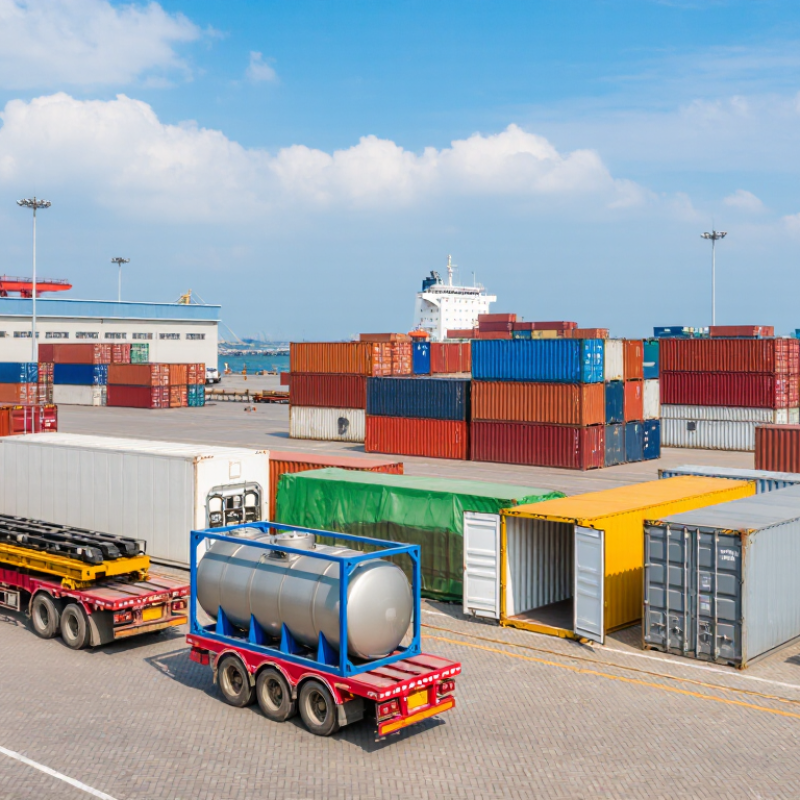
Shipping containers are classified by structure, purpose, dimensions, and handling requirements. The common dry container suits general cargo, while high-cube units provide extra internal height. Refrigerated containers control temperature for approved goods. Open-top models support tall or crane-loaded cargo, while flat racks handle machinery and oversized equipment. Tank containers carry regulated liquids under strict technical controls. Other useful types include side-opening, double-door, insulated, and ventilated containers.
International buyers should check ISO 668 dimensions and ISO 6346 identification codes. These references help confirm external measurements, container category, and ownership markings.
A valid CSC safety plate is also essential for international transport. It records inspection details and permitted operating information.
However, standards do not guarantee perfect condition. A container may meet a size standard yet still have damaged flooring or weak door seals.
Tips: Measure the internal length, width, and height yourself. Inspect corner posts, roof panels, locking bars, and floor boards. Check for water stains after rainfall, not only during a dry inspection. Ask for recent inspection records and clear photographs of every side. Even experienced buyers miss small roof dents. I have found that a simple door-seal test can reveal more than polished sales descriptions. Verify the destination port’s acceptance requirements before payment, because local procedures may differ.
Top 10 Shipping Container Types for Global Buyers
Standard and High-Capacity Containers for General Cargo
Standard dry containers remain the practical foundation of global cargo transport. UNCTAD’s Review of Maritime Transport 2024 records approximately 12.3 billion tonnes of seaborne trade in 2023. This scale explains why familiar 20-foot and 40-foot units still dominate general cargo planning. Under ISO 668, a 20-foot container offers roughly 33 cubic metres of internal space. A standard 40-foot unit provides about 67 cubic metres. Actual payload depends on tare weight, cargo distribution, and the verified gross mass requirement under SOLAS.
High-cube containers add height rather than width. A 40-foot high-cube unit normally provides about 76 cubic metres, while a 45-foot high-cube can reach approximately 86 cubic metres. They suit cartons, furniture, textiles, and other low-density cargo. The extra internal height can reduce unused space. It can also create loading problems when pallets are poorly stacked. Volume wins only when the cargo is light enough.
Container selection should match the cargo’s shape, handling method, and destination equipment. Open-top, flat-rack, refrigerated, and tank units belong among the broader top-ten category, but they serve more specialized needs. For general cargo, standard and high-cube units usually offer simpler booking and handling. Check the door opening, floor condition, maximum payload, and inspection records. Measure twice. A high-cube choice may look efficient on paper, yet local road limits or terminal restrictions can reduce its real value. Forecasts and equipment availability also change by route, so buyers should verify current carrier schedules and port conditions before contracting.
Temperature-controlled containers protect cargo when ordinary boxes cannot. Refrigerated containers, often called reefers, maintain set conditions for fresh food, medicines, flowers, and sensitive chemicals. Their systems control temperature, airflow, and sometimes humidity. The correct setting depends on the cargo, packaging, route, and loading pattern. Never guess the temperature. A few blocked air vents can create warm pockets and spoil a shipment.
Specialized containers solve different handling problems. Insulated units reduce outside temperature changes but may not actively cool cargo. Ventilated containers support goods that need steady airflow.
Open-top and flat-rack containers suit tall, wide, or heavy machinery. Tank containers carry approved liquid cargo under strict technical controls.
I have found that dimensions matter as much as container type. A cargo plan that looks safe on paper may fail at the terminal.
Tips: Pre-cool the container when required, inspect door seals, and record readings before departure. Use calibrated sensors inside the cargo area, not only the control panel. Leave proper airflow channels around cartons. Confirm power availability during port transfers. Labels should show handling conditions clearly. Small details matter. Yet monitoring is not perfect; sensors can drift, doors can open, and weather can change quickly. Build inspection points into the route, and ask a qualified logistics specialist to review unusual cargo before booking.
Top 10 Shipping Container Types for Global Buyers
Open-Access Containers for Oversized and Difficult Loads
Open-access containers help global buyers handle cargo that cannot fit through standard doors. Among the top ten container types, open-top units, flat racks, platform containers, and side-opening models offer practical loading flexibility. Open-top containers accept tall machinery through the roof. Flat racks support wide equipment, steel structures, and heavy industrial parts. Platform units provide a clear base for exceptionally large loads.
Cargo planning should begin with accurate measurements, including height, width, length, and total weight. Measure every projection. A small valve or uneven frame can affect clearance. Confirm the container’s rated capacity with the supplier and carrier. Weight distribution matters because concentrated pressure may damage the floor. Small details matter.
In practice, loading plans are rarely perfect. A crane may require extra space, or the cargo center may sit higher than expected. Use certified lifting equipment and secure the load with suitable restraints. Protect sharp edges with padding and inspect tie-down points before departure. Weather exposure also deserves attention, especially for open-top shipments. Tarpaulins can reduce rain exposure, but they do not replace proper cargo protection.
Buyers should request drawings, internal dimensions, payload limits, and loading instructions before booking. A qualified freight professional or cargo surveyor can review unusual dimensions. Documentation must match the actual cargo. I have seen delays caused by estimates that looked reasonable but lacked one critical measurement. Careful checking is slower, but it prevents expensive corrections.
This chart compares the approximate usable cargo volume of ten widely used ISO container types. Open-top containers support loading from above, while flat racks are designed for oversized cargo and tank containers are intended for liquids, so these types do not have a conventional enclosed cargo volume. Actual dimensions and payload limits vary by specification, CSC plate, and equipment configuration.
Top 10 Shipping Container Types for Global Buyers
Selecting a container starts with the cargo, not the lowest quotation. UNCTAD’s Review of Maritime Transport 2024 recorded about 12.3 billion tonnes of seaborne trade in 2023. That volume hides very different transport conditions. Standard dry containers suit cartons, machinery, and palletized goods. High-cube units add valuable vertical space for lightweight cargo. Small detail, major effect. A 40-foot high-cube container can reduce wasted air, but only when road height limits allow it. Open-top containers help load tall machinery with a crane. Flat racks support oversized equipment, although securing plans and route permits require early checking.
Temperature-sensitive goods need refrigerated containers, with verified set points, airflow, and power continuity. Tank containers serve approved liquid cargo under applicable safety rules. Side-door and double-door models improve warehouse access, but they may cost more and have limited availability. The right choice depends on the complete route. Confirm port handling, inland bridges, chassis compatibility, and seasonal weather. The World Bank’s Container Port Performance Index 2023 shows that port efficiency varies widely, so extra handling time should not be ignored.
Inspect the CSC safety plate, door seals, floor condition, and inspection records before loading. ISO dimensions alone do not guarantee suitability. A reefer may reach the required temperature, yet poor airflow can still damage cargo. I have seen buyers focus too heavily on internal volume. That was a mistake. Weight distribution, ventilation, loading equipment, and local regulations often matter more. Request written confirmation from the carrier, terminal, and inland transport provider. Also allow schedule flexibility; the cheapest container is not always the safest operational choice.
| No. | Container Type | Common ISO Size | Typical Internal Dimensions (L × W × H) |
Approx. Capacity | Typical Payload Range | Best Suited Cargo | Key Route or Regulatory Considerations |
|---|---|---|---|---|---|---|---|
| 1 | General-Purpose Dry Van | 20 ft Standard | 5.90 × 2.35 × 2.39 m | About 33 m³ | Approximately 25–28 tonnes | Cartons, machinery, furniture, packaged goods and palletized cargo | The most widely accepted option for standard cargo. Cargo weight must comply with the container’s CSC safety plate, road axle limits and local gross-mass restrictions. |
| 2 | General-Purpose Dry Van | 40 ft Standard | 12.03 × 2.35 × 2.39 m | About 67 m³ | Approximately 26–28 tonnes | High-volume, lightweight or medium-density general cargo | Provides more floor length than a 20 ft unit, but the permitted gross weight may be similar. Check inland bridge, chassis and axle restrictions before booking. |
| 3 | High-Cube Dry Van | 40 ft High Cube | 12.03 × 2.35 × 2.70 m | About 76 m³ | Approximately 26–28 tonnes | Bulky, tall or lightweight goods; retail and industrial cargo | Offers roughly 30 cm more internal height than a standard-height container. Verify height clearance for rail, road tunnels, depots and loading equipment. |
| 4 | Refrigerated Container | 20 ft Reefer | About 5.45 × 2.29 × 2.26 m | About 28 m³ | Approximately 20–27 tonnes | Frozen food, fresh produce, pharmaceuticals and temperature-sensitive products | Requires a continuous power supply at terminals, on vessels and during inland transport. Confirm temperature range, ventilation settings, pre-trip inspection and cargo-specific sanitary rules. |
| 5 | Refrigerated High-Cube Container | 40 ft High-Cube Reefer | About 11.56 × 2.29 × 2.54 m | About 67 m³ | Approximately 25–29 tonnes | Large-volume chilled or frozen shipments requiring controlled temperature | Internal space is reduced by refrigeration machinery and insulation. Temperature records, airflow clearance and applicable food or pharmaceutical regulations should be documented. |
| 6 | Open-Top Container | 20 ft Open Top | About 5.90 × 2.35 × 2.35 m | About 32 m³ | Approximately 25–28 tonnes | Stone, scrap metal, timber, machinery and cargo loaded by crane | The removable roof simplifies top loading. Cargo height and lashing must remain within approved limits, and weather protection may require a tarpaulin or special securing plan. |
| 7 | Flat-Rack Container | 20 ft Flat Rack | Platform about 5.60 × 2.20 m | Not normally rated by cubic volume | Often approximately 25–40 tonnes, subject to unit rating | Oversized machinery, vehicles, steel products, pipes and industrial equipment | Cargo may exceed standard width or height, creating out-of-gauge status. Requires an approved lashing plan, route survey, special handling and possible extra charges. |
| 8 | Platform Container | 40 ft Platform | Platform about 12.06 × 2.44 m | Not normally rated by cubic volume | Commonly around 30–40 tonnes, subject to unit rating | Very wide, long or heavy project cargo that cannot fit inside side rails | Used for project and breakbulk-style cargo. Confirm vessel acceptance, lifting points, center of gravity, securing method and port-specific handling procedures. |
| 9 | Tank Container | 20 ft ISO Tank | Frame footprint about 6.06 × 2.44 m | Typically 14,000–26,000 litres | Determined by tank rating, product density and legal gross mass | Bulk liquids, powders, gases and regulated chemical products | The tank must be suitable for the product and pressure class. Dangerous goods require correct classification, marking, documentation, packing instructions and compliance with applicable sea, road and rail codes. |
| 10 | Ventilated Container | 20 ft Ventilated | About 5.90 × 2.35 × 2.39 m | About 33 m³ | Approximately 25–28 tonnes | Coffee, cocoa, onions, garlic and other cargo needing passive air exchange | Ventilation is not the same as refrigeration or active temperature control. Confirm airflow requirements, moisture sensitivity, pest-control documentation and agricultural import rules at destination. |
If for some reason you did not find the service or product you need, you can always leave a request for a free consultation and get an answer.