en es

China Top Shipping Container Offices How Much Do They Cost?

China is a major manufacturing base for modular buildings and intermodal containers. UNCTAD’s Review of Maritime Transport reports that maritime shipping carries about 80% of global merchandise trade by volume. That scale supports competitive factory pricing, but it does not guarantee a low final cost. Buyers comparing China’s top shipping container offices should examine materials, workmanship, certification, delivery terms, and after-sales support.

Recent Container xChange market analyses show that container prices change with steel costs, equipment supply, leasing demand, and regional availability. A basic 20-foot container shell may cost only a few thousand US dollars in China. A finished office can cost considerably more after insulation, windows, wiring, flooring, ventilation, furniture, and factory testing. Industry quotations commonly place customized units in a broad range, often from about US$8,000 to US$25,000 before international freight and local installation. These figures are indicative, not promises.

A practical office might include rock-wool insulation, a steel door, LED panels, two sockets, and a compact split air conditioner. The details matter. A neat price table can still mislead. Freight, cranes, foundations, customs charges, and local building requirements may exceed early estimates. ISO 668 container dimensions help standardize external sizes, but office conversions still require project-specific engineering. This guide will compare China suppliers, construction quality, delivery arrangements, and realistic total budgets. It will also question the cheapest quote, because low prices sometimes hide thin insulation, weak electrical components, or unclear warranty terms. Careful buyers should request drawings, material lists, test records, and a complete landed-cost calculation before ordering.
China Top Shipping Container Offices How Much Do They Cost?

Shipping Container Office Types: 20-Foot and 40-Foot ISO Units

China Top Shipping Container Offices: How Much Do They Cost?

A 20-foot ISO container measures about 6.06 meters long and 2.44 meters wide. Its usable floor area is usually near 13.9 square meters. A 40-foot unit doubles the length and offers approximately 28.3 square meters. ISO 668 and ISO 1496 define these basic dimensions and structural requirements. That standardization simplifies transport, stacking, and factory production.

A converted 20-foot office commonly costs about US$8,000–18,000 in China. A 40-foot office often costs US$14,000–30,000. These indicative ranges come from 2024 container resale and modular-construction market analyses. Prices usually exclude shipping, foundations, local permits, and site connections. Insulation, electrical wiring, windows, flooring, and air conditioning can change the quote sharply. Small details matter.

The 20-foot model suits one to four workstations, a compact reception room, or a site office. The 40-foot version can support meeting space, storage, and several desks. UNCTAD’s Review of Maritime Transport 2024 confirms the continuing scale of global containerized shipping, supporting ISO units as practical modular shells.

However, cargo containers were not designed as comfortable offices. Steel walls can create heat and condensation. That assumption is often wrong.

Before ordering, buyers should request verified steel-condition records, insulation specifications, wiring diagrams, and a delivered-cost breakdown. I would not treat either figure as a final quote. Geological conditions, crane access, and regional labor rates still need checking.

China Container Office Prices: US$1,500–3,500 for Used Units

Used shipping container offices in China commonly cost US$1,500–3,500 per unit. This range usually covers the container shell, basic doors, windows, and simple interior treatment. A 20-foot unit sits near the lower end. A refurbished 40-foot office costs more. Prices often exclude inland delivery, port fees, taxes, and installation. That distinction matters. A cheap listing may exclude wiring, insulation, flooring, or air conditioning.

Condition changes the price quickly. Check corner posts, roof seams, floor moisture, and door alignment before payment. Surface rust can be repaired. Deep corrosion may weaken the structure. Ask for dated photos, exact measurements, and a written specification. Confirm whether the unit remains windproof and watertight after refurbishment. Used units can have dents and uneven paint. That is normal, but poor repairs should not be accepted. A third-party inspection helps when distance prevents a physical visit.

A realistic budget should reserve another US$500–2,000 for basic modifications. Local labor, equipment, and transport affect this estimate. Plumbing, fire safety upgrades, furniture, and climate control can raise the final cost considerably. I would compare landed cost rather than the factory quote alone. A US$1,800 unit may become expensive after transport and site work. Conversely, a US$3,200 unit with tested wiring and insulation may save time. The weak point is often unclear documentation, not the steel box itself. Ask for material thickness, electrical ratings, repair records, and delivery terms before signing.

Used shipping container offices are commonly priced between US$1,500 and US$3,500. The chart shows the low-end price, midpoint estimate, and high-end price within this stated range. Actual costs may vary according to size, condition, insulation, electrical work, windows, doors, delivery, and local installation requirements.

Turnkey Container Office Costs: US$8,000–25,000 per 20-Foot Unit

China Top Shipping Container Offices: How Much Do They Cost?

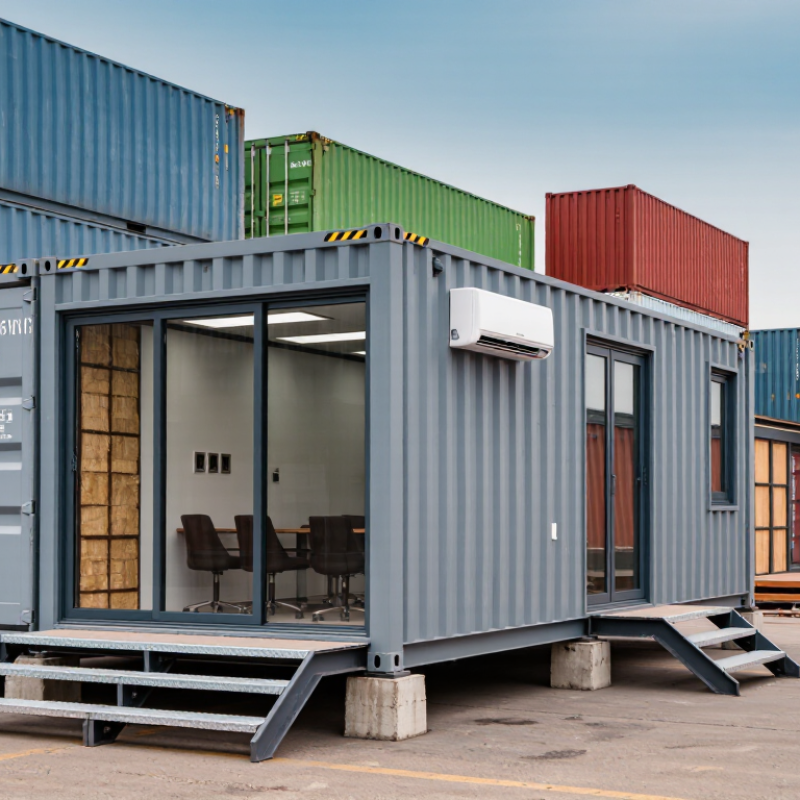
Turnkey container offices in China commonly cost US$8,000–25,000 per 20-foot unit. This range usually covers the converted steel shell, insulation, windows, doors, electrical wiring, lighting, flooring, and basic interior finishes. A simple site office may stay near the lower end. A comfortable workspace with stronger insulation, larger windows, a private washroom, and built-in furniture can approach the upper limit.

In my experience reviewing modular project specifications, the container itself is only one cost layer. Factory inspection, export packing, inland transport, port charges, and sea freight can add substantially. Installation, foundations, utility connections, local permits, and taxes are often excluded. A buyer should request a line-by-line quotation, not rely on a single headline price. Small details matter. A 20-foot unit offers limited room. Poor ventilation can also make a polished office uncomfortable in hot weather.

Specifications need careful checking. Ask for material thickness, insulation type, electrical standards, fire-safety documentation, door hardware, and waterproofing details. Photos may not show weld quality or hidden corrosion protection. Lead times commonly range from several weeks, but custom layouts can take longer. Prices can change with steel costs, exchange rates, and shipping conditions. The US$8,000–25,000 estimate is useful, but it is not a guaranteed landed cost. A realistic budget should include a contingency of around 10–20%, although that allowance may still prove too low for difficult sites.

China Top Shipping Container Offices How Much Do They Cost? - Turnkey Container Office Costs: US$8,000–25,000 per 20-Foot Unit

Cost or Specification Dimension Typical Range or Value What Is Usually Included Main Cost Drivers
Standard 20-Foot Office Shell US$3,000–7,000 Steel container structure, basic wall and ceiling panels, floor base, doors, and windows. Steel thickness, structural reinforcement, window quantity, door type, and factory specifications.
Turnkey 20-Foot Container Office US$8,000–25,000 Insulated interior, electrical system, lighting, outlets, flooring, finished walls, windows, doors, and basic office fit-out. Insulation standard, interior finish, electrical capacity, climate-control requirements, furniture, and customization.
Approximate External Size About 6.06 m × 2.44 m × 2.59 m Common external dimensions for a standard 20-foot shipping-container format. High-cube construction, modified roof height, transport regulations, and local installation requirements.
Approximate Usable Floor Area About 13–14 m² One compact office, reception room, meeting room, or site administration room. Wall thickness, internal partitions, washrooms, storage cabinets, and mechanical-room space.
Basic Insulation Package US$500–1,500 Thermal insulation in walls and ceiling, interior lining, and sealed openings. Insulation material, thickness, fire rating, condensation control, and regional climate.
Electrical and Lighting System US$800–2,500 Distribution board, wiring, LED lighting, switches, power outlets, and basic data provisions. Voltage standard, number of circuits, equipment load, emergency systems, and certification requirements.
Heating, Ventilation, and Air Conditioning US$800–3,000 Wall-mounted air-conditioning or heat-pump equipment with basic ventilation provisions. Cooling capacity, heating requirement, energy efficiency, ventilation rate, and local climate.
Interior Finish and Flooring US$700–3,000 Vinyl or laminate flooring, wall panels, ceiling finish, skirting, and basic decorative treatment. Surface materials, moisture resistance, fire performance, acoustic treatment, and design complexity.
Doors and Windows US$600–3,000 External door, insulated windows, locks, handles, and weather sealing. Aluminum or steel frames, glazing type, security rating, thermal performance, and opening configuration.
Office Furniture and Fixtures US$500–4,000 Desks, chairs, shelving, storage units, worktops, and basic meeting furniture. Furniture quantity, material grade, ergonomic specification, built-in cabinetry, and installation.
Toilet or Small Washroom Addition US$2,000–6,000 Compact sanitary room, toilet, basin, plumbing connections, waterproofing, and ventilation. Plumbing distance, wastewater solution, water-heating system, sanitary fixtures, and local codes.
Exterior Cladding or Weather Protection US$800–4,000 Protective coating, exterior panels, roof treatment, gutters, or additional weatherproofing. Coastal exposure, corrosion protection, architectural appearance, insulation requirements, and finish type.
Factory Quality Inspection and Testing US$200–1,000 Dimensional checks, electrical testing, water-leak checks, welding inspection, and packing review. Inspection scope, independent inspection, testing standards, documentation, and project complexity.
Export Packing and Loading US$300–1,500 Protective wrapping, internal securing, moisture protection, and loading preparation. Shipping method, destination requirements, packaging materials, lifting points, and number of units.
International Freight and Insurance US$1,000–5,000+ Sea freight estimate, cargo insurance, and selected documentation services. Destination port, season, container availability, fuel surcharges, route, and cargo volume.
Destination Charges and Installation US$1,000–8,000+ Port handling, customs-related charges, local transport, crane lifting, and site positioning. Country regulations, distance from port, site access, foundation work, crane size, and utility connections.
Typical Production Lead Time About 4–10 weeks Manufacturing, inspection, packing, and dispatch after approved drawings and deposit. Order quantity, customization level, material availability, approval speed, and seasonal workload.
Recommended Cost Contingency 10%–20% of project budget Allowance for design changes, transport variation, site preparation, and unforeseen installation work. Incomplete specifications, uncertain ground conditions, import procedures, and volatile freight costs.

Cost basis: The figures are indicative planning ranges in US dollars for a single 20-foot unit manufactured in China. Final landed cost depends on specifications, order quantity, destination, shipping terms, taxes, permits, site works, and utility connections.

Key Cost Factors: Insulation, HVAC, Electrical Systems, and Fit-Outs

A 20-foot shipping-container office from China typically costs about US$8,000–18,000 for a basic fit-out. Higher-spec units can reach US$20,000–35,000. These are indicative market ranges, not fixed quotations. Transport, foundations, permits, taxes, and on-site lifting may add 15–30%. Confirm every exclusion before comparing suppliers.

Insulation strongly affects comfort and operating cost. Mineral wool or closed-cell panels usually perform better than thin foam alone. The 2023 UNEP Global Status Report states that buildings consume about 30% of global energy. Poor insulation makes a small steel room heat rapidly. HVAC sizing must match occupancy, glazing, and local humidity. Oversized units cool quickly but cycle poorly. Electrical work also needs careful inspection. A compact office may require a 6–10 kW supply, depending on lighting, computers, sockets, and air conditioning. Use documented load calculations and protected circuits.

Fit-outs create the largest price differences. Vinyl flooring, washable wall panels, LED lighting, a small distribution board, and furniture can add US$2,000–8,000. Plumbing raises the figure further. I would not accept a “fully finished” label without a component schedule. Some quotations look inexpensive because insulation thickness, cable grades, or HVAC installation are unclear. The IEA’s Energy Efficiency 2023 report supports treating energy performance as a long-term cost, not just an installation detail. A cheaper shell can become the expensive choice.

Delivery and Compliance: CSC Certification, Freight, and 20–30-Day Builds

China Top Shipping Container Offices: How Much Do They Cost?

A shipping container office may cost less than a conventional site cabin, but delivery often changes the final budget. A standard 20-foot unit commonly needs insulation, wiring, windows, flooring, and ventilation before use. Factory production can take 20–30 days when drawings, materials, and inspections are approved early. That timeline is not guaranteed. Weather, design revisions, and port congestion can add several days.

CSC certification deserves careful attention. The International Maritime Organization’s International Convention for Safe Containers requires approved containers to carry a valid CSC safety plate for international transport. A converted office may lose its original cargo-worthy status after cutting openings or adding heavy fittings. Buyers should request structural calculations, welding records, inspection documents, and clear confirmation of the container’s transport condition. The convention allows periodic examinations at intervals not exceeding five years, while serious damage requires earlier inspection.

Freight is another moving cost. UNCTAD’s Review of Maritime Transport 2024 reported continued volatility in container shipping capacity and rates. Weekly freight indexes also show that route prices can change sharply after disruptions or seasonal demand. A quotation should separate fabrication, inland haulage, export handling, ocean freight, insurance, destination charges, and customs work. The cheapest factory price may become expensive at the destination. It happens often. Allowing a 10–20% contingency is practical, although the percentage depends on the route, port, and office specification.

Get a quote
Open chat
1
Hi! How can we help you?
Chat with Pelican Containers