How to Choose a High Cube Shipping Container in 2026?
Choosing a high cube shipping container in 2026 requires more than comparing online prices. It requires evidence, practical inspection, and a clear understanding of cargo conditions. UNCTAD’s Review of Maritime Transport 2024 confirms that maritime shipping carries over 80% of global merchandise trade by volume. That scale makes container reliability a serious supply-chain concern, not a minor purchasing detail.
A high cube shipping container usually provides an extra foot of external height compared with a standard unit. Its internal height is commonly about 2.69 meters, while usable volume often approaches 76 cubic meters. However, dimensions vary by manufacturer, flooring, corner fittings, and insulation. Check the specification sheet carefully. A taller box is not automatically the better box.
The World Bank’s Logistics Performance Index 2023 emphasizes reliability, tracking, infrastructure, and delivery performance. These factors should shape your selection. Inspect the roof for daylight, test both door locks, and measure corrosion around the bottom rails. Look closely at the floor. Forklift damage can hide beneath paint.
Small details matter.
For international transport, verify the container’s structural condition, identification plate, and applicable CSC safety approval. For storage, ventilation, drainage, and local placement requirements may matter more than shipping certification. Ask for recent inspection photographs, repair records, and exact internal measurements. Supplier reputation helps, but it is not proof. I have seen attractive listings conceal uneven floors and stiff door seals.
A better decision balances cargo height, loading equipment, route demands, budget, and future reuse. Industry data can guide the purchase, but physical evidence should confirm it. No checklist replaces inspection. That is where many decisions become imperfect.
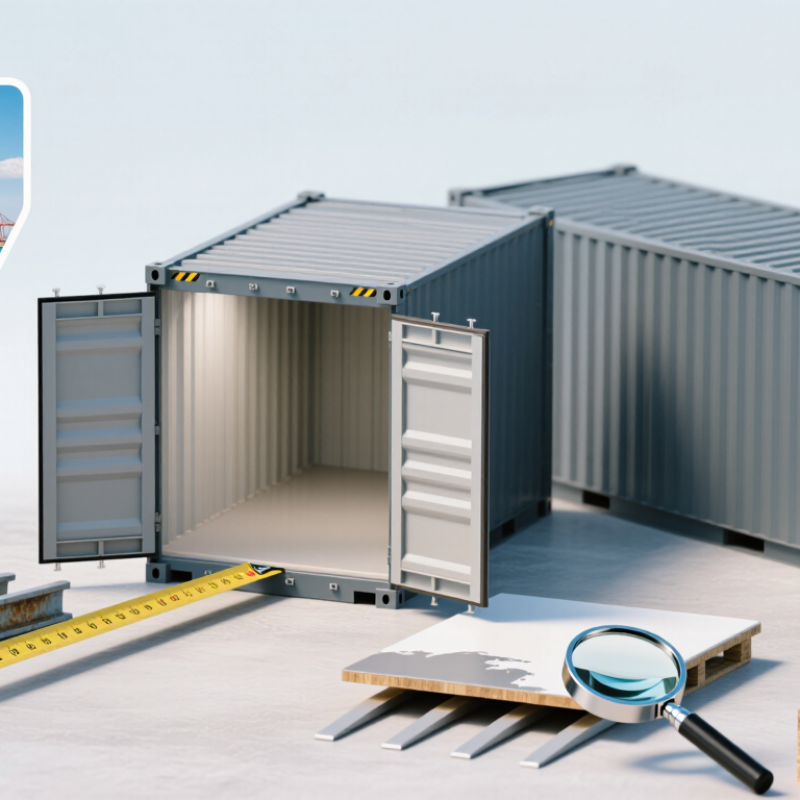
What Is a High Cube Shipping Container?
A high cube shipping container is an intermodal steel box designed for cargo that needs extra vertical space. Its external height is usually 9 feet 6 inches, about one foot taller than a standard container. Length and width generally remain unchanged. This added height increases internal volume, but it does not automatically increase the permitted payload.
A common 40-foot high cube has an internal height near 8 feet 10 inches. Its internal length is roughly 39 feet 5 inches, while its width is about 7 feet 8 inches. Interior measurements can vary after repairs or manufacturing changes. These containers work well for tall equipment, stacked cartons, furniture, and palletized goods. Cargo weight still matters. Floor strength and the container’s maximum gross weight control safe loading.
A careful inspection should include the safety plate, corner posts, roof, doors, gaskets, and wooden floor. Look for deep corrosion, fresh paint covering repairs, water stains, and bent door frames. A clean exterior can mislead. Open both doors and check for daylight through the roof or walls. I once focused on volume and missed the delivery route’s height limit. That mistake was avoidable. High cube containers may create clearance problems at warehouses, bridges, loading bays, and private entrances. Measure the cargo, lifting equipment, and route before choosing one.
How to Compare High Cube Container Sizes and Specifications
When choosing a high cube shipping container in 2026, compare usable space rather than exterior length alone. A standard 40-foot high cube usually provides about 12.03 meters of internal length, 2.35 meters of width, and 2.69 meters of height. Actual dimensions can vary slightly by manufacturer and production year. Measure your cargo carefully.
Check the door opening, floor rating, tare weight, and maximum gross weight on the data plate. A taller interior helps with stacked cartons, machinery, and bulky furniture, but it does not automatically improve loading efficiency. Confirm whether pallets can pass through the doors without tilting. Also compare ventilation, flooring condition, corner posts, and roof integrity. Small defects can become expensive problems during long-distance transport. I once underestimated door clearance by only a few centimeters. That mistake changed the loading plan.
Tips: Create a comparison sheet before requesting quotes. Record internal dimensions, door size, payload, tare weight, inspection date, and repair history. Ask for recent photos, especially of the roof and floor. Check certification documents and confirm that the stated specifications match the container’s plate. If you need unusual length or side access, verify availability early. A larger container may seem better, but unused space can increase handling costs and reduce cargo stability. Recheck every measurement.
How to Choose a High Cube Shipping Container in 2026?
Compare the typical internal dimensions of high cube containers before selecting a size. High cube containers are approximately 30 cm taller than standard-height containers, providing more vertical loading space.
How to read the chart: A 20-foot high cube is suitable for smaller shipments, while 40-foot and 45-foot high cubes provide substantially greater floor length and internal volume. Actual dimensions can vary slightly by container manufacturer, construction type, and applicable regional standards.
Which Materials and Features Matter Most?
A high cube shipping container gives about 30 centimeters more internal height than a standard unit. That extra space helps with tall shelving, equipment, and ventilation. Material quality matters more than a fresh coat of paint. Corten steel resists weathering, but exposed rust still needs careful inspection. Check the roof, corner posts, door frame, and underside for deep corrosion or repairs. A container can look clean outside and remain weak underneath. I once underestimated floor condition; that mistake can become expensive.
Tips: Bring a flashlight, tape measure, and moisture meter. Open both doors fully. Test every locking bar. Inspect welds closely. Ask for the manufacturing date, repair history, and valid safety documentation. Confirm the container suits local transport and placement requirements.
The floor should use treated hardwood or another approved, load-rated material. Look for soft patches, broken boards, chemical odors, and water stains. Door seals should compress evenly without visible gaps. Ventilation openings reduce condensation, especially in humid storage areas. However, vents do not fix active leaks. Check the roof during daylight from inside; small bright spots reveal trouble. A lockbox can protect the door hardware, while internal tie-down points help secure cargo. Optional insulation may improve temperature control, but poor installation can trap moisture. Leave room for maintenance access.
How to Choose the Right High Cube Container for Your Needs
Choosing the right high cube container begins with the cargo, not the advertised size. A high cube usually provides 30 centimetres more internal height than a standard container. That extra space suits furniture, machinery parts, retail fixtures, and other bulky but relatively light goods. Measure the tallest packed item, including pallets, protective padding, and handling clearance. A few centimetres can change the loading plan.
Check the internal length and width as carefully as the height. A typical 40-foot high cube is about 12.03 metres long, 2.35 metres wide, and 2.69 metres high inside, but actual dimensions vary by construction and repair history. Do not assume extra volume means extra payload. Confirm the maximum gross weight, tare weight, floor rating, and axle limits for the intended route. Weight comes first. A tightly packed container may still be unsuitable if the load concentrates pressure on a small floor area.
Inspect the doors, roof, corner posts, seals, and floor before committing. Look for daylight around door gaskets, soft timber, corrosion, and previous water marks. A clean exterior can hide costly problems. Select ventilation only when the cargo requires airflow, and use a suitable lining for moisture-sensitive goods. I would also request recent inspection records and verify the unit’s certification with the supplier. My earlier assumption that “more height is always better” was too simple; some cargo needs easier handling, not unused roof space.
How to Choose a High Cube Shipping Container in 2026? - How to Choose the Right High Cube Container for Your Needs
Typical specifications and selection guidance for high cube dry freight containers
| Container Option |
Typical External Dimensions
(L × W × H) |
Typical Internal Dimensions
(L × W × H) |
Approx. Volume |
Typical Tare Weight |
Typical Maximum Payload |
Best Suited For |
| 20 ft High Cube |
6.058 × 2.438 × 2.896 m |
5.898 × 2.352 × 2.698 m |
Approximately 37.4 m³ |
Approximately 2.5–2.8 t |
Approximately 27.7–28.0 t |
Compact, dense or heavy cargo that needs additional vertical clearance. |
| 40 ft High Cube |
12.192 × 2.438 × 2.896 m |
12.032 × 2.352 × 2.698 m |
Approximately 76.3 m³ |
Approximately 3.7–4.2 t |
Approximately 26.8–28.3 t |
General cargo, furniture, machinery, packaged goods and high-volume shipments. |
| 45 ft High Cube |
13.716 × 2.500 × 2.896 m |
Approximately 13.556 × 2.444 × 2.695 m |
Approximately 86.0 m³ |
Approximately 4.7–5.0 t |
Approximately 27.0–27.6 t |
Large-volume, relatively light cargo where additional floor space is more important than maximum weight. |
| Selection Criterion |
What to Check |
Recommended Decision |
| Cargo volume |
Measure the packed cargo, including pallets, protective packaging and unused space above the load. |
Choose a 40 ft high cube for most high-volume shipments; consider 45 ft only when the route and equipment support it. |
| Cargo weight |
Compare the packed cargo weight with the container’s maximum payload and local road limits. |
For dense cargo, select the smallest suitable container and confirm axle-weight restrictions before loading. |
| Vertical clearance |
A high cube normally provides about 30 cm more internal height than a standard-height dry container. |
Use a high cube for tall cartons, stacked pallets, bulky furniture or cargo requiring extra headroom. |
| Pallet compatibility |
Check pallet dimensions, loading orientation, aisle requirements and door clearance. |
Use the internal width and door opening rather than nominal container length when planning the loading pattern. |
| Door access |
Typical high cube door openings are approximately 2.34 m wide and 2.58 m high, but dimensions vary by unit. |
Verify the actual door opening against the largest item, lifting equipment and packaging dimensions. |
| Transport route |
Confirm vessel, terminal, rail, truck, bridge-height and destination acceptance requirements. |
Select 45 ft equipment only after confirming route availability and handling compatibility. |
| Condition and service life |
Inspect flooring, roof, doors, locking bars, corner posts, seals, corrosion and previous repairs. |
For international transport, require a valid safety approval plate and a container suitable for the intended cargo. |
| Cargo protection |
Check for water tightness, clean internal surfaces, ventilation requirements and lashing points. |
Reject units with active leaks, major deformation, damaged flooring or odors that could affect the cargo. |
Note: Dimensions, tare weights and payloads are typical industry ranges. Actual specifications vary by manufacturer, construction year, container design and regulatory limits. Always confirm the data plate, inspection records and route-specific weight restrictions before purchase or shipment.