en es

Top 10 40 ft Container Dimensions and Prices

Choosing a 40 ft container starts with more than checking its advertised length. External dimensions affect transport and placement, while internal dimensions determine how much usable space remains. Door openings matter, too. A pallet may fit inside yet prove difficult to load through the doors. Small details matter.

This guide compares ten common 40-foot container options, including standard and high-cube models. It explains typical length, width, height, internal capacity, and payload considerations. Exact specifications can vary by manufacturer, age, and container condition, so treat listed measurements as a starting point. Before buying or renting, confirm the specification sheet and inspect the unit when possible. Check the door seals, floor, corner fittings, and visible repairs. A tape measure can settle a surprising number of questions.

Prices are less fixed than dimensions. Location, availability, delivery distance, condition, and whether the container is new or used can all change the quote. Prices move. The figures discussed here should be understood as general comparisons, not guaranteed offers; request current, itemized quotes from local suppliers. Ask whether delivery, placement, and taxes are included. A clean exterior does not always mean a sound floor. That is easy to overlook, and a comparison table cannot reveal every dent or repair. Use the rankings to narrow your choices, then verify the details that matter for your site, cargo, and budget.

Top 10 40 ft Container Dimensions and Prices

Understanding the Main Types of 40-Foot Shipping Containers

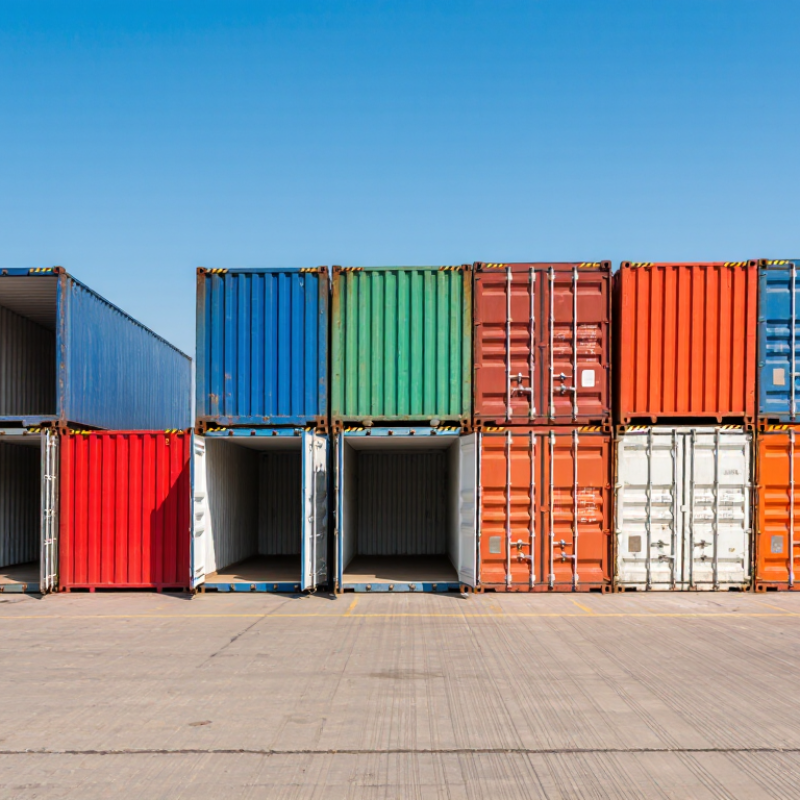
A 40-foot container is not a single, uniform box. Under ISO 668:2020, a standard dry unit measures about 12.192 metres long, 2.438 metres wide, and 2.591 metres high externally. A high-cube model adds roughly 305 millimetres of height, useful for bulky but lightweight cargo. Internal space varies with wall thickness, flooring, and repairs. Small differences matter.

The main types serve different loading needs. Dry containers suit general cargo; refrigerated units use insulated walls and cooling equipment, reducing usable space. Open-top units allow overhead loading, while flat racks accommodate oversized machinery. UNCTAD’s Review of Maritime Transport 2024 reported 858.8 million TEUs of global container-port throughput in 2023. That scale reflects broad demand, but it does not make every type equally available or similarly priced. Condition, location, and seasonal supply all affect quotations.

Tips: Compare external dimensions with the usable interior measurements before booking. Ask for the unit’s age, door opening size, and inspection details. For a purchase, check the floor and roof in daylight; small holes can be easy to miss. Prices change by market, so treat online estimates as a starting point, not a promise.

Comparing Exterior and Interior Dimensions Across Container Types

A 40 ft container is not one uniform box. ISO 668:2020 specifies nominal exterior dimensions of 12.192 m long and 2.438 m wide. Standard units are about 2.591 m high; high-cube units reach 2.896 m. That extra height matters when pallets or machinery nearly touch the roof.

Interior space is tighter. Typical technical tables, including the GDV Container Handbook, put standard-container clear dimensions near 12.03 m long, 2.35 m wide, and 2.39 m high. A high-cube unit usually adds roughly 30 cm of interior height. Reefers lose width and length to insulation and cooling equipment; open-top units trade a fixed roof for loading access. Exact clearances vary by construction. Measure the door opening too. Easy to overlook.

Price comparisons need the same care. Used-unit prices depend on location, condition, age, and repair history, so a single global figure can mislead. Industry container-price indices track regional market movements, but they cannot replace an inspection or local quote. A dented corner post or damaged floor can change the value quickly. Exterior dimensions are standardized; usable volume and price are not. I would verify both before planning a tight fit.

Reviewing Prices for the Top 10 40-Foot Container Options

For a 40-foot container price review, compare condition and design before comparing quotes. In the U.S. market, used standard dry containers often cost about $1,500–$3,000. One-trip standard units may run $3,000–$5,000. Used high-cube models commonly fall near $2,000–$4,000, while new high-cubes can reach $4,000–$6,000. These estimates exclude delivery and site preparation. Condition changes everything. A clean floor and sound door seals matter more than fresh paint.

Specialized designs usually cost more. Used refrigerated containers may range from $8,000–$18,000; new units can exceed $20,000. Used open-top models often list around $3,500–$6,500, with new ones higher. Flat racks can cost roughly $4,000–$14,000, depending on age and fittings. Side-door containers commonly fall near $5,000–$9,000, while insulated models may cost $4,000–$8,000. Prices vary by region, season, inspection results, and transport distance. Ask whether a quote includes unloading. That detail gets missed. I would also request recent photos of the roof, corners, and interior; a low price can hide repairs that are easy to overlook. These figures are planning ranges, not fixed offers.

Factors That Influence 40-Foot Container Prices

A 40-foot container’s listed price is only a starting point. Standard and high-cube models have different dimensions, so confirm the exact type before comparing quotes. Condition matters just as much. A used unit with surface rust may still be sound, while damaged door seals or a soft floor can lead to costly repairs. Check the roof, corners, floor, and door operation in person when possible. Photos help, but they can hide awkward details.

Location can change the final cost substantially. A container stored near your site may cost less to deliver than one requiring a long truck journey. Check access, turning space, and whether a crane or other unloading equipment is needed. Ask whether delivery, waiting time, and placement are included in the quote. Small details matter. They are easy to overlook.

Price also reflects availability, age, condition, and features such as extra height or ventilation. Modifications can add labor and materials, and custom work is not always worth the expense. Compare dated, written quotes for the same container type and delivery terms. No single factor explains every quote, and a clean-looking unit is not automatically a good buy. Inspect before committing, and leave room in your budget for unexpected costs.

Top 10 40 ft Container Dimensions and Prices - Factors That Influence 40-Foot Container Prices

Dimensions are approximate and may vary by manufacturer and model. Price ranges are indicative USD equipment-only estimates; condition, location, availability, and delivery costs can substantially affect quotations.

Container Type Approx. External Dimensions (L × W × H) Approx. Internal Dimensions (L × W × H) Approx. Capacity Indicative Used Price (USD) Indicative New Price (USD) Key Price Factors
1. Standard dry container 12.19 × 2.44 × 2.59 m
40 ft × 8 ft × 8 ft 6 in
12.03 × 2.35 × 2.39 m About 67.7 m³ $1,500–$3,500 $3,000–$5,500 Age, corrosion, floor condition, cargo doors, and certification.
2. High-cube dry container 12.19 × 2.44 × 2.90 m
40 ft × 8 ft × 9 ft 6 in
12.03 × 2.35 × 2.69 m About 76.3 m³ $1,800–$4,000 $3,500–$6,500 Extra height, local supply, condition, and availability.
3. Refrigerated container (reefer) 12.19 × 2.44 × 2.90 m
Typical high-cube profile
About 11.56 × 2.29 × 2.25 m About 60 m³ $8,000–$20,000 $25,000–$45,000 Refrigeration unit age, operating hours, temperature range, and service history.
4. Insulated container About 12.19 × 2.44 × 2.59 m Typically slightly smaller than a standard dry container; varies by insulation thickness. Typically 60–66 m³ $3,000–$7,000 $7,000–$14,000 Insulation material and thickness, lining condition, and thermal performance.
5. Open-top container About 12.19 × 2.44 × 2.59 m About 12.03 × 2.35 m; usable height depends on the cover and cargo loading. About 65–66 m³ $3,000–$7,000 $6,000–$11,000 Roof bows, removable cover condition, end-wall condition, and cargo suitability.
6. Hard-top container About 12.19 × 2.44 × 2.59 m Similar to standard dry dimensions; removable roof may affect usable clearance. Typically 65–67 m³ $3,500–$8,000 $7,000–$13,000 Roof-panel condition, lifting hardware, seals, and availability.
7. Flat-rack container Deck about 12.19 × 2.44 m; end-wall height varies. Open deck; no enclosed internal dimensions. Not measured in cubic metres; payload varies by model. $5,000–$12,000 $9,000–$18,000 Payload rating, fixed or folding end walls, deck condition, and inspection status.
8. Platform container Deck about 12.19 × 2.44 m Open platform; no walls or enclosed internal dimensions. Not measured in cubic metres; payload varies by model. $4,000–$10,000 $8,000–$16,000 Structural rating, deck material, condition, and handling requirements.
9. Side-door container About 12.19 × 2.44 × 2.59 m Approximately standard-container interior; door hardware may reduce usable space. Typically 60–67 m³ $4,000–$9,000 $7,000–$14,000 Number and condition of side doors, seals, locking gear, and frame strength.
10. Double-door container About 12.19 × 2.44 × 2.59 m Approximately 12.03 × 2.35 × 2.39 m About 67 m³ $2,000–$5,000 $4,000–$8,000 Condition of both door sets, seals, locking bars, and container age.

Factors That Influence 40-Foot Container Prices

  • Condition and age: Wind- and watertight units generally cost less than cargo-worthy or newer units in better condition.
  • Container type: Refrigerated, open-top, flat-rack, insulated, and modified units typically cost more than standard dry containers.
  • Location and delivery: Local inventory, transport distance, port handling, and unloading requirements affect the final cost.
  • Supply and demand: Availability, seasonal demand, shipping activity, and regional equipment imbalances can change prices.
  • Specifications and certification: Payload rating, inspection status, operating refrigeration equipment, and required approvals can increase the price.
  • Included services: Taxes, delivery, modifications, repairs, and warranties may be excluded from advertised equipment prices.

Choosing a Container Based on Space, Condition, and Budget

A 40-foot container can provide about 2,350 cubic feet of interior space, though exact measurements vary by model and condition. A typical standard unit measures roughly 39.5 feet long inside, while a high-cube version adds about one foot of height. Check the door opening, too. A bulky cabinet may fit inside but fail to pass through the doors.

When comparing the top 10 options, match usable space to your actual load rather than choosing by exterior size alone. Measure large items and leave room for safe loading. Prices depend on location, delivery distance, age, and condition; a low listed price may not include transport or unloading. Inspect the floor for soft spots, look for daylight through seams, and test the doors. Surface rust is common, but extensive corrosion or a bent frame deserves closer attention. Photos help, but they cannot replace an in-person check. I once underestimated delivery access; a narrow approach can add hassle and cost.

Tips: Ask for interior and door measurements in writing. Confirm delivery fees and the unit’s grade before paying. Compare the total cost, not just the sticker price.

Get a quote
Open chat
1
Hi! How can we help you?
Chat with Pelican Containers