China Top 10 40 ft Container Manufacturers?
Choosing among China’s top 10 40 ft container manufacturers requires more than comparing factory photographs or quoted prices. A dependable supplier should demonstrate practical production experience, stable material sourcing, and consistent quality control. This guide examines manufacturers through clear indicators, including ISO-related quality systems, CSC compliance support, welding standards, paint protection, dimensional accuracy, and export experience. These details matter when a container must survive ocean transport, repeated handling, and changing weather conditions.
A well-made 40 ft container should show clean welds, aligned doors, strong locking bars, and a dry, odor-free interior. Buyers should also review steel grades, floor construction, corner casting quality, inspection procedures, lead times, and after-sales communication. Factory capacity matters, but it does not tell the whole story. A smaller producer may offer better customization, while a larger factory may provide stronger delivery support. No ranking is perfect. Public information can change, and supplier performance may vary between production batches. That limitation matters.
The manufacturers discussed here are assessed from a buyer’s perspective, using practical and verifiable considerations wherever possible. Readers should still request current certificates, sample photos, inspection reports, and detailed quotations before placing an order. Visit the factory if the project is substantial. It can reveal more than a polished brochure. The final decision should balance product reliability, service responsiveness, total cost, and compliance with the destination market’s requirements. In container procurement, the cheapest offer is rarely the safest choice. Reliability earns its place slowly.
What Qualifies as a Leading 40-Foot Container Manufacturer in China
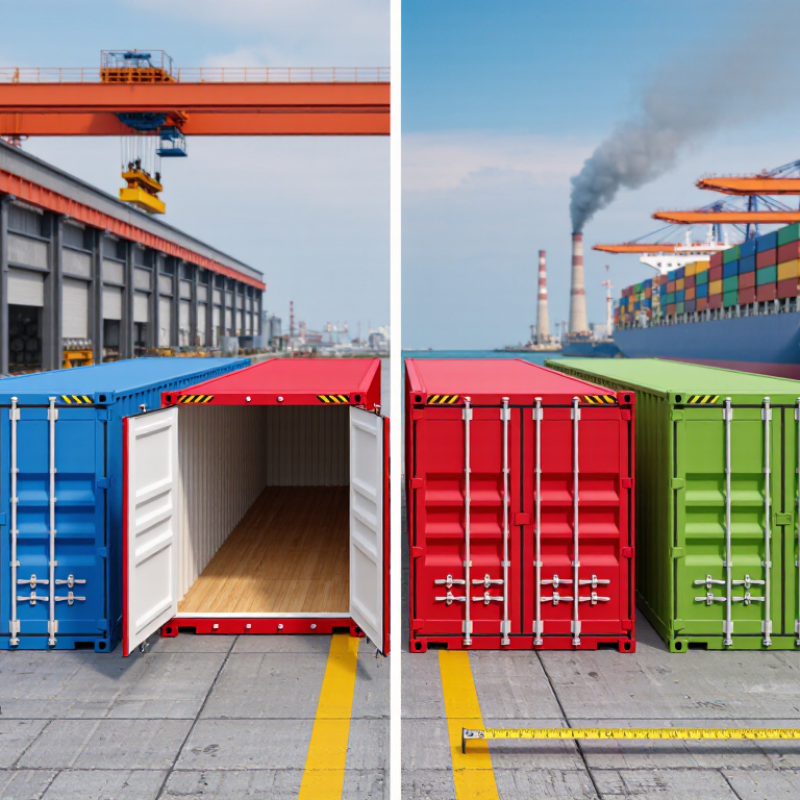
What qualifies as a leading 40-foot container manufacturer in China? It is more than a low quotation. An experienced buyer should verify design control, steel traceability, weld inspection, and repeatable testing. ISO 668 sets dimensional requirements, while ISO 1496-1 addresses series-1 freight-container performance. Each unit should also carry valid CSC safety approval.
Measure the details. Door alignment, floor load, corner-post strength, coating thickness, and drain-hole finishing reveal factory discipline. UNCTAD’s Review of Maritime Transport 2024 reported global cellular container capacity above 28 million TEU. One weak batch can disrupt many routes. A qualified supplier publishes material certificates, weld procedures, inspection records, and load-test results. It should explain tolerance limits, corrosion protection, spare-part support, and realistic production capacity.
Drewry’s Container Census 2024 recorded roughly 1.9 million TEU of new container production in 2023. The decline exposed the market’s strong cycle. Audit teams can compare serial numbers with inspection files, sample finished units, and review corrective-action history. Delivery price alone misleads. Freight, repainting, repairs, and rejected units may erase an apparent saving. Some evaluations remain imperfect; weather exposure and long-term floor wear are difficult to predict from a short audit. That uncertainty deserves honest disclosure.
China Top 10 40 ft Container Manufacturers? - What Qualifies as a Leading 40-Foot Container Manufacturer in China
Anonymous evaluation table based on production capability, ISO compliance, quality control, customization, and export readiness.
| Rank |
Anonymous Manufacturer Profile |
Primary Container Type |
ISO / CSC Capability |
Annual Capacity Range |
Typical Tare Weight |
Steel Construction |
Quality Controls |
Customization |
Export Readiness |
Qualification Score |
| 1 |
Profile 01 |
40 ft dry freight |
ISO 668; CSC-ready |
50,000–100,000 units |
3,700–4,200 kg |
Corten weathering steel |
Welding, coating, leak and dimensional inspection |
High |
Global port delivery support |
94/100 |
| 2 |
Profile 02 |
40 ft dry freight and high cube |
ISO 668; CSC-ready |
30,000–60,000 units |
3,800–4,300 kg |
Corten steel with galvanized components |
Traceability, weld inspection and coating tests |
High |
Experienced export packaging |
92/100 |
| 3 |
Profile 03 |
40 ft dry freight |
ISO 668; CSC-ready |
20,000–50,000 units |
3,900–4,400 kg |
Weathering steel |
Incoming material and final load testing |
Medium–High |
Standard export documentation |
90/100 |
| 4 |
Profile 04 |
40 ft high cube |
ISO 668; CSC-ready |
20,000–40,000 units |
3,900–4,500 kg |
Corten steel and marine plywood floor |
Dimensional, paint thickness and door-seal checks |
High |
Multi-port shipping coordination |
88/100 |
| 5 |
Profile 05 |
40 ft dry freight |
ISO 668; CSC-ready |
15,000–35,000 units |
4,000–4,600 kg |
Weathering steel |
Weld, floor, coating and operational checks |
Medium |
Regular overseas shipment capability |
86/100 |
| 6 |
Profile 06 |
40 ft dry freight and open side |
ISO 668; CSC-ready |
10,000–25,000 units |
4,100–4,700 kg |
Corten steel |
Prototype approval and final inspection |
Very high |
Project-based export service |
84/100 |
| 7 |
Profile 07 |
40 ft dry freight |
ISO 668; CSC-ready |
10,000–20,000 units |
4,000–4,600 kg |
Weathering steel |
Basic ISO production and load checks |
Medium |
Container forwarding support |
82/100 |
| 8 |
Profile 08 |
40 ft high cube |
ISO 668; CSC-ready |
8,000–18,000 units |
4,100–4,800 kg |
Corten steel and plywood floor |
Door, floor load and paint inspection |
Medium–High |
Standard export capability |
80/100 |
| 9 |
Profile 09 |
40 ft dry freight |
ISO 668; CSC-ready |
5,000–15,000 units |
4,100–4,800 kg |
Weathering steel |
Routine weld, coating and dimensional checks |
Medium |
Limited-volume export orders |
78/100 |
| 10 |
Profile 10 |
40 ft dry freight |
ISO 668; CSC-ready |
3,000–10,000 units |
4,200–4,900 kg |
Corten steel |
Standard production inspection |
Basic–Medium |
Export available by project |
75/100 |
Reference specifications:
A standard 40 ft container is approximately 12.192 m long, 2.438 m wide, and 2.591 m high externally. Typical internal dimensions are about 12.032 m × 2.350 m × 2.393 m. The common maximum gross mass is 30,480 kg, subject to the container's safety plate, certification, and operating regulations. Actual tare weight, capacity, certification scope, and delivery performance should be verified through factory records and inspection documents.
Key Standards and Features of 40-Foot Shipping Containers
When evaluating 40-foot shipping containers from China, standards should guide the purchase more than appearance. A standard dry container usually measures 12.192 meters long, 2.438 meters wide, and 2.591 meters high externally. Internal dimensions vary slightly by manufacturer and wall design. This difference affects pallet layouts.
ISO 668 defines key dimensional requirements, while ISO 1161 covers corner fittings. A valid CSC safety plate shows that the container passed required structural inspections. During practical checks, I examine weld seams, door locking rods, floor condition, and corner posts. These areas often reveal poor workmanship before paint defects do. Corten steel is common because it resists weather exposure, but it is not rust-proof. Small untreated scratches can grow quickly near the lower rails.
A useful 40-foot container should have even doors, secure rubber gaskets, functioning vents, and a dry, odor-free interior. Marine plywood flooring must support the declared load without soft spots or serious warping. Payload capacity depends on tare weight, construction, transport rules, and handling equipment. Do not trust one general number. Ask for tested weight data and inspection records.
Manufacturing quality can still be inconsistent. Some units look excellent but hide weak weld penetration or uneven door alignment. Request dimensional reports, coating details, CSC documentation, and photographs of hidden areas. I would also inspect a sample unit before accepting a large order. That step costs time, yet it may prevent expensive repairs and delayed deployment.
China Top 10 40 ft Container Manufacturers? Key Standards and Features of 40-Foot Shipping Containers
The chart compares nominal external dimensions with typical internal dimensions for an ISO 40-foot dry freight container. External dimensions follow ISO 668 nominal measurements, while internal measurements vary slightly by design, flooring, door construction, and manufacturer.
Nominal external size
12.192 m long × 2.438 m wide × 2.591 m high.
Typical internal size
Approximately 12.032 m long × 2.350 m wide × 2.390 m high.
Capacity and loading
Typical internal volume is about 67.7 m³; maximum gross mass is commonly 30,480 kg under ISO container specifications.
Core ISO features
Corner castings, standardized lifting points, locking bars, CSC safety approval, and weather-resistant construction.
Reference framework: ISO 668 dimensional classifications and CSC safety requirements. Actual tare weight, payload, and internal dimensions depend on the container design and specification.
China’s Top 10 40-Foot Container Manufacturers
China’s Top 10 40-Foot Container Manufacturers
China’s top 10 40-foot container manufacturers are best compared through evidence, not promotional rankings.
A serious review examines production capacity, steel quality, welding control, and delivery records.
Factory visits can reveal details that brochures often hide, including uneven floor joints, poor paint coverage, or crowded inspection areas. These physical signs matter when containers face sea spray, heavy stacking, and repeated handling.
Reliable manufacturers usually provide recognized compliance documents, traceable material records, and clear inspection procedures.
Buyers should check corner castings, door seals, locking bars, roof panels, and understructure welds.
A standard 40-foot dry container may look simple, but small dimensional errors can affect loading efficiency.
Experienced teams also test water resistance and verify internal measurements before shipment. Production scale helps, but it does not replace process discipline.
No factory is perfect. Even an experienced supplier may face delays during steel shortages, port congestion, or sudden specification changes.
A careful buyer should request recent production photos, sample inspection reports, and references from comparable projects.
Communication deserves attention too. Slow answers can become costly later.
A spreadsheet cannot show everything. Site audits, third-party inspections, and honest discussions about defects create a more reliable basis for selecting among China’s leading manufacturers.
How to Choose the Right Chinese Container Manufacturer
Choosing among China’s top 40 ft container manufacturers requires more than comparing online rankings. A polished website proves little. Request factory photos, production records, material specifications, and recent inspection reports. Visit the facility when possible. Check steel storage, welding lines, paint areas, and container testing equipment. A busy factory is not always a reliable one.
Ask for exact dimensions, payload, floor material, door hardware, coating system, and expected service life. Confirm whether the manufacturer follows applicable international container standards and can provide valid certification. Inspect a sample carefully. Look for uneven welds, poor door alignment, sharp edges, thin paint, or water entering through the roof. These small defects become expensive during transport and field use.
Communication deserves equal attention. The supplier should answer technical questions clearly, issue consistent drawings, and explain quality-control checkpoints. Confirm production capacity, lead time, packaging, delivery terms, spare parts, and after-sales support in writing. Independent pre-shipment inspection adds useful protection. It may feel unnecessary. It often is not.
I have seen buyers focus heavily on the lowest quotation. That approach can fail when steel grades, paint thickness, or testing methods remain unclear. Ask for a detailed cost breakdown and compare identical specifications. Even experienced purchasers can overlook local port charges or seasonal production delays. Leave room for correction. A manufacturer willing to discuss problems openly may be safer than one promising perfection.