en es

Why Choose a Small Travel Motor for Compact Machines?

Compact machines work in narrow spaces, where every millimeter and kilogram can affect performance. A Small Travel Motor offers a practical solution for mini excavators, compact loaders, tracked carriers, and agricultural equipment. Its reduced housing can preserve valuable frame space without sacrificing essential travel power. On a crowded construction site, this means easier positioning between walls, posts, and stored materials. It may also reduce unnecessary machine width and simplify maintenance access.

Field experience shows that size alone never determines motor quality. Engineers should compare displacement, torque, pressure ratings, speed, brake capacity, and port configuration. The motor must match the machine’s total weight, track design, operating surface, and duty cycle. A unit that performs well on level ground may struggle on wet slopes or repeated turns. Real testing matters. A supplier’s technical datasheet, application guidance, and service records provide stronger evidence than attractive product claims.

Small does not mean universally better. A compact motor can overheat when selected without a suitable hydraulic circuit or cooling strategy. Installation errors can also cause leaks, noise, or uneven travel. These risks deserve attention before purchase. Reliable manufacturers normally support clear specifications, quality control, warranty terms, and replacement-part availability. Buyers should also inspect sealing quality and confirm compatibility with the existing gearbox and hydraulic system. The best choice balances compact dimensions with dependable torque, controlled movement, and long service life. That balance is not always obvious. Careful evaluation prevents a small component from creating a large operational problem.

Why Choose a Small Travel Motor for Compact Machines?

What Is a Small Travel Motor?

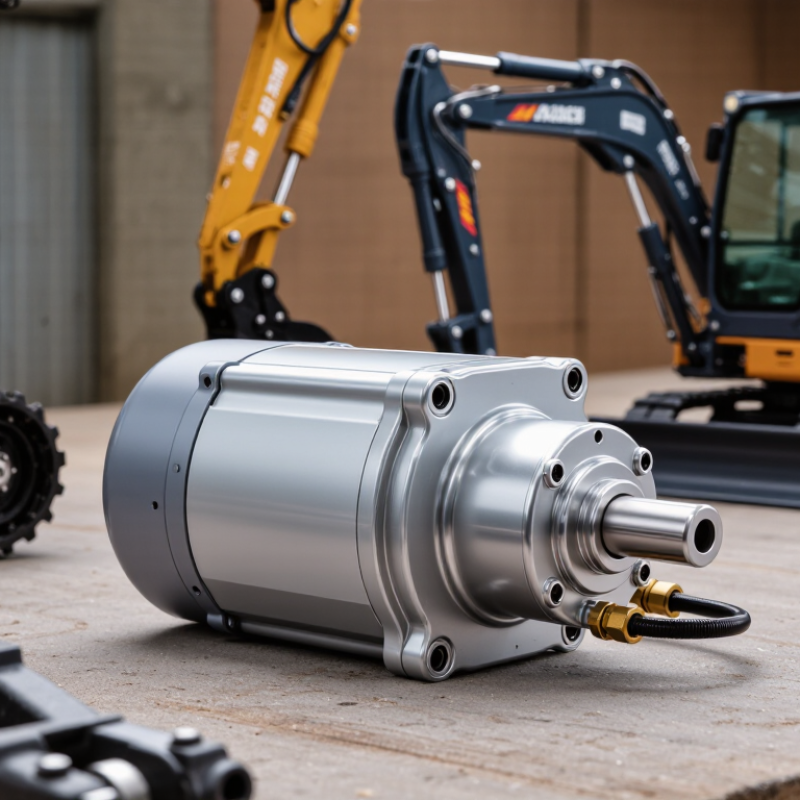
A small travel motor is a compact drive unit that moves tracked or wheeled machinery. It converts hydraulic or electrical energy into controlled rotary motion. Most hydraulic versions combine a motor, planetary gearbox, and mechanical parking brake. The gearbox reduces speed and increases torque at the drive sprocket or wheel.

In compact machines, size matters, but it is not the only concern. During equipment inspections, I have seen undersized motors overheat on steep ground. A motor with excessive capacity can also add weight and waste energy. Engineers normally check torque, travel speed, duty cycle, machine weight, and ground resistance before selecting one. Mounting space and shaft alignment deserve equal attention. Small errors become expensive later.

Protection is important in muddy, dusty work areas. Sealed housings, suitable oil, and correct hose routing can reduce premature wear. Still, no compact motor is maintenance-free. I once underestimated repeated reversing loads on a small carrier; the parts survived, but the temperature rose more than expected. That experience changed my view of simple catalog ratings. Real operating conditions matter. Even a quiet motor can hide internal stress when cooling is poor or tracks are overtightened.

How Small Travel Motors Work in Compact Machines

Why Choose a Small Travel Motor for Compact Machines?

A small travel motor converts hydraulic pressure into controlled rotary motion. Pressurized oil enters the motor and pushes an internal piston or gear assembly. This movement creates torque at the output shaft. The shaft then drives a planetary gearbox, which increases pulling force and reduces travel speed. Compact machines need this balance when operating in narrow spaces.

A hydraulic valve controls oil flow in both directions. More flow usually increases motor speed, while higher pressure produces greater torque. The motor’s displacement also matters. A larger displacement gives stronger rotation but may reduce speed. A smaller displacement supports faster movement with less pulling power. Technicians must match these details to machine weight, slope, and ground conditions.

Heat and contamination remain practical concerns. Clean oil protects precision surfaces and seals. A blocked filter can increase wear quickly. Field inspections often reveal leaks around fittings before major failure appears. That small warning matters. However, motor size alone does not guarantee efficiency. Poor hose routing, incorrect relief pressure, or an undersized gearbox can waste energy. Designers sometimes focus too heavily on compact dimensions. That assumption can fail under continuous loads. Measuring operating pressure and temperature during real work provides more reliable evidence. The best selection usually comes from actual duty cycles, not catalog figures alone.

Why Choose a Small Travel Motor for Compact Machines?

How Small Travel Motors Work in Compact Machines

A hydraulic travel motor converts pressurized fluid into rotational torque. The representative values below show how compact motors can deliver useful wheel or track-driving force while keeping displacement and package size small. Torque is calculated from displacement, pressure, and a 90% overall efficiency using T = pVη ÷ 2π.

Key Benefits of Using a Small Travel Motor

Why Choose a Small Travel Motor for Compact Machines?

Small travel motors offer practical benefits when equipment must work in narrow spaces. On a mini excavator, a compact motor leaves more room for frame members, hydraulic lines, and protective guards. This makes machine packaging easier and can improve ground clearance. It also helps operators move confidently between walls, trees, and stored materials.

Lower mass is another useful advantage. A lighter travel motor can reduce the machine’s total weight and transport demands. It may also support smoother acceleration when matched with the correct hydraulic system. In field maintenance, smaller components are often easier to reach. A technician can inspect connections without removing half the undercarriage. That saves time.

Installation still requires care. A small motor is not automatically the best motor. Engineers must check torque, speed, pressure, duty cycle, and heat limits against real working conditions. A motor that performs well on level ground may struggle on a muddy slope. I have seen compact machines lose efficiency when the selected motor was undersized for repeated turning. That mistake costs more than the space it saves. Noise, sealing quality, and service access also deserve attention, especially in dusty or wet workplaces. Practical testing remains essential. Manufacturer data helps, but actual load testing reveals weaknesses early.

How to Choose the Right Small Travel Motor

Choosing the right small travel motor starts with the machine, not the catalogue. Measure total operating weight, maximum slope, track radius, and required travel speed. Then calculate tractive force, including rolling resistance and grade resistance. A motor with excessive displacement may move slowly, while an undersized unit can overheat during turning.

The U.S. Department of Energy’s hydraulic-system guidance reports that avoidable losses can reach 20–30 percent in poorly maintained systems. That makes pressure, flow, and cleanliness essential selection factors. Check the motor’s continuous and peak torque separately. Match its displacement to available flow, then verify the reduction ratio. In compact excavators, planetary reduction can provide high final torque without a physically large motor. It still needs enough thermal capacity.

Installation details often decide real performance. Confirm port size, mounting flange, shaft dimensions, brake capacity, and case-drain requirements. ISO 4406 cleanliness coding offers a practical reference for controlling hydraulic contamination. I once selected a motor from peak torque alone. It worked on flat ground, but stalled on a wet ramp. The calculation looked correct. The duty cycle was not. Leave working margin, especially for repeated starts, side slopes, and frequent counter-rotation. Field testing under the actual load remains more reliable than a neat spreadsheet.

Why Choose a Small Travel Motor for Compact Machines? - How to Choose the Right Small Travel Motor

Selection Dimension Typical Requirement for Compact Machines Recommended Small Travel Motor Specification Why It Matters Selection Check
Machine Operating Weight Mini excavators, compact track loaders, small agricultural machines, and access equipment generally operate below 10,000 kg. Choose a motor whose continuous and peak torque can move the fully loaded machine on the steepest intended surface. Motor sizing based only on empty machine weight can cause poor gradeability, overheating, and premature wear. Use the maximum operating weight, including attachments, payload, fuel, and accessories.
Required Tractive Force Tractive force depends on machine weight, rolling resistance, slope, and acceleration requirements. Calculate resistance forces first, then apply a design safety factor commonly between 1.2 and 1.5. The motor must provide enough wheel or sprocket force without operating continuously at its pressure limit. Check both flat-ground travel and the maximum working gradient.
Motor Displacement Small travel motors commonly use fixed or two-speed displacement designs to balance torque and travel speed. Select displacement according to required output torque, hydraulic flow, and final-drive ratio. Larger displacement produces more torque at the same pressure but normally requires more hydraulic flow for the same speed. Confirm that the selected displacement matches the available pump flow and reduction gearbox.
Output Torque Compact-machine travel systems often require high starting torque for turning, climbing, and overcoming static resistance. Compare continuous torque and peak or breakaway torque separately; do not use peak torque as the continuous rating. Starting and obstacle-crossing loads can be considerably higher than steady travel loads. Verify torque at the actual system pressure and the intended motor displacement.
Hydraulic Pressure Many compact mobile hydraulic systems operate in the approximate range of 210–350 bar, depending on machine design. Select a motor with continuous and intermittent pressure ratings above the machine’s real operating pressure. Insufficient pressure capacity may result in leakage, seal damage, reduced service life, or motor failure. Allow for pressure spikes during sudden stops, turning, slope travel, and obstacle impact.
Hydraulic Flow Small travel circuits may provide roughly 20–100 L/min per motor, depending on pump capacity and machine size. Match motor flow capacity to the pump’s continuous and maximum flow output. Excessive flow can cause overspeed and heat generation; insufficient flow reduces travel speed. Use the motor’s displacement and flow to estimate speed: motor speed is approximately flow divided by displacement.
Travel Speed Compact machines commonly require a low-speed range for precise work and a higher-speed range for repositioning. A two-speed motor is useful when the machine needs both high tractive effort and faster travel. Low speed improves control and torque; high speed reduces transport and repositioning time. Check maximum motor speed, gearbox ratio, sprocket diameter, and track or wheel circumference together.
Final-Drive Reduction Hydraulic motors are normally connected to planetary reduction gearboxes in tracked or wheeled travel systems. Use a reduction ratio that converts motor speed into the required wheel or sprocket speed while increasing output torque. The gearbox determines the final balance between travel speed, tractive force, and mechanical durability. Confirm allowable gearbox input speed, output torque, ratio, and mounting dimensions.
Brake Configuration Mobile machines may need the drive to hold position when hydraulic pressure is removed. Use a spring-applied, hydraulically released parking brake when a fail-safe holding function is required. A mechanical brake helps prevent unintended movement during parking, loading, or hydraulic shutdown. Check brake holding torque, release pressure, emergency-stop behavior, and maximum slope.
Machine Layout and Envelope Compact equipment has limited space around the track frame, wheel hub, hoses, and structural members. Select a compact motor with suitable flange, shaft, port orientation, and overall length. A physically smaller motor can simplify installation and protect components from interference or impact. Compare mounting bolt pattern, pilot diameter, shaft connection, port size, and hose bend radius.
Turning and Counter-Rotation Tracked machines may operate one motor forward and the other in reverse during spot turns. Select motors with matching displacement, speed characteristics, and pressure capability on both sides. Balanced drive performance improves straight-line tracking, turning control, and maneuverability. Test motor synchronization, leakage balance, and performance during counter-rotation.
Thermal Capacity Continuous travel, high ambient temperature, restricted airflow, and frequent turning increase heat generation. Choose a motor and circuit capable of dissipating heat at the expected duty cycle. Excessive oil temperature lowers lubricant viscosity and accelerates seal and component wear. Evaluate case-drain requirements, oil-cooling capacity, duty cycle, and allowable oil temperature.
Filtration and Cleanliness Travel motors contain precision hydraulic surfaces that are sensitive to contaminated oil. Use filtration and oil cleanliness levels recommended for the hydraulic components in the circuit. Clean hydraulic oil reduces scoring, sticking valves, internal leakage, and premature failure. Check return-line filtration, suction protection, flushing procedures, and contamination control.
Efficiency Compact machines benefit from low energy loss because they often use small engines, batteries, or limited cooling capacity. Compare volumetric and mechanical efficiency at the actual pressure, speed, and temperature range. Higher efficiency provides more useful tractive force and reduces heat and fuel or battery consumption. Review performance curves rather than relying only on nominal displacement or maximum pressure.
Service and Maintenance Construction and agricultural equipment may operate in mud, dust, water, and abrasive environments. Prefer a sealed, serviceable design with accessible ports, drain provisions, and replaceable wear components. Simple inspection and maintenance can reduce downtime and extend the travel-drive life. Confirm seal protection, drain routing, replacement-part availability, and inspection intervals.

Engineering note: The ranges shown are general guidance for compact hydraulic machines. Final motor selection must be verified against the machine weight, hydraulic schematic, pump flow, system pressure, duty cycle, reduction ratio, operating temperature, and manufacturer performance curves.

Common Applications and Maintenance Considerations

Why Choose a Small Travel Motor for Compact Machines?

Small travel motors suit machines that work where space is limited. Common applications include mini excavators, compact tracked loaders, access platforms, and agricultural equipment. Their compact housing leaves more room for frames, tracks, and hydraulic lines. A well-matched motor also provides controlled movement in narrow work areas.

Maintenance begins with cleanliness. Inspect hydraulic oil for dark color, metal particles, or a burnt smell. Contaminated oil can damage valves and planetary gears quickly. Check hose fittings for seepage after demanding work. Even a small leak may allow dirt to enter the circuit. Keep track tension within the equipment maker’s specified range. Excessive tension increases bearing and gear loads.

Pay attention to operating temperature. A motor that becomes unusually hot may have restricted flow, overloaded tracks, or internal wear. Listen for grinding, pulsing, or uneven travel. These symptoms deserve testing before they become expensive failures. Use the service manual for oil grades, pressure limits, bolt torque, and inspection intervals.

Field experience shows that neglected mounting bolts can loosen through vibration. I have also seen operators replace a motor when the real problem was a blocked filter. Diagnosis is not always obvious. Record operating hours and inspection findings, even when the machine seems healthy. No maintenance plan is perfect, and missed details can matter.

Get a quote
Open chat
1
Hi! How can we help you?
Chat with Pelican Containers