
Choosing the right Universal Saucepan Lid can influence safety, cooking efficiency, and customer satisfaction across international markets. Global buyers must examine more than diameter. Material strength, steam control, handle insulation, rim compatibility, packaging quality, and replacement availability all deserve attention. A lid may fit one saucepan perfectly, yet perform poorly on another.
“Universality is measured in kitchens, not catalogues,” says cookware engineer Dr. Lena Hartmann. “A dependable lid should sit steadily, release steam predictably, and remain comfortable after repeated use.” Her observation reflects a practical purchasing reality. Suppliers should provide clear measurements, tolerance ranges, material certificates, and testing information. Stainless steel, tempered glass, and silicone components each offer different benefits. Glass improves visibility. Steel often improves durability. Silicone can support flexible fitting, but quality varies.
Details matter.
This guide reviews leading Universal Saucepan Lid suppliers serving global buyers. It considers manufacturing experience, product consistency, customization options, quality control, export readiness, and after-sales support. It also examines small details, such as protective corner inserts, barcode accuracy, carton strength, and handle screws that loosen after repeated washing. These details may seem minor. They can shape product returns and long-term trust.
The comparison is not perfect. Supplier capabilities can change, and online specifications may not tell the whole story. Buyers should request samples before placing large orders. Check the lid on several saucepan sizes. Test heat resistance, cleaning performance, storage convenience, and sealing stability. A lower price may look attractive, but inconsistent fit can create higher costs later. Reliable sourcing requires evidence, careful questioning, and a willingness to reconsider convenient assumptions.
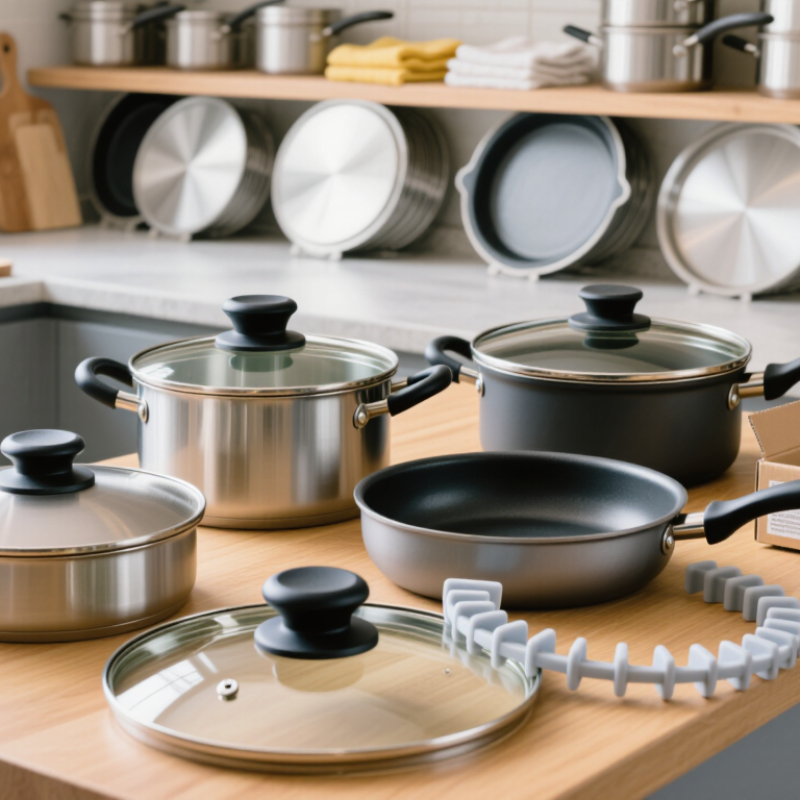
In my sourcing experience, universal saucepan lids fall into three practical groups: silicone, glass, and metal. Adjustable silicone lids use flexible rims to cover several pan diameters. They suit mixed cookware sizes and store easily. However, soft silicone can collect oil around its folds. That detail is easy to miss. Tempered-glass lids let cooks watch food without lifting the cover. Steam vents help release pressure and reduce rattling during simmering. The visible surface can still cloud after repeated washing. Metal lids are durable and resist breakage. They handle frequent commercial use well. Visibility disappears.
Universal designs usually rely on stepped rims, stretchable edges, or sliding sections. These features improve compatibility, but they cannot correct every shape difference. Before approving a lid, global buyers should measure the inner rim, outer rim, and handle clearance. A claimed 28-centimeter fit may fail on a pan with a thick rolled edge. Not every pan is perfectly round. Handle shape matters too. Large knobs need enough overhead space for stacking and storage. Heat-resistant handles should remain stable during ordinary cooking. Edges should sit evenly, without sharp flashing or loose inserts. Small gaps can trap moisture.
For global buyers comparing suppliers, request material specifications, heat limits, cleaning guidance, and food-contact documentation. Ask for samples from different production batches when possible. Packaging deserves attention because stacked glass lids can suffer impact damage during long-distance shipping. Sample testing remains essential. Test them on several saucepan profiles. Supplier data can look complete, while real cookware exposes uneven sealing or weak handles. That uncomfortable mismatch deserves a second inspection.
Representative diameter ranges commonly specified for universal saucepan lids; actual fit depends on the rim design and manufacturer specifications.
Adjustable silicone lids generally cover the widest range, while tempered-glass and stainless-steel lids typically provide stronger heat resistance and durability. Splatter screens prioritize ventilation and grease control rather than creating a sealed fit.
A reliable saucepan lid supplier should provide more than attractive catalog photos. Check the lid diameter, rim tolerance, handle strength, and compatibility with common pan designs. Ask for material specifications, such as tempered glass grade or stainless steel thickness. Small measurements matter. A lid that shifts by two millimeters may release steam unevenly during cooking.
Request production samples before placing a large order. Test the lid on several saucepans, including slightly different rim shapes. Inspect the seal, vent hole, handle attachment, and surface finish after repeated heating and washing. Suppliers should share food-contact documents and independent test reports relevant to your destination market. Do not accept vague claims. Clear records are stronger evidence than confident sales language.
Global purchasing also depends on operational discipline. Review minimum order quantities, sample charges, production capacity, packaging design, and realistic lead times. Confirm carton drop-test methods if the lids include glass. Ask how defects are recorded and replaced. A supplier that explains corrective actions deserves closer attention. However, no checklist is perfect. I would still compare first shipments against approved samples, because quality can drift after a successful trial. A low price may conceal thicker packaging costs, higher breakage, or inconsistent dimensions. Keep written specifications, inspection photos, and agreed tolerances in one purchasing file. That simple habit reduces confusion across time zones.
Top Universal Saucepan Lid Suppliers for Global Buyers
Universal saucepan lids require more than a matching diameter. A reliable supplier should control rim contact, steam release, and handle clearance across different pan shapes. Grand View Research estimates the global cookware market will grow at roughly 5% annually through 2030. That expansion increases demand for adaptable, export-ready lid designs. Buyers should compare stainless steel, tempered glass, and food-grade silicone carefully. Stainless steel resists dents and corrosion. Tempered glass improves visibility but needs controlled edge protection. Silicone rims can improve grip, yet their heat rating must be verified. Ask for material certificates, thickness records, and repeated heat-cycle test results.
Common size ranges include 16–18 cm, 20–22 cm, and 24–28 cm. However, diameter alone is not enough. Measure the inner rim, outer rim, pouring notch, and knob height. A practical sample test should cover a narrow pot, a flared saucepan, and a rounded edge. It should also check rattling during simmering. Small details matter. The lid must vent steam without splashing nearby surfaces. A 2024 report by Fortune Business Insights places the cookware market on a continued growth path, encouraging suppliers to offer flexible production. Custom options may include rim colors, handle shapes, etched measurement marks, packaging formats, and private mold development. Yet customization can increase minimum order quantities and inspection costs. A perfect universal fit remains an ambitious claim. Buyers should approve pilot samples before accepting large shipments.
Global buyers should assess universal saucepan lid suppliers through documented quality systems, not polished product photos. In factory audits, I look for controlled stainless steel grades, stable glass thickness, and food-contact silicone with traceable batches. Lid rims should sit evenly on different pan diameters. Small gaps can cause steam leaks and customer complaints.
ISO 9001 certification indicates a structured quality management system, but it does not prove every lid is safe for cooking. Ask for current food-contact test reports covering the target market. Depending on destination, relevant evidence may include FDA requirements, EU food-contact rules, LFGB testing, or REACH-related declarations. Reports should identify materials, test methods, laboratories, and production dates. Generic certificates are weak evidence.
Manufacturing capability matters just as much. Reliable suppliers should control stamping, polishing, tempering, silicone molding, assembly, and final inspection in clear stages. They should provide drawings, tolerance records, packaging tests, and sample approval procedures. Ask how they test handle strength, thermal shock, corrosion resistance, and dishwasher durability. Real production data is more useful than promises.
No supplier is perfect. Even experienced factories may show uneven polishing or delayed corrective action. That is where reliability becomes visible. A strong supplier admits defects, records root causes, and verifies improvements through follow-up inspections. Buyers should also review capacity during peak seasons. A factory may pass a sample audit yet struggle with a large order. That possibility deserves honest consideration.
Top Universal Saucepan Lid Suppliers for Global Buyers
Shipping, Pricing, and After-Sales Support for International Buyers
Reliable saucepan lid suppliers should explain shipping, pricing, and service before accepting an order. Request product drawings, glass thickness, handle materials, rim measurements, and compatibility ranges. A Universal Lid must fit securely, not merely look attractive in photographs. Ask for a sample before discussing large-volume purchasing. This small step can reveal loose rims, weak handles, or poor packaging. It may delay the order. That delay is usually cheaper than receiving unusable stock.
Compare quotations using the same delivery terms. Check whether prices include export packaging, documentation, insurance, and destination charges. Confirm the minimum order quantity and production schedule in writing. A low unit price can hide expensive freight or oversized cartons. Shipping tests matter. Ask suppliers to provide carton dimensions, gross weight, pallet details, and available transport options. Sea freight may reduce costs, while air freight suits urgent samples. However, rushed shipping can create avoidable mistakes.
Tips: Keep two approved suppliers for continuity. Request photos of packed cartons before dispatch. Confirm spare handles, replacement glass, and claim procedures. After-sales support should include a response time, inspection process, and practical remedy for damaged goods. Ideally, suppliers provide batch records and clear quality standards. Some buyers focus too heavily on price. That is understandable, but it can weaken long-term reliability. Even experienced purchasing teams sometimes overlook replacement-part availability.
The following comparison uses anonymized supplier profiles and indicative market ranges for universal saucepan lids. Final specifications, prices, shipping terms, and service conditions should be confirmed in a written quotation.
| Supplier Profile | Typical Product Range | Common Materials | Diameter Coverage | Indicative FOB Price | Typical MOQ | Production Lead Time | Shipping Options | After-Sales Support | Best Fit for Buyers |
|---|---|---|---|---|---|---|---|---|---|
| Profile A High-volume factory | Tempered-glass Universal Lids with steam vents, silicone rims, and adjustable compatibility features | Tempered glass, stainless steel, food-contact silicone | 16–32 cm | US$2.20–5.80 per piece | 500–1,000 pieces | 25–45 days after approval | Sea freight, rail, air freight, courier samples | Replacement for verified defects; batch inspection records; spare-part support | Retail chains, importers, and large e-commerce programs |
| Profile B Custom-development supplier | Custom handles, private packaging, laser marking, and tailored silicone rim colors | Tempered glass, 304 stainless steel, silicone, heat-resistant plastic | 18–30 cm; custom sizes subject to tooling | US$3.00–8.50 per piece | 300–800 pieces | 30–55 days, including sample approval | Sea freight, air freight, DDP subject to destination | Pre-production samples; artwork revisions; documented complaint handling | Private-label brands and buyers requiring differentiated designs |
| Profile C Mid-volume export supplier | Standard universal lids with stainless-steel rims, knob handles, and vent holes | Tempered glass, stainless steel, phenolic or nylon handles | 20–32 cm | US$2.60–6.20 per piece | 1,000–2,000 pieces | 20–40 days after order confirmation | Sea freight and consolidated container shipments | Photo-based quality claims; replacement or credit for confirmed shortages | Distributors seeking stable specifications and competitive pricing |
| Profile D Small-batch supplier | Ready-stock universal lids, mixed-size cartons, and trial-order assortments | Tempered glass, stainless steel, silicone or plastic edge components | 16–30 cm | US$3.50–9.00 per piece | 100–500 pieces | 7–25 days for available stock | Courier, air freight, LCL sea freight | Sample replacement; basic inspection photographs; responsive order follow-up | Start-ups, test orders, and buyers with limited storage capacity |
| Profile E Premium compliance-focused supplier | Heavy-duty lids, polished stainless-steel finishes, reinforced rims, and documented testing | Tempered glass, 304 stainless steel, food-grade silicone | 18–32 cm | US$5.50–12.00 per piece | 500–1,500 pieces | 35–60 days after technical approval | Sea freight, air freight, export-carton optimization | Material documentation; pre-shipment inspection; corrective-action reports | Hospitality groups, premium cookware distributors, and regulated markets |
If for some reason you did not find the service or product you need, you can always leave a request for a free consultation and get an answer.