
en es

Top Steel Metal Plate Manufacturers and Suppliers

The global steel plate market is changing under pressure from infrastructure demand, energy costs, and stricter carbon expectations. World Steel Association data shows that global crude steel production reached about 1.84 billion tonnes in 2024. This immense volume supports shipbuilding, bridges, pressure vessels, heavy machinery, and energy projects. Yet production volume alone cannot identify a dependable Steel Metal Plate supplier.

Quality begins with chemistry, not appearance. A clean plate surface may still hide poor toughness, uneven thickness, or weak weldability. The World Steel Association highlights steel’s essential role in modern infrastructure, while OECD steel market reports continue to examine excess capacity, trade pressure, and investment risks. These reports matter because unstable supply can affect delivery schedules and project budgets.

Lakshmi Mittal once described steel as “the backbone of the modern economy.” His statement remains practical, not merely promotional. A reliable manufacturer should provide mill certificates, heat numbers, dimensional tolerances, and traceable inspection records. Look closely at the plate edge. Check the surface. Ask about ultrasonic testing when service conditions demand it.

No supplier is perfect.

This guide compares leading Steel Metal Plate manufacturers and suppliers through measurable factors, including production capability, certifications, material grades, export experience, delivery performance, and technical support. It also considers less visible issues, such as communication delays and inconsistent documentation. Those details can become expensive during fabrication.

The ranking requires caution. Public data may be incomplete, and supplier claims need independent verification. Buyers should confirm applicable ASTM, EN, JIS, or project-specific requirements before ordering. A strong supplier is not simply the largest producer. It is the partner that delivers consistent plates, accurate records, and honest technical answers.
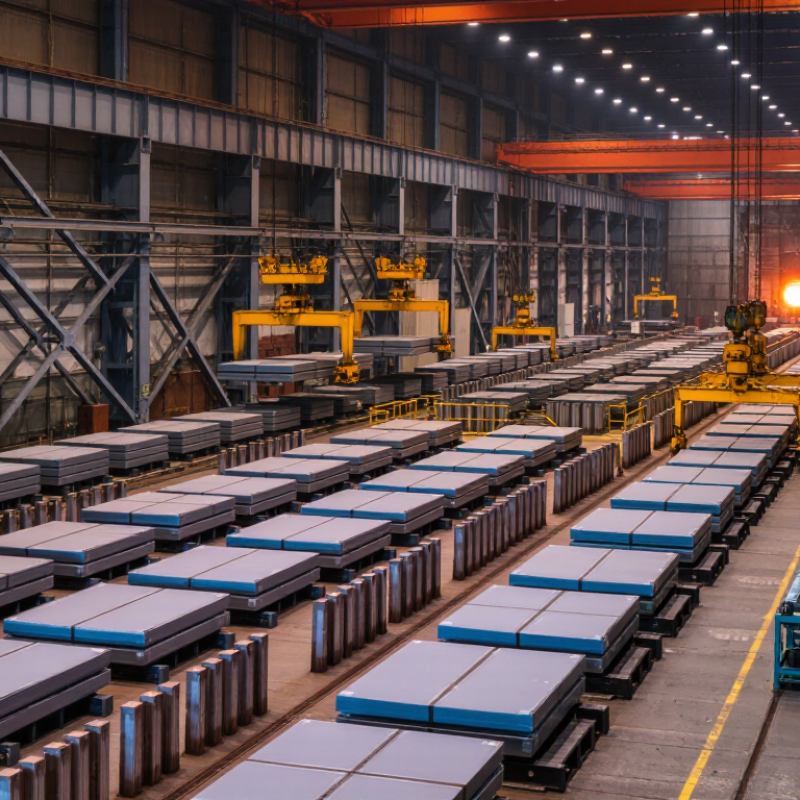
Top Steel Metal Plate Manufacturers and Suppliers

Types of Steel Metal Plates and Their Key Properties

Top Steel Metal Plate Manufacturers and Suppliers

Types of Steel Metal Plates and Their Key Properties

Steel metal plates differ by chemistry, thickness, strength, and surface condition. Carbon steel plates are common for structural frames, bridges, and equipment bases. They offer good strength and easy fabrication, but moisture can cause rust without protection. Low-alloy plates contain elements such as nickel, chromium, or molybdenum. These additions can improve toughness, wear resistance, or performance at low temperatures.

Stainless steel plates resist corrosion through their chromium-rich surface layer. They suit food-processing areas, chemical equipment, and humid environments. However, stainless grades vary widely in strength and weldability. Abrasion-resistant plates protect buckets, chutes, and mining parts from repeated impact. Weathering steel develops a protective surface under suitable outdoor conditions, though poor drainage can still create serious corrosion. Thickness matters, too. A thicker plate may resist bending better, but it also increases weight and welding heat.

Tips: Match the plate to its working environment, not only its price. Check tensile strength, yield strength, impact requirements, and corrosion exposure. Ask suppliers for heat numbers, test certificates, dimensional tolerances, and surface inspection records. A small error in plate grade can affect cutting, bending, and weld quality. I have found that drawings sometimes omit temperature conditions. That omission deserves review. Also confirm flatness before installation, because uneven plates can create stress during assembly. Suppliers with clear traceability and consistent testing are safer choices for demanding projects.

How to Evaluate Steel Plate Manufacturers and Suppliers

When evaluating steel plate manufacturers and suppliers, look beyond price and polished websites. Ask about production experience, material grades, thickness ranges, and monthly capacity. A reliable supplier should provide mill certificates, chemical analysis, mechanical test results, and heat-number traceability. Check whether each document matches the delivered plate.

Request samples before placing a large order. Measure thickness at several points, inspect the surface for laminations, and review edge quality. Confirm testing follows the required industry standards and project specifications. A factory visit can reveal storage conditions, calibration practices, and actual production equipment. Still, one successful visit is not conclusive evidence. Procedures may change later.

Tips: Compare several quotations using the same specifications. Ask for delivery records from similar projects. Verify production dates and inspection responsibilities in writing. Do not accept vague claims such as “premium quality.” An independent inspection can add confidence, especially for critical structures. Keep communication clear and documented. Even experienced buyers miss small details, so review tolerances twice before approval.

Top Steel Metal Plate Manufacturers and Suppliers - How to Evaluate Steel Plate Manufacturers and Suppliers

Evaluation Dimension Recommended Benchmark or Reference What to Verify Importance
Applicable Product Standard ASTM A36/A36M, ASTM A572/A572M, EN 10025-2, or another standard specified in the purchase order The supplier should state the exact standard, grade, revision, and supplementary requirements on the quotation and certificate. Critical
Yield Strength ASTM A36: minimum 36 ksi (250 MPa); ASTM A572 Grade 50: minimum 50 ksi (345 MPa); EN 10025 S355: commonly 355 MPa for nominal thickness up to 16 mm Confirm the required grade, thickness range, test direction, and mill test results. Critical
Tensile Strength ASTM A36: typically 58–80 ksi (400–550 MPa); ASTM A572 Grade 50: minimum 65 ksi (450 MPa); EN 10025 S355: commonly 470–630 MPa for thinner plate Compare the certificate values with the applicable standard and ordered thickness. Critical
Chemical Composition Carbon, manganese, phosphorus, sulfur, silicon, and alloying elements must remain within the limits of the specified grade. Request a heat number, chemical analysis, and traceability from the plate back to the production heat. Critical
Thickness Availability Common carbon-steel plate ranges begin around 6 mm and extend beyond 100 mm, subject to grade, production route, and supplier capability. Check minimum and maximum thickness, permitted thickness tolerance, and whether the requested size is standard or made to order. High
Dimensional Tolerance Tolerance should follow the ordered standard, such as ASTM A6/A6M or EN 10029, rather than an informal “commercial tolerance.” Confirm thickness, length, width, flatness, squareness, and edge-condition tolerances in writing. High
Surface Condition The plate should be free from defects that impair fabrication or service performance; acceptable limits depend on the applicable standard and surface class. Define rust level, pits, laminations, rolled-in scale, edge defects, and repair limits before shipment. High
Ultrasonic Testing ASTM A578/A578M or EN 10160 may be specified for detecting internal discontinuities in rolled steel plate. Confirm test class, scanning coverage, acceptance level, report format, and whether testing is performed by an independent party. High
Weldability Information For welding applications, carbon equivalent, plate thickness, hydrogen control, preheating, and post-weld requirements should be assessed. Request the applicable welding recommendations and verify compatibility with the approved welding procedure. High
Heat Treatment Available conditions may include as-rolled, normalized, normalized-rolled, quenched and tempered, or thermo-mechanically controlled. Ensure the delivery condition matches the design specification and is recorded on the material certificate. High
Material Test Certificate A certificate should include grade, standard, heat number, dimensions, chemical composition, mechanical properties, and inspection results. Check that certificate data matches the plate markings, packing list, purchase order, and traceability records. Critical
Inspection and Quality System Documented quality procedures based on ISO 9001 principles can support consistent production and inspection control. Request a valid certificate, scope of certification, calibration records, nonconformance procedures, and audit access where required. High
Traceability Each plate or bundle should be linked to a heat number and corresponding inspection documentation. Verify durable markings, barcode or tag information, bundle identification, and document retention practices. Critical
Cutting and Fabrication Services Optional services may include shearing, CNC flame cutting, plasma cutting, drilling, beveling, shot blasting, and primer coating. Confirm cut-size tolerance, bevel angle, heat-affected-zone requirements, surface preparation, and inspection responsibilities. Medium
Packaging and Corrosion Protection Packaging should protect plate edges, markings, and surfaces during handling, storage, and transportation. Review separators, lifting points, weather protection, bundle stability, marking visibility, and storage recommendations. Medium
Delivery and Logistics A reliable supplier should provide a confirmed production schedule, dispatch documentation, and shipment tracking. Evaluate delivery terms, minimum order quantity, port or warehouse options, loading equipment, and claims handling. High
Commercial Evaluation Compare total landed cost rather than base price alone, including testing, cutting, packaging, freight, duties, and inspection. Use the same grade, dimensions, tolerances, delivery term, payment condition, and inspection scope for every quotation. High
Supplier Qualification Score Suggested weighting: technical compliance 30%, quality and traceability 25%, delivery capability 20%, inspection support 15%, total cost 10%. Score suppliers using documented evidence and set a minimum pass level before commercial award. Decision Tool

Leading Regions for Steel Plate Production and Supply

Steel plate production is concentrated in regions with deep raw-material networks, skilled mills, and dependable transport. East Asia remains a major supply center, supported by integrated steelworks, large ports, and extensive fabrication capacity. Several producers there offer carbon, alloy, and weather-resistant plates in broad thickness ranges. Quality can vary between mills. Buyers should verify heat numbers, test reports, and dimensional tolerances before shipment.

Europe maintains a strong position in specialized and high-performance steel plate production. Its mills often serve construction, energy, pressure equipment, and heavy transport projects. Regional supply chains can shorten delivery routes for nearby buyers, while strict inspection practices support consistent documentation. However, energy costs and production scheduling may affect pricing. That matters.

North America combines substantial plate manufacturing with reliable distribution across inland and coastal markets. The region suits projects requiring traceable material, custom cutting, or close technical support. South Asia and the Middle East are also expanding supply capabilities, especially for infrastructure and industrial development. Port access, coating facilities, and local inventory can influence the real purchase cost more than mill price alone. A practical sourcing review should compare grade, thickness, origin, lead time, certification, and after-sales response. No region is perfect.

Top Steel Metal Plate Manufacturers and Suppliers

Leading Regions for Steel Plate Production and Supply

Regional crude steel output provides a practical benchmark for the depth of upstream supply available to steel plate manufacturers and distributors. Asia and Oceania remain the dominant production base, while Europe, North America, the CIS, the Middle East, South America, and Africa represent additional important supply regions. Figures are rounded 2023 regional production estimates in million tonnes, based on World Steel Association statistics.

Quality Standards, Certifications, and Testing Requirements

Top steel metal plate manufacturers and suppliers should prove quality through repeatable evidence, not polished brochures. The World Steel Association reported about 1.89 billion tonnes of crude steel production in 2023. At this scale, traceability cannot be treated as paperwork. Each plate should carry a heat number, chemical analysis, dimensions, and delivery condition.

ISO’s 2023 survey recorded more than 1.26 million ISO 9001 certificates worldwide. However, certification alone does not guarantee reliable plate performance. Buyers should check the certificate scope, expiry date, and issuing body. A supplier should also provide an EN 10204 3.1 inspection certificate, supported by laboratory results. Testing commonly includes tensile strength, yield strength, elongation, hardness, and Charpy impact performance. Ultrasonic testing can reveal internal laminations that visual inspection may miss. Good suppliers explain the sampling plan, test temperature, and acceptance criteria clearly.

Details matter.

Testing laboratories should operate under ISO/IEC 17025 accreditation where applicable. Results must identify the method, equipment, calibration status, and specimen location. Experienced inspectors compare mill data with independent test results, especially for thick plates and welded applications. A weakness remains common: some purchasing teams accept copied reports without verifying heat numbers. That shortcut can undermine an otherwise strong quality system. Ask for original records, retain samples when practical, and require corrective-action reports for failed tests. Reliable manufacturers welcome those questions.

Ordering, Pricing, Delivery, and Supplier Selection Factors

Ordering steel plate begins with precise specifications, not a broad request for “standard material.” State the grade, thickness, width, length, surface condition, and required tolerance. Include the intended use, cutting method, and welding environment. These details reduce unsuitable quotations and prevent costly rework. A practical order should also list acceptable substitutions, packaging requirements, and inspection documents. Small details matter.

Pricing depends on more than the quoted price per ton. Compare material cost, cutting fees, testing charges, packaging, inland transport, and import-related expenses. Ask whether the quotation is firm and how long it remains valid. Steel prices can change quickly. Delivery estimates should show production time, inspection time, loading dates, and transit time. Request a realistic schedule, not an optimistic promise. A partial shipment may help urgent projects, but it can increase handling costs and complicate inventory control.

Supplier selection requires evidence. Review production experience, quality certifications, traceability procedures, and recent project references. Ask for sample mill certificates and confirm that heat numbers match the shipped plates. Independent inspection can provide useful assurance for critical orders. Communication also reveals reliability; unclear answers before payment may create larger problems later. I would compare at least three written offers using the same specifications. Price is important, but the cheapest plate may carry hidden risks. Even experienced buyers can overlook tolerance limits or delivery buffers, so a final technical review is worth the extra day.

Get a quote
Open chat
1
Hi! How can we help you?
Chat with Pelican Containers