
en es

Top Inverter IGBT Welder Manufacturers for Global Buyers

Choosing an Inverter Igbt Welder manufacturer is not just a price comparison. Buyers also need to understand duty cycle, input voltage, output range, and service support. These details shape performance on a shop floor, at a repair site, or in a fabrication workshop. A compact machine may be easier to carry, but its rated output and cooling design still deserve a close look. Small details matter.

This guide introduces manufacturers serving global buyers and the factors that help distinguish their offerings. It considers product range, manufacturing experience, quality controls, documentation, and access to spare parts. For example, a clear specification sheet should identify rated duty cycle and compatible power supply, rather than relying on broad claims. Ask how warranties are handled in your destination market, and whether technical support can respond in a useful time zone. Those answers can reveal more than a polished brochure.

No single supplier suits every workshop. Production volume, electrode preferences, local power conditions, and operator experience all affect the right choice. Buyers should verify certifications and test reports against their own requirements, since product listings may not tell the whole story. I have seen selection guides overemphasize headline amperage; it is useful, but not enough. A careful comparison helps narrow the field, though it cannot replace a practical assessment of the machine and supplier.
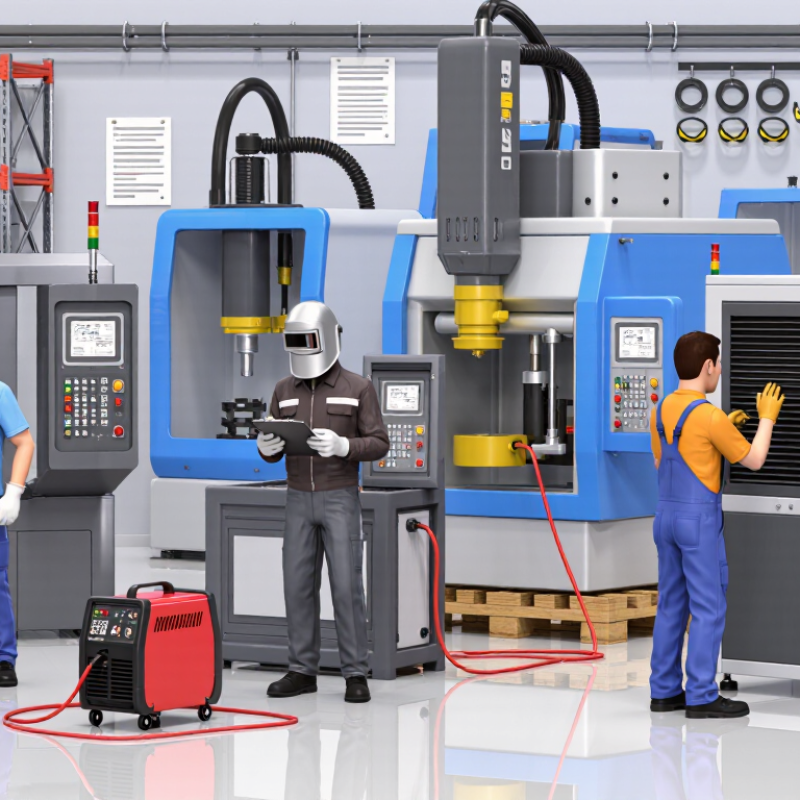
Top Inverter IGBT Welder Manufacturers for Global Buyers

What Inverter IGBT Welders Are and How They Work

Top Inverter IGBT Welder Manufacturers for Global Buyers

What Inverter IGBT Welders Are and How They Work

An inverter IGBT welder converts incoming electrical power into a controlled welding current. Inside, rectifier components change AC input into DC. Switching circuits then use insulated-gate bipolar transistors, or IGBTs, to rapidly control that power. A transformer adjusts the voltage, and the output stage delivers current suited to the welding task.

The switching happens thousands of times per second. This lets the machine use a smaller transformer than many traditional welders. It can also provide steadier output when the operator adjusts current for a thin steel panel or a thicker joint. On a workshop floor, that often means a lighter unit and easier transport. Still, performance depends on more than the inverter design. Input voltage, duty cycle, cooling, and electrode choice all matter. A compact welder can overheat if pushed beyond its rated duty cycle.

Tips: Check the rating plate before connecting the machine. Match input voltage and electrode size to the job. Keep vents clear of dust, and allow cooling pauses when required. A useful reminder: real work conditions can differ from a clean product test. Verify specifications against your own power supply and workload.

How Inverter IGBT Welders Work: Typical Power-Conversion Frequencies

An inverter welder rectifies mains AC into DC, then IGBT switches convert it into high-frequency AC for a smaller transformer. The transformer output is rectified to provide welding current.

The chart shows typical frequency ranges, not specifications for a particular welder. Mains frequency is 50–60 Hz; inverter switching frequency commonly falls around 20–100 kHz and varies by design.

Key Features That Distinguish Leading Manufacturers

Leading IGBT welder manufacturers distinguish themselves through measurable performance, not attractive specifications. The 2024 Welding Equipment Market analysis by MarketsandMarkets projects industry growth above 5% annually, increasing pressure on suppliers to prove efficiency and durability. A serious manufacturer publishes verified duty-cycle data at realistic ambient temperatures. It also reports output stability, power factor, idle consumption, and thermal derating. These details matter when a workshop runs six-hour shifts beside steel dust and fluctuating power.

Look for compliance with IEC 60974-1, documented factory testing, and traceable serial-number records. Advanced thermal sensors should protect the IGBT modules without causing frequent nuisance shutdowns. Better designs use controlled cooling paths, reinforced circuit boards, and sealed connectors. Independent testing is stronger evidence than laboratory claims. The International Energy Agency’s Energy Efficiency 2023 report highlights the industrial value of reducing energy losses, making high-efficiency power conversion increasingly relevant to buyers.

Control quality is equally important. Leading suppliers offer stable arc starts, adjustable inductance, and repeatable waveform control across thin sheet and heavy plate. Service capability separates dependable manufacturers from short-term sellers. Spare modules, calibration support, multilingual manuals, and response-time commitments should be available before purchase. ISO 3834-based quality practices can also indicate disciplined production, although certification alone cannot guarantee field performance. I would still request repair records and test a sample unit under real load. Marketing figures sometimes look cleaner than workshop reality.

How to Assess Welder Manufacturers for Global Purchasing

Global buyers should assess inverter IGBT welder manufacturers beyond catalog prices. MarketsandMarkets valued the welding equipment market at about USD 16.7 billion in 2023. It projects roughly 8% annual growth through 2028. This expansion attracts capable factories and weaker imitators. Ask for ISO 9001 records, IEC 60974-1 compliance, and traceable IGBT component data. Request thermal images after continuous-load testing. A machine rated at 60% duty cycle should prove that rating under defined ambient conditions, not only in a showroom. Check arc stability, current accuracy, cooling performance, and protection against over-temperature faults.

Supplier audits should include production floors, calibration logs, and repair records. The International Federation of Robotics reported 541,302 industrial robots installed globally in 2023. That figure reflects rising automation, but welding quality still depends on operator control and machine consistency. Compare ten sample units, not one perfect demonstration. Review failure rates, spare-part availability, firmware control, and response times across different time zones. Also verify packaging tests, manuals, customs documents, and electrical compatibility for the target market. No checklist is perfect. I once treated a low defect rate as proof of reliability, but the sample was too small. That mistake matters. Require independent inspection before shipment, and record every acceptance criterion in the purchase contract.

Top Inverter IGBT Welder Manufacturers for Global Buyers - How to Assess Welder Manufacturers for Global Purchasing

Use this evidence-based checklist to compare suppliers. Requirements vary by welding process, destination market, and application; request current product-specific documentation before purchasing.

Assessment Dimension What to Verify Useful Evidence Purchasing Check
Process and application fit Confirm supported processes (for example, MMA/SMAW, TIG/GTAW, or MIG/MAG/GMAW), material types, electrode or wire range, and intended operating environment. Product datasheet, operator manual, and a representative weld demonstration or sample procedure. Match the model to the actual process and workload; do not rely on a broad “multi-process” claim alone.
IGBT inverter design and serviceability Check the stated power topology, cooling arrangement, overload and thermal protection, and availability of service documentation and replacement parts. Technical specification, block diagram where available, parts list, and written service procedure. Ask which components are field-replaceable and whether parts will remain available for the expected service period.
Output ratings and duty cycle Compare rated welding current, output voltage, duty cycle, and the stated test conditions. Duty-cycle figures are meaningful only with their current, time basis, and ambient conditions. Nameplate and datasheet values, plus test information aligned with the applicable requirements of IEC 60974-1. Compare like-for-like ratings; confirm the intended job does not exceed the machine’s rated operating conditions.
Input power compatibility Verify supply voltage, phase, frequency, input current, plug or connection requirements, and permitted voltage variation for the destination installation. Electrical ratings on the product label, installation manual, and wiring diagram. Have a qualified electrician confirm compatibility with the site supply and local electrical rules.
Safety and conformity documentation Check the applicable product-safety and EMC requirements for the target market. IEC 60974-1 covers welding power sources; IEC 60974-10 addresses electromagnetic compatibility. Applicable test reports, declarations, labels, and technical files for the exact model and configuration. Confirm local regulatory requirements independently; a document for another model or market may not apply.
Environmental protection Review stated operating temperature, humidity, ventilation clearance, storage conditions, and enclosure protection rating where specified. Installation instructions and an IP rating supported by relevant documentation; IP code classification is defined by IEC 60529. Do not assume an IP rating makes equipment suitable for every outdoor, dusty, or wet environment.
Quality control and traceability Ask how incoming components, assembly, electrical safety checks, and final functional tests are controlled and recorded. Quality-system certificate where applicable, inspection records, serial-number traceability, and sample final-test reports. Check that certificates are valid and relevant to the manufacturing site and product scope.
Warranty and after-sales support Compare warranty duration, coverage, exclusions, claim process, repair options, technical support hours, and responsibility for freight or labor. Written warranty terms, service contact details, troubleshooting guidance, and spare-parts ordering process. Obtain the terms for the destination country and intended sales channel in writing before placing an order.
Export packaging and logistics Confirm packed dimensions and weight, packaging protection, shipping method, delivery terms, lead time, and documents required for import. Packing list, commercial invoice details, shipment plan, and packaging specification. Clarify who handles transport, insurance, customs clearance, duties, and import compliance under the agreed delivery terms.
Quotation and order terms Compare exact model configuration, included accessories, minimum order quantity, payment schedule, production lead time, and price validity. Itemized quotation, approved specification sheet, and written order confirmation. Ensure the quotation and purchase order describe the same model, voltage configuration, accessories, and delivery conditions.

Standards references are for assessment guidance; verify the current edition and applicable national or regional requirements for the product and destination market.

Regional Strengths of Major IGBT Welder Producers

Regional strengths shape how global buyers evaluate IGBT welder manufacturers. East Asia offers dense electronics supply chains, fast production, and competitive pricing. Mordor Intelligence’s 2024 Welding Equipment Market report estimates the sector could grow at over 7% annually through 2029. That growth supports high-volume inverter production. However, lower prices do not always mean better thermal design.

European producers generally emphasize electrical safety, energy efficiency, and traceable quality control. Their equipment often suits fabrication shops with strict documentation requirements. The European Commission’s Energy Efficiency Progress Report highlights continuing pressure to reduce industrial energy consumption. This favors IGBT welders with efficient switching, stable arc control, and lower standby losses. Certification can add cost. It can also reduce procurement risk.

North American manufacturers commonly compete through application engineering, repair networks, and software integration. This matters when welders operate across remote construction sites or demanding industrial cells. The U.S. Department of Energy’s Industrial Decarbonization Roadmap identifies efficiency improvements as a practical manufacturing priority. India and Southeast Asia are also expanding assembly capacity and skilled welding labor. Their cost advantages are promising, but supplier consistency still requires careful audits. Buyers should inspect waveform testing, spare-part availability, duty-cycle evidence, and after-sales response times. Datasheets are useful. Field trials are better.

Export, Certification, and After-Sales Factors for Buyers

Global buyers should evaluate inverter IGBT welders beyond price and rated output. Export readiness matters. Ask manufacturers for a complete document pack, including commercial invoices, packing lists, user manuals, and applicable conformity certificates for the destination market. Certificate names alone are not enough; check that model numbers and electrical ratings match the equipment being shipped. Small mismatches can delay customs clearance or complicate installation.

After-sales support deserves equal attention. Confirm warranty coverage, response times, spare-parts availability, and whether technicians can guide setup remotely. A buyer in a humid coastal workshop, for example, may need clear advice on ventilation, storage, and routine inspection. Ask for replacement-part lead times in writing. Promises can sound reassuring, but they are hard to measure.

Test the support process before placing a large order. Send a technical question about duty cycle or input voltage and note how clearly the supplier responds. Request sample maintenance instructions, too. They may be incomplete. That is worth noticing, and discussing before shipment.

Get a quote
Open chat
1
Hi! How can we help you?
Chat with Pelican Containers