Top 10 Types of Industrial Floor Scrubbers to Buy
Choosing the right Industrial Floor Scrubber can change how quickly a facility recovers from daily dirt, spills, and heavy foot traffic. Warehouses, hospitals, retail stores, and manufacturing plants rarely share the same cleaning needs. A compact walk-behind machine may suit narrow aisles, while a ride-on model can cover large concrete floors with fewer interruptions. The wrong choice, however, may waste water, battery power, labor, and valuable cleaning time.
This guide examines the top 10 types of industrial floor scrubbers worth considering before you buy. It compares cleaning width, brush pressure, tank capacity, power systems, maneuverability, noise levels, and maintenance demands. These details matter. A machine that looks powerful in a product photograph may struggle with oil film or uneven flooring. Manufacturer specifications provide a useful starting point, but real operating conditions deserve equal attention. Ask how often the scrubber will run. Check doorway widths, charging access, floor coatings, and drainage arrangements. Small details can decide performance.
Reliable purchasing decisions also require evidence. Look for clear warranties, accessible replacement parts, safety features, and service support from established suppliers. Speak with operators, not only sales representatives. Their daily experience often reveals problems hidden in brochures. No single scrubber fits every facility. Even experienced buyers can overlook battery charging time or recovery-tank cleaning. That is why this overview focuses on practical differences, realistic limitations, and the conditions that make each scrubber type useful.
Industrial Floor Scrubber Basics and Operating Principles
Top 10 Types of Industrial Floor Scrubbers to Buy
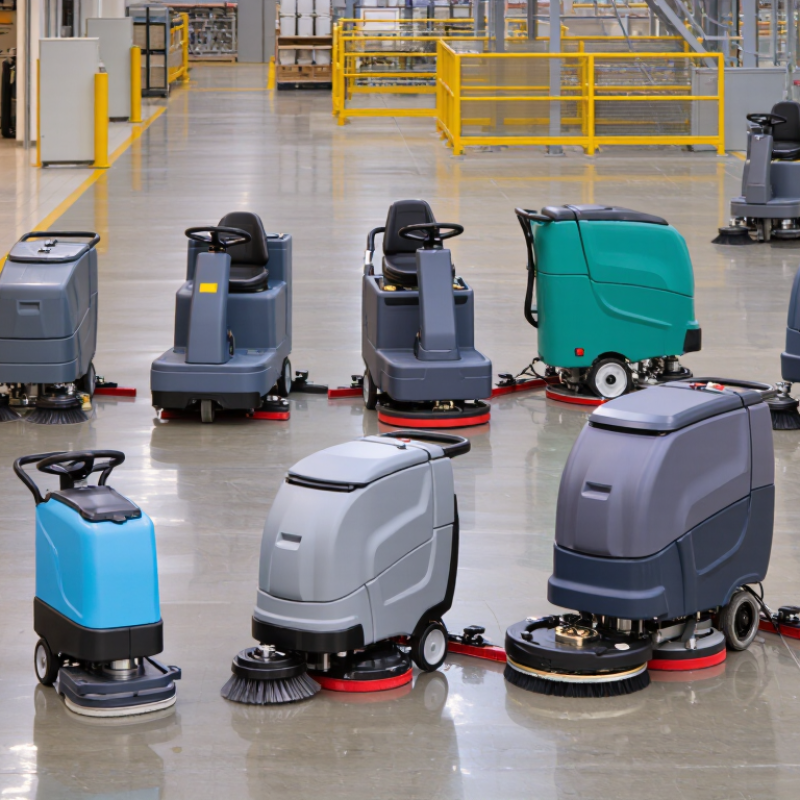
Industrial floor scrubbers combine solution delivery, mechanical agitation, vacuum recovery, and controlled movement. The main types include walk-behind, ride-on, compact, cylindrical, disc, orbital, robotic, battery-powered, corded, and sweeper-scrubber machines. Each design suits different surfaces, aisle widths, and soil levels. That matters.
A scrubber normally releases water and detergent through calibrated jets. A disc or cylindrical brush then breaks the soil bond. The rear squeegee gathers dirty liquid, while the vacuum motor pulls it into a recovery tank. Brush pressure, water flow, and travel speed must match the floor. Excess water increases drying time and slip risk. Too little solution leaves traffic lanes visibly dull.
Grand View Research estimated the global floor scrubber market at approximately 3.3 billion dollars in 2023, with continued growth expected through 2030. The report links demand to mechanized cleaning and labor efficiency. The U.S. Environmental Protection Agency’s WaterSense at Work guidance also emphasizes controlled water use in commercial cleaning operations. I still see operators choosing machines by tank size alone. That is an incomplete test. Measure cleaning width, recovery performance, noise, battery runtime, and turning space. The International Facility Management Association reports that cleaning performance supports occupant health and facility usability, but machine settings remain site-specific. A polished warehouse may need an orbital head, while textured concrete often benefits from cylindrical brushes. Test a small area first. Floors can surprise you.
Top 10 Types of Industrial Floor Scrubbers
Typical cleaning width by scrubber type
Cleaning width is a key selection factor because it affects coverage per pass. Walk-behind machines generally suit congested areas and smaller facilities, while ride-on, stand-on, cylindrical, and robotic scrubbers are designed for larger industrial spaces. Actual performance varies with brush pressure, floor condition, operator speed, solution flow, and layout.
Walk-Behind Scrubbers: Compact, Cylindrical, and Orbital Models
Industrial floor scrubbers differ sharply in handling, cleaning pressure, and operating cost. For many facilities, walk-behind models offer practical control in tight aisles, loading areas, and workshop corridors. Their smaller footprint helps operators clean around shelving without moving every obstacle. That matters during a busy shift.
Compact walk-behind scrubbers suit offices, clinics, retail back rooms, and light industrial spaces. They usually combine a solution tank, recovery tank, brush deck, and adjustable handle. Choose a deck width that leaves room for turning. A machine that is too wide may clean faster on paper, yet struggle beside pallets or fixed equipment.
Check battery runtime, water flow, recovery performance, and noise before buying. Test the squeegee on textured flooring. Some machines leave thin wet trails after sharp turns.
Cylindrical models use rotating brushes that reach shallow grooves and collect small debris more effectively than many disc designs. They can be useful near entrances where grit arrives on footwear. Orbital models move a pad in rapid, small patterns, supporting controlled cleaning on delicate or uneven surfaces. Their lower water demand can reduce drying time, but pad selection becomes critical. I have seen operators blame the machine when the real issue was excessive detergent or worn rubber blades. Train users to overlap passes, empty recovery tanks daily, and inspect cables, wheels, and brush pressure. One overlooked detail remains operator comfort. If the handle causes wrist strain, consistent cleaning quality soon declines.
Ride-On Scrubbers: Standard, Compact, and High-Capacity Designs
Ride-on scrubbers are among the most practical choices for large industrial floors. Standard models suit warehouses, factories, and retail spaces with wide, open aisles. They usually balance cleaning width, tank capacity, and operating time. Compact designs work better in narrow corridors, crowded storage areas, and facilities with tight turning points. They may clean more slowly, but their smaller frame improves control. High-capacity designs carry more water and solution, reducing refill stops across very large sites.
I have found that operator visibility matters as much as machine size. A clear front view helps the driver avoid racks, pallets, and floor drains. Check the brush path, turning radius, and seat comfort during a practical trial. Measure every doorway before purchasing. Small details matter. A machine that cannot enter a service corridor quickly becomes expensive storage. Battery runtime should also match the cleaning schedule, not just the advertised figure.
Reliable performance depends on daily care. Operators should empty recovery tanks, rinse filters, and inspect squeegee blades after each shift. Uneven floors can increase vibration and shorten brush life. My first assumption was that the largest tank always saved time, but maneuvering delays changed the result. High-capacity machines need skilled route planning. Compact units can sometimes finish sooner in complex spaces. Keep written maintenance records, and review water use, downtime, and cleaning consistency every month.
Specialized Scrubbers: Robotic, Sweeper-Scrubber, and Battery Models
Top 10 Types of Industrial Floor Scrubbers to Buy
Industrial floor scrubbers range from walk-behind machines to ride-on, orbital, cylindrical, robotic, sweeper-scrubber, and battery-powered models. For specialized facilities, three choices deserve closer attention. Robotic scrubbers suit predictable routes and large open floors. A 2024 MarketsandMarkets report identifies automation as a key growth driver in the commercial cleaning equipment market. Still, robots need clear paths, reliable mapping, and human supervision. They are not magic.
Sweeper-scrubbers combine dry debris collection with wet scrubbing. This design helps warehouses where dust, pallets, and tire marks appear together. It can reduce equipment changes during a shift. Battery models offer quieter operation and eliminate trailing power cables. According to Grand View Research, battery-powered cleaning equipment continues gaining demand because of lower operating noise and improved workplace flexibility. Actual runtime varies with brush pressure, floor condition, and battery age. A specification sheet cannot predict every site.
Tips: Walk the route before buying. Measure aisle widths, door thresholds, drainage points, and charging space. Ask suppliers for verified cleaning width, real runtime, recovery-tank capacity, and decibel data. Review ISO 50001 energy goals if your facility tracks energy performance. The U.S. Department of Energy notes that efficient motors and charging practices can reduce equipment energy use, but maintenance remains decisive. Dirty squeegees leave wet trails. I have seen attractive productivity claims fail when operators skipped recovery-tank checks. A short on-site trial is safer than choosing from a brochure.
