
Choosing among the top Galvanized Closed Head Steel Drum manufacturers requires more than comparing catalog prices. These drums protect materials through demanding storage, transport, and handling conditions. Their value depends on steel strength, zinc coverage, seam quality, closure design, and inspection discipline.
Corrosion engineering authority Mars G. Fontana wrote, “Corrosion can be defined as the destructive attack of a metal by chemical or electrochemical reaction with its environment.” His observation remains practical for drum buyers. A galvanized surface is not magic. Scratches, moisture, acidic contents, and poor sealing can still create weak points. Look closely.
Reliable manufacturers usually document coating specifications, wall thickness, bung performance, and pressure testing. They should explain how each Galvanized Closed Head Steel Drum performs in outdoor storage and variable temperatures. Factory photographs can help, but traceable test records matter more. Ask about batch identification and quality-control procedures. Details reveal experience.
This guide compares manufacturers through a practical lens. It considers production capacity, customization, export consistency, certifications, and customer support. It also examines whether suppliers understand compatibility between galvanized steel and the intended contents. A technically strong drum may still be unsuitable for a particular formulation. That mistake is easy to make.
No ranking is permanent. Markets change, factories improve, and documentation sometimes lags behind reality. Even a careful comparison has blind spots. Buyers should verify current specifications directly before placing orders. The best supplier is not always the largest. It is the one that communicates clearly, tests consistently, and accepts responsibility for measurable quality.
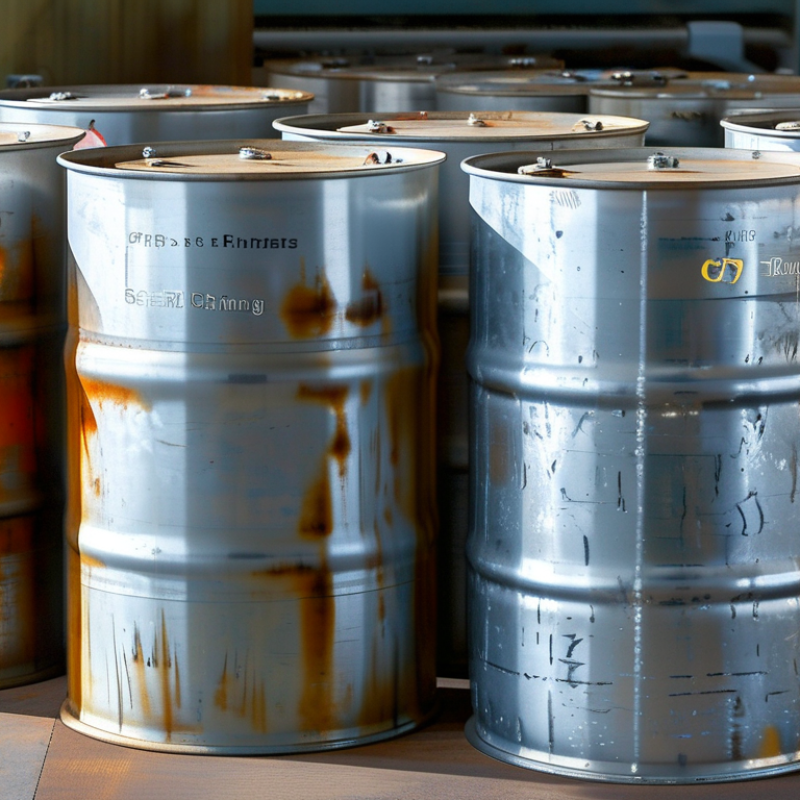
Galvanized closed head steel drums are rigid containers made from carbon steel with a protective zinc coating. Their fixed top includes small openings, usually fitted with threaded plugs, for filling and dispensing materials. Unlike open-head drums, they are not designed for frequent top removal. This structure improves stacking strength and helps reduce accidental spills during handling.
The galvanized surface offers useful protection against moisture, scratches, and mild corrosive exposure. It is not completely rustproof. Deep damage, standing water, or incompatible contents can still cause failure. A well-made drum should have even coating coverage, clean seams, secure closures, and a stable base ring. Experienced inspectors also check dents near the chime, plug threads, and interior contamination. These details often reveal problems before shipment or storage. Wall thickness and closure design should match the intended contents and handling conditions. Local packaging requirements still matter.
Tips: Store drums upright on a dry surface. Keep plugs tight, but do not over-tighten them. Inspect every drum before use. Check the coating, seams, and closure threads. A small dent may look harmless, yet it can weaken stacking stability. Confirm compatibility with the contents and temperature range. Specifications are helpful, but practical inspection remains essential.
Evaluating top galvanized closed-head steel drum manufacturers requires more than comparing prices or polished catalogs. Start with material control. Reliable producers identify the steel grade, galvanizing method, coating thickness, and batch number. The zinc layer should cover the body evenly, including seams and forming areas. Thin spots can appear near bends. They are easy to miss.
Manufacturing standards provide a useful foundation. Check whether the factory follows relevant ISO and ASTM procedures for dimensions, closures, leak resistance, and handling strength. Ask for current test records, not generic certificates. Inspect the bung threads, gasket fit, weld continuity, and lid alignment. A drum should close smoothly without excessive force. It should also withstand stacking and routine movement without distortion. Small details matter.
Quality control must continue after production. Strong manufacturers use documented inspections, calibrated gauges, sample testing, and traceable batch records. Review their corrective-action process when a drum fails inspection. The response often reveals more than the failure itself. Site audits can confirm storage conditions, coating protection, and operator training. A clean factory helps, but it does not prove everything. No audit is perfect. My own evaluation would also include trial orders, because performance can change between samples and larger batches. Look for consistent wall thickness, secure closures, readable markings, and packaging that prevents scratches during delivery. Reliability is demonstrated over repeated shipments, not claimed in one meeting.
Leading manufacturers of galvanized closed head steel drums combine practical production experience with disciplined quality control. They select low-carbon steel for strength, then form the body with precise seams and reinforced chimes. A uniform zinc coating helps protect the drum from moisture, warehouse humidity, and rough transport conditions. The closed head design supports secure storage when fitted with compatible threaded closures and approved gaskets.
Reliable manufacturers inspect coating coverage, wall thickness, weld integrity, and closure fit during production. They also test sample drums for leakage, stacking stability, and handling durability. Details matter. A drum may look clean but still fail around its seam or bung area. Experienced producers record batch data and maintain clear inspection procedures. This makes quality easier to verify.
Leading suppliers also adapt drum specifications to filling equipment and storage environments. They can provide different capacities, closure styles, coating weights, and surface finishes. Practical manufacturers listen to packaging engineers, not only sales forecasts. That matters in real warehouses. Still, no producer is perfect. Coating variations, dented rims, or inconsistent closures can appear without careful monitoring. Buyers should review test records, dimensional tolerances, and packaging performance before placing large orders. A dependable manufacturer welcomes those questions and explains limitations openly.
Top Galvanized Closed Head Steel Drum Manufacturers
Reliable galvanized closed head steel drums begin with controlled sheet preparation. Manufacturers inspect steel coils for thickness, surface marks, and chemical consistency. The sheets are then cut, formed, and rolled into cylindrical bodies. Automated welding creates the side seam, while separate operations attach the top and bottom ends. Small flaws matter.
Galvanizing follows a carefully managed cleaning and coating sequence. Workers remove oil, scale, and oxide before applying zinc to the steel surface. Coating thickness is checked at several points, including the seam and chime. These areas often receive uneven coverage. Quality teams also inspect bung fittings, gasket seating, and closure torque. Leak testing can reveal pinholes that visual inspection misses. Drop and stack tests provide practical evidence of drum strength, although test conditions must reflect real handling. A rushed inspection can produce misleading confidence.
Tips: Ask manufacturers for batch traceability, coating-thickness records, weld inspection results, and pressure or leak-test procedures. Examine sample drums under bright light. Check the chime for sharp edges and inconsistent zinc coverage. Do not guess. A useful quality program combines documented measurements with trained human judgment. However, inspection plans are not perfect; sampling can miss an isolated defect. Reviewing recurring failures and adjusting process controls shows stronger manufacturing discipline than simply passing every routine check.
This reference chart shows the typical number of quality-control checkpoints used across major stages of galvanized closed-head steel drum production. Key controls include steel thickness verification, body forming, seam-weld inspection, galvanizing coverage, closure fitting, leak testing, and final UN performance checks.
Top Galvanized Closed Head Steel Drum Manufacturers
Applications, Safety Requirements, and Purchasing Considerations
Galvanized closed head steel drums suit liquid chemicals, lubricants, coatings, and industrial powders. Their sealed top reduces contamination during storage and transport. A typical 200-liter drum needs compatible bungs, a reliable gasket, and consistent wall thickness. In practical warehouse use, small dents around the closure area deserve attention. They can weaken sealing performance. The appearance can mislead.
Safety starts with the contents, not the container alone. Buyers should request current UN performance certification for the intended packing group and transport method. The UN Model Regulations require tested packaging for many hazardous materials. Workers also need labels, safety data sheets, ventilation, and suitable protective equipment. Grounding may be necessary when filling flammable liquids. OSHA’s Hazard Communication Standard supports written hazard information and worker training. Store drums upright, secure them against movement, and inspect rust, bulging, leaks, and damaged flanges.
Purchasing teams should compare galvanized coating quality, steel gauge, closure torque, internal lining, and pallet compatibility. Ask for batch traceability and test records, including leak, pressure, and drop tests. Global Resources Outlook 2024 reports that material extraction could rise by about 60% by 2060. Reusable drums, refurbishment, and recyclable steel therefore deserve financial review. Still, reuse is not automatically safer. Residue history, cleaning records, and closure replacement must be verified. A lower unit price may become expensive after leakage, rejected loads, or disposal. Supplier audits should include production controls, documentation accuracy, and response time for defects.
| Category | Typical Specification or Requirement | Common Applications | Safety and Purchasing Considerations |
|---|---|---|---|
| Standard Capacity | Common nominal sizes include 20 L, 25 L, 30 L, 60 L, 110 L, 200 L, and 208 L. The 208 L size is widely associated with the nominal 55-gallon drum. | Industrial liquids, coatings, lubricants, chemicals, powders, and process materials. | Confirm actual working capacity, headspace, external dimensions, pallet quantity, and filling-line compatibility before ordering. |
| Drum Construction | Carbon-steel body with a zinc coating applied by methods such as hot-dip galvanizing or electro-galvanizing; closed head with two bung openings is common. | Outdoor storage, general industrial packaging, agricultural products, and non-corrosive or compatible chemical products. | Ask for coating type, coating thickness or mass, seam construction, body thickness, and resistance data for the intended contents. |
| Closure Configuration | Usually fitted with a 2-inch bung and a 3/4-inch bung, using threaded plugs, gaskets, and tamper-evident or dust-control features as required. | Liquid filling, dispensing, sampling, blending, and controlled material transfer. | Check bung thread standards, gasket material, torque requirements, venting needs, and compatibility with pumps or adapters. |
| UN Performance Certification | For regulated dangerous goods, the drum may require a UN specification marking that identifies packaging type, performance level, specific gravity or test pressure, year, and approval authority. | Flammable liquids, corrosive materials, toxic substances, and other regulated hazardous goods. | The UN marking must match the material, packing group, closure system, transport mode, and applicable regulations. Certification should be verified rather than assumed. |
| UN Packing Groups | UN packaging performance levels are generally associated with Packing Group I for high danger, II for medium danger, and III for low danger, when applicable. | International and domestic transport of hazardous materials. | Select packaging based on the product's official classification and required performance level, not solely on drum capacity or steel thickness. |
| Chemical Compatibility | Galvanized steel is often suitable for many oils, greases, and neutral materials, but zinc coatings may be attacked by strong acids, strong alkalis, and certain chemical formulations. | Lubricants, mineral oils, selected solvents, industrial additives, and compatible dry goods. | Review the safety data sheet, conduct compatibility testing, and obtain written confirmation for aggressive, acidic, alkaline, aqueous, or high-purity products. |
| Pressure and Venting | Most standard closed head drums are atmospheric containers and are not intended to store pressurized contents. Vented closures may be available for products that release gas. | Temperature-sensitive liquids, materials that may generate vapor, and products requiring controlled pressure equalization. | Never pressurize a standard drum unless it is specifically designed and certified for that service. Evaluate thermal expansion, gas generation, and vent placement. |
| Handling and Stacking | Drums may be handled with drum clamps, forklifts, pallets, or drum trucks. Stackability depends on design, load, closure condition, and storage environment. | Warehouses, distribution centers, manufacturing plants, and bulk material storage areas. | Use approved pallets, keep drums upright, protect bung areas, follow the supplier's stacking limits, and inspect for dents, corrosion, or leakage. |
| Fire and Static Control | Steel drums are conductive, but the full transfer system must be correctly bonded and grounded when handling flammable liquids or combustible vapors. | Solvents, fuels, coatings, cleaning chemicals, and other flammable liquids. | Follow site fire procedures, eliminate ignition sources, use suitable dispensing equipment, and provide ventilation and personal protective equipment. |
| Interior Protection | Options can include unlined steel, internal lacquer, epoxy or polymer lining, and specialized coatings for product compatibility. | Water-based products, corrosive formulations, food-contact-related applications where permitted, and materials sensitive to metal contact. | Specify lining chemistry, cure requirements, extractables limits, inspection method, and resistance to the product's pH, solvents, and temperature. |
| Environmental Resistance | Galvanizing provides sacrificial corrosion protection, but damage, standing water, salt exposure, and incompatible chemicals can reduce service life. | Covered outdoor storage, humid warehouses, agricultural environments, and general industrial logistics. | Request corrosion-test information when needed, avoid prolonged contact with wet surfaces, and specify additional exterior protection for marine or severe environments. |
| Quality Documentation | Typical documentation may include dimensional drawings, material declarations, coating information, closure specifications, batch records, and UN test certificates. | Regulated supply chains, audited manufacturing, export shipments, and applications requiring traceability. | Confirm document availability before purchase and define inspection standards, sampling plans, defect limits, and corrective-action procedures. |
| Customization | Possible options include different gauges, bung arrangements, gaskets, linings, color coding, labels, embossed markings, and pallet configurations. | Automated filling operations, private-label packaging, hazardous-material programs, and specialized logistics. | Customization can affect lead time, minimum order quantity, certification status, tooling charges, and compatibility with existing handling equipment. |
| Sustainability and End-of-Life | Steel is widely recyclable. Reconditioning or reuse may be possible when the drum remains structurally sound and is legally suitable for the next product. | Closed-loop packaging programs, industrial recycling, and returnable-container systems. | Empty drums must be managed according to residue and waste regulations. Do not cut, weld, burn, or repurpose a drum until it has been properly cleaned and declared safe. |
| Supplier Evaluation | Evaluate manufacturing capacity, consistency, testing capability, traceability, export experience, quality systems, and technical support. | High-volume procurement, multi-location operations, regulated chemicals, and long-term supply contracts. | Compare total landed cost, not only unit price. Include freight, packaging, tooling, inspection, storage, rejected goods, and delivery reliability. |
Note: Final drum selection should be based on the product safety data sheet, applicable dangerous-goods regulations, required UN performance level, storage conditions, and documented compatibility testing.
If for some reason you did not find the service or product you need, you can always leave a request for a free consultation and get an answer.