China Top Mild Steel Pipe Manufacturers for Global Buyers
China has become a major sourcing base for Mild Steel Pipe used in construction, water systems, infrastructure, and general fabrication. The World Steel Association reported that China produced approximately 1.02 billion tonnes of crude steel in 2023. This represented nearly 54% of global output. That scale supports broad manufacturing capacity, competitive pricing, and established export networks.
However, production volume does not automatically prove supplier quality. Global buyers must examine factory experience, material traceability, welding controls, coating systems, and inspection procedures. Relevant standards may include ASTM A53, ASTM A106, EN 10255, and ISO 9001 quality systems. For pipeline applications, API 5L certification may also be necessary. Requirements should match the project, not merely the supplier’s brochure.
Data from UN Comtrade and national customs agencies shows China remains an important exporter of steel products worldwide. Yet trade statistics often combine different pipe categories, making direct comparisons imperfect. That limitation deserves attention. A reliable manufacturer should provide mill test certificates, dimensional reports, chemical analysis, and independent inspection support. Production details matter too, from strip preparation to hydrostatic testing and final marking.
This guide examines leading Chinese Mild Steel Pipe manufacturers for global buyers. It focuses on practical evidence, including factory capabilities, product ranges, certifications, export experience, and communication reliability. Supplier rankings can change. Therefore, buyers should verify current documents, sample quality, lead times, and contract terms before placing orders. Small details often decide large projects.
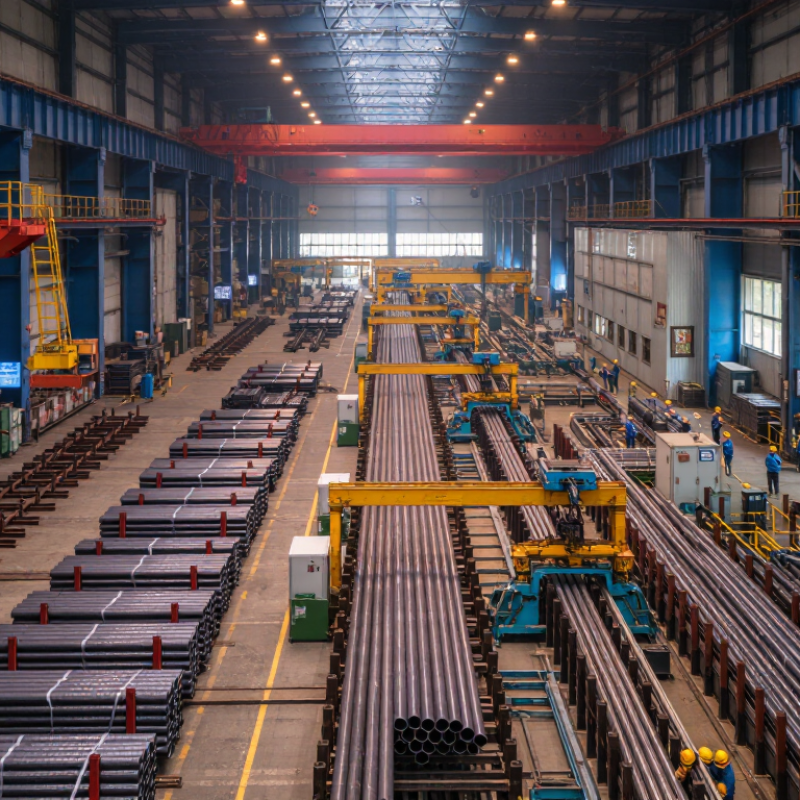
Mild Steel Pipe: Definition, Grades, and Common Applications
Mild steel pipe is a carbon steel tube with a relatively low carbon content, usually offering good weldability and easy fabrication. It is not stainless steel, so exposed surfaces need suitable protection against moisture and corrosion. Its combination of strength, cost control, and workable cutting makes it common in industrial projects.
Grades vary by specification and region. ASTM A53 Grade B is widely used for general piping, while ASTM A106 Grade B suits higher-temperature service. European projects may specify grades such as S235 or S275 for structural purposes. Grade names alone are not enough. Buyers should check chemical composition, yield strength, wall thickness, testing requirements, and the mill test certificate. A neat label can still hide a mismatch.
Common applications include water lines, compressed-air systems, handrails, frames, agricultural equipment, and temporary construction supports. Black steel pipe is often selected for indoor or protected installations. Galvanized pipe provides better surface protection in damp locations, but the coating and threading quality require inspection. For global purchasing, confirm outside diameter, schedule or thickness, length tolerance, end finish, and packing method. Small differences can affect installation costs. Pipes intended for pressure service also need the correct design calculation and inspection level. Mild steel is practical, but it is not suitable for every fluid, temperature, or outdoor environment.
China’s Mild Steel Pipe Manufacturing Landscape
China Top Mild Steel Pipe Manufacturers for Global Buyers
China’s Mild Steel Pipe Manufacturing Landscape
China’s mild steel pipe manufacturing landscape is shaped by enormous upstream capacity. The World Steel Association reports that China produced 1,019.1 million tonnes of crude steel in 2023. That represented about 54% of global output, measured at 1,888.2 million tonnes. This scale supports broad access to hot-rolled coil, welded pipe, and fabrication services.
Scale matters. Yet it can also hide uneven quality systems. The OECD Steel Outlook 2024 highlights excess capacity, softer demand, and continuing trade uncertainty across steel markets. For buyers, a low quotation should never replace technical verification. Supplier reviews should examine furnace sources, forming equipment, welding procedures, and traceability.
Data needs context. Mill certificates should match heat numbers, chemical composition, tensile results, and dimensional records. Independent checks may include ultrasonic testing, hydrostatic testing, coating thickness, and random wall measurements. ASTM A53 and EN 10217 involve different product requirements. ISO 9001 addresses management systems, not pipe performance. Buyers should also confirm outside diameter, wall tolerance, end finishing, packing methods, and loading protection. The picture is not perfectly clean. Some factories present strong documentation but weak process consistency. That assumption deserves challenge through witnessed inspections, retained samples, and repeat-order performance.
China’s Mild Steel Pipe Manufacturing Landscape
This chart compares the specified minimum yield strength of widely traded mild and carbon steel pipe grades used in international procurement. The values are based on commonly referenced requirements in ASTM A53, ASTM A106, API 5L, EN 10255, and JIS G3454 standards. Actual pipe selection should also consider wall thickness, outside diameter, manufacturing process, pressure rating, testing requirements, and the applicable standard edition.
Unit: MPa. Reference standards: ASTM A53 Grade B, ASTM A106 Grade B, API 5L Grade B, EN 10255 S195T, and JIS G3454 STPG 370.
Key Criteria for Evaluating Chinese Pipe Manufacturers
China Top Mild Steel Pipe Manufacturers for Global Buyers
Evaluating Chinese mild steel pipe manufacturers requires more than comparing quotations. The World Steel Association reported China produced 1.019 billion tonnes of crude steel in 2023, approximately 54% of global output. This scale offers broad production experience, but capacity does not automatically prove reliability. Buyers should review factory audits, furnace records, welding procedures, and recent export references. Ask for heat numbers that connect the pipe to its mill certificate. Small details matter.
Technical compliance should be checked against the project’s required standard, dimensions, grade, coating, and testing method. Independent inspection can verify wall thickness, tensile strength, chemical composition, and hydrostatic results. The OECD Steel Outlook 2024 also warns that global steel overcapacity remains a serious industry concern. Therefore, unusually low prices deserve careful questioning. They may reflect efficient production, but they may also signal thinner margins, weaker inspection, or unclear material origins.
Tips: Request three recent test reports, not one sample. Compare tolerances with the purchase specification. Confirm whether inspection occurs before shipment. Check packaging photographs, bundle markings, and loading procedures. A manufacturer that answers slowly may still produce acceptable pipes; a confident sales promise is not technical evidence. I have seen purchasing teams focus on surface appearance and miss ovality or inconsistent wall thickness. That mistake can become expensive during installation. Use a documented scorecard covering quality, traceability, production capacity, communication, and corrective-action history. Reassess the supplier after the first delivery.
Leading Manufacturer Profiles and Product Capabilities
China’s mild steel pipe manufacturers serve construction, water systems, machinery, and general fabrication markets. A reliable supplier profile should show factory experience, production scale, and export history. It should also identify pipe grades, sizes, wall thicknesses, and available surface treatments. Vague capability statements deserve careful questioning.
Many established factories operate electric resistance welding lines, cutting machines, and automated forming equipment. Some also provide hot-dip galvanizing, painting, threading, and customized end preparation. Production teams usually inspect dimensions, weld appearance, tensile strength, and hydrostatic performance. Testing records matter. So does traceability.
Capacity alone is not enough. Buyers should review sample reports, inspection procedures, packaging methods, and loading photographs. A manufacturer producing 10,000 tons monthly may still struggle with small custom orders. Another factory may offer excellent technical support but lack flexible shipping arrangements. I have seen specifications change between quotation and production, usually because drawings were incomplete. Clear purchase documents reduce that risk. Ask how the factory handles rejected batches, delayed materials, and corrective actions. Small details reveal operational maturity. Supplier claims should be checked against physical samples and independent inspections. Mistakes happen. Reliable manufacturers explain them directly and document the remedy.
Export Standards, Quality Checks, and Global Buyer Considerations
China’s mild steel pipe manufacturers serve buyers across construction, water, energy, and general fabrication markets. Export quality begins with matching the pipe to the destination’s required standard. Common specifications may include ASTM, EN, or ISO requirements, but buyers should confirm the exact edition and grade before ordering. A familiar standard can still hide important differences.
Quality checks should cover outside diameter, wall thickness, straightness, surface condition, and pipe length. Chemical composition and tensile results should appear on a traceable mill test certificate. Heat numbers must match the pipes, bundles, and inspection records. Hydrostatic testing may be required for pressure applications. Visual checks also matter. Small dents, uneven ends, or deep rust can create costly delays. Third-party inspection adds confidence, although it cannot replace clear technical instructions.
Global buyers should review export packing, marking, loading photos, commercial invoices, certificates of origin, and shipping documents. Bundles need secure steel straps and protection from seawater exposure. Confirm the trade term, port, lead time, minimum order quantity, and customs requirements in writing. In practical sourcing, buyers sometimes focus too heavily on price. That is a mistake. A cheaper pipe may have inconsistent thickness or incomplete records. Certificates are useful, but they are not perfect proof. Random testing and independent verification remain sensible, especially for large orders. Mistakes can still occur when drawings, tolerances, or destination rules are unclear.
