
en es

10 Tips for Buying 304 Stainless Steel Plate?

Buying a 304 Stainless Steel Plate looks straightforward until specifications, surface finish, and certification begin to differ. A plate may appear bright and flawless under warehouse lighting, yet its thickness can vary beyond your project tolerance. Careful purchasing starts with understanding the application, not just choosing the lowest quoted price.

This guide shares ten practical tips drawn from common fabrication and procurement experience. It explains how to verify chemical composition, thickness, dimensions, finish, edge condition, and corrosion requirements. Mill test certificates matter. So does supplier traceability. A reliable seller should identify the material grade, production standard, heat number, and inspection details. Ask for these records before payment, especially when the plate will support pressure, food-processing, architectural, or outdoor applications.

Small details can prevent expensive rework. Check whether the quoted thickness is nominal or actual. Confirm if the surface uses a 2B, BA, or brushed finish. Review packaging before shipment; scratched corners and wet wrapping can create avoidable problems. Delivery timing also deserves attention, because custom cutting may add days. One overlooked issue is welding. 304 stainless steel usually performs well, but heat exposure can affect appearance and corrosion resistance. The correct welding procedure still matters.

No checklist replaces engineering judgment. Some applications may require another stainless-steel grade, tighter testing, or a documented standard. I have seen buyers focus heavily on price and regret ignoring inspection evidence. That lesson is easy to remember. Use these tips as a practical buying framework, then confirm critical requirements with a qualified engineer, inspector, or materials specialist.
10 Tips for Buying 304 Stainless Steel Plate?

Identify the Required Grade, Dimensions, and Quantity

Before buying 304 stainless steel plate, confirm the required grade for the service environment. Standard 304 suits many indoor, food-processing, architectural, and general fabrication applications. However, 304L may be more practical for welded assemblies because its lower carbon content can reduce weld-related corrosion risks. Check the material test certificate, chemical composition, mechanical properties, and applicable production standard. Do not rely on “stainless steel” written on a quotation.

Measure the finished parts carefully. Specify plate length, width, thickness, surface finish, flatness, and permitted tolerances. A drawing may call for a 6 mm plate, but actual thickness tolerance still matters during machining. Clarify whether you need hot-rolled plate, cold-rolled sheet, or cut-to-size pieces. Small details matter. A brushed finish and a mill finish are not interchangeable in visible installations.

Calculate quantity from the cutting layout, not only from total weight. Include nesting efficiency, edge trimming, test pieces, and possible fabrication mistakes. For example, ten panels measuring 1,000 by 500 mm may require more than five square meters after cutting gaps and edge loss. Ask for individual piece dimensions and bundle weight. I have seen buyers order by tonnage and later discover unusable remnants. That estimate looked efficient, but it was not. Allowing a modest reserve can protect the schedule, though excessive stock ties up money and storage space.

Verify Chemical Composition, Standards, and Material Certification

When buying 304 stainless steel plate, chemical verification should come before price comparison. The material normally contains about 18% chromium and 8% nickel, but the exact limits depend on the selected standard. Ask for the heat analysis, not only a general product description. Check carbon, manganese, silicon, phosphorus, sulfur, chromium, nickel, and nitrogen values against the stated specification.

Standards make the purchase measurable. ASTM A240/A240M and EN 10088 are common references, but they are not interchangeable in every detail. Confirm the required standard, plate thickness, surface finish, flatness, and mechanical properties before placing an order. A certificate should identify the heat number and connect it to the plate markings. Without that link, traceability becomes weak.

Request a material test certificate, such as an EN 10204 3.1 document, when project control requires it. Review the supplier’s signature, testing methods, and inspection results carefully. Independent testing can verify composition when the application is critical. A common mistake is trusting a certificate without checking its numbers. I would recheck them. Even small chemistry differences may affect corrosion resistance, forming behavior, or welding performance. Keep copies of certificates, purchase specifications, and receiving records for future inspection.

Evaluate Surface Finish, Flatness, Thickness, and Fabrication Quality

10 Tips for Buying 304 Stainless Steel Plate?

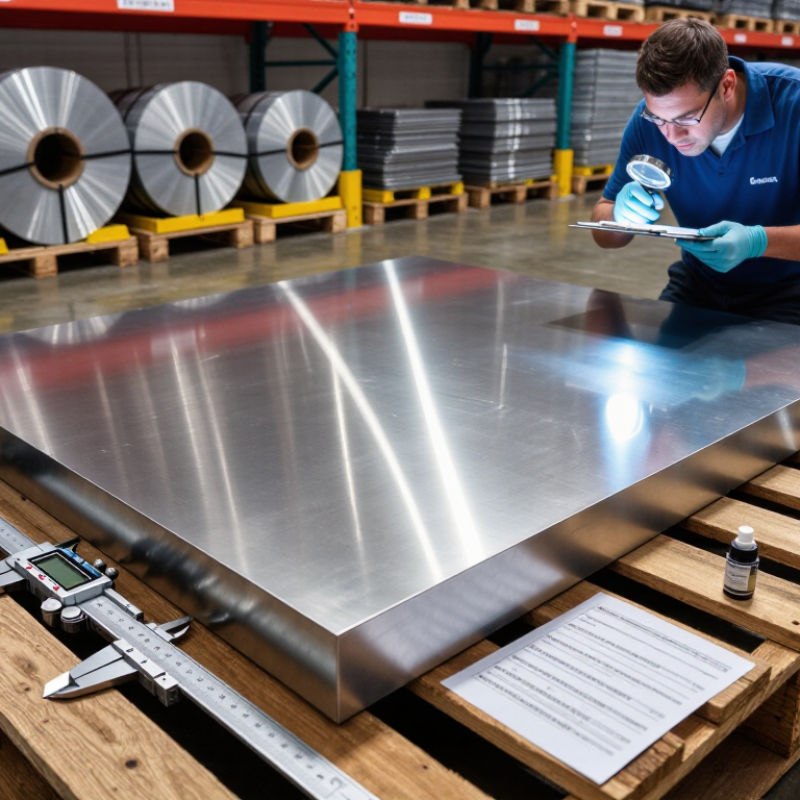
Buying 304 stainless steel plate requires more than checking the grade. Inspect the surface under clear, angled light. Look for pits, rolled-in scale, scratches, and uneven polishing. A clean No. 2B finish should appear consistent across the sheet. Do not judge only from a small sample. Ask for surface-finish records and photographs from several areas. Check flatness on a level table, not by eye. A 2-metre straightedge can reveal rocking, edge lift, or center waves. Confirm the stated tolerance against ASTM A480/A480M or the agreed purchasing specification. I have seen plates pass visual checks yet fail during laser cutting.

Measure thickness at multiple points, including corners and the center. Record actual readings, not only nominal values. Request the mill test certificate, heat number, chemical analysis, and mechanical results. EN 10204 inspection documentation can strengthen traceability. According to the World Stainless 2023 statistical release, global stainless production reached about 58.4 million tonnes, making documented quality control increasingly important across complex supply chains. Ask how the plate was leveled, cut, and protected after production. Sharp burrs, distorted edges, and plastic dents indicate weak handling. Fabrication quality matters. Welding preparation, shearing accuracy, and cut-edge condition can affect later costs. One imperfect detail remains: supplier photos may hide shallow defects. Independent inspection is safer for critical orders.

Compare Suppliers, Pricing, Lead Times, and Order Requirements

10 Tips for Buying 304 Stainless Steel Plate

Compare suppliers beyond the lowest quoted price. Check their production history, quality system, and ability to provide traceable mill test certificates. Confirm the grade, thickness, width, length, surface finish, and dimensional tolerances before requesting a formal offer. “304” alone is not enough. Ask whether the plate meets the required ASTM, EN, or equivalent specification. A certificate should match the heat number stamped on the material. Request recent sample documents if your project requires strict inspection.

Review the price basis carefully. Does it include cutting, edge preparation, packaging, taxes, freight, or only the raw plate? Compare price per kilogram and total delivered cost, not just the unit figure. Ask how long the quotation remains valid because alloy surcharges can change. Lead time also needs detail. Separate production time from inspection, packing, and transport. A short promise may exclude real shipping delays. Get the delivery date in writing. It helps.

Clarify minimum order quantity, payment terms, cutting charges, and acceptable order tolerances. Confirm whether partial shipments are allowed and how damaged plates will be handled. Strong packaging matters, especially for brushed or polished surfaces. Consider a pre-shipment inspection for expensive orders. I would also allow a small schedule buffer; perfect forecasts rarely survive real production. One overlooked detail can erase an attractive price. Make every assumption visible before approval.

10 Tips for Buying 304 Stainless Steel Plate

Compare suppliers, pricing, lead times, and order requirements before placing an order. The chart below uses indicative purchasing benchmarks for 304 stainless steel plate and is intended for early-stage planning rather than a live quotation.

Supplier Profile Typical Order Requirement Best Fit
Local stockholder Small lots from approximately 0.5 metric tons; standard sizes usually available Urgent or low-volume projects
Regional service center Commonly around 2 metric tons; cutting and finishing may be available Regular industrial orders
Direct mill export Often approximately 20 metric tons or more; production scheduling required Large-volume cost optimization

Buying tip: confirm ASTM or EN grade requirements, thickness tolerance, surface finish, test certificates, packaging, Incoterms, freight costs, and whether the quoted price includes cutting, export documentation, and taxes.

Inspect Documentation, Packaging, Delivery, and After-Sales Support

10 Tips for Buying 304 Stainless Steel Plate?

Buying 304 stainless steel plate requires evidence, not persuasive promises. Ask for an EN 10204 3.1 certificate with the heat number, plate number, grade, thickness, chemistry, tensile results, and surface finish. Compare the reported chemistry with ASTM A240 or the applicable specification. Request independent testing for critical orders. The International Stainless Steel Forum reported 58.4 million tonnes of global stainless crude steel production in 2023. Such scale makes traceability essential. A perfect certificate cannot replace inspection. Do not guess.

Before dispatch, check whether plates are separated with paper or plastic film. Moisture barriers, dry packaging, edge protection, and strong wooden skids reduce scratches and transit corrosion. Ask for loading photographs, package counts, net weights, and visible heat numbers. UNCTAD’s Review of Maritime Transport reports that ships carry over 80% of world merchandise trade by volume. Delivery records therefore matter. Confirm the agreed Incoterm, shipment date, container condition, and document list before loading. Keep evidence.

After-sales terms should define response time, inspection procedures, replacement options, and claim deadlines. Require support for shortages, wrong dimensions, damaged surfaces, or mismatched certificates. A supplier should retain traceability records after delivery. Share photographs and independent measurements when problems arise. Do not rely on verbal assurances. One weakness remains: buyers sometimes inspect documents carefully but ignore packaging until arrival. That habit deserves correction.

10 Tips for Buying 304 Stainless Steel Plate? - Inspect Documentation, Packaging, Delivery, and After-Sales Support

No. Buying Checkpoint What to Verify Practical Acceptance Criteria Required Evidence Risk Level
1 Confirm the 304 Grade Specify 304 or 304L, the applicable product standard, surface finish, thickness, width, length, and quantity before placing the order. The purchase order should identify the grade and standard clearly, such as ASTM A240 or EN 10088-2, rather than using only the term “stainless steel.” Approved purchase specification and order confirmation. Medium
2 Inspect the Material Test Certificate Check the heat number, chemical composition, mechanical properties, product dimensions, heat-treatment condition, and inspection results. The heat number on the certificate must match the identification stamped or tagged on the plate. Values must comply with the specified standard and grade. Original or traceable MTC, linked to the shipment and heat number. High
3 Verify Chemical Composition Confirm chromium and nickel content and review carbon, manganese, silicon, phosphorus, and sulfur limits against the selected standard. For ASTM A240 Type 304, typical specified ranges include approximately 17.5–19.5% chromium and 8.0–10.5% nickel; always use the current applicable standard. Heat-analysis report or independent positive material identification test. High
4 Check Thickness and Flatness Measure thickness at several points away from edges and inspect the plate for waviness, buckling, dents, and excessive edge deformation. Measurements must remain within the tolerance stated in the purchase order and applicable dimensional standard; do not rely on a single measurement. Calibrated micrometer readings, inspection report, and dimensional tolerance reference. Medium
5 Review Surface Finish Confirm whether the required finish is 2B, No. 1, BA, brushed, or another specified finish. Inspect for scratches, pits, scale, stains, and embedded iron. The finish must match the approved sample or written specification. Surface defects should not exceed the agreed visual acceptance level. Approved sample, surface inspection report, and photographs before dispatch. Medium
6 Confirm Testing and Traceability Determine whether third-party inspection, ultrasonic testing, PMI, or other testing is needed for the intended application. Every plate or bundle should remain traceable to its heat number, inspection record, and packing list throughout delivery and fabrication. Inspection and test plan, test reports, heat-number records, and bundle tags. High
7 Inspect Packaging Protection Check whether plates are protected from moisture, seawater, impact, abrasion, and contact with carbon-steel materials during handling and transport. Packaging should be dry, stable, securely banded, suitable for the transport route, and clearly marked with grade, size, quantity, and heat number. Packing list, packaging photographs, shipping marks, and loading inspection record. Medium
8 Control Delivery and Shipping Documents Compare the delivered quantity, dimensions, bundle count, shipping marks, delivery date, and transport documents with the purchase order. No visible transport damage, missing bundles, wet packaging, incorrect dimensions, or mismatched heat numbers should be accepted without written deviation approval. Bill of lading or delivery note, packing list, receiving report, and damage photographs. High
9 Evaluate Processing Compatibility Confirm that the plate is suitable for cutting, forming, welding, polishing, food-contact service, or corrosion exposure as required by the project. For welding or severe corrosion service, review the need for 304L, controlled heat input, post-fabrication cleaning, and passivation. Fabrication procedure, welding requirements, application specification, and corrosion-service assessment. Medium
10 Assess After-Sales Support Clarify the process for nonconformities, replacement, credit, technical questions, document corrections, and claims for transit damage. Written response times, claim requirements, escalation contacts, and corrective-action procedures should be agreed before shipment. Warranty or claim terms, service procedure, response-time commitment, and corrective-action template. Medium

Note: Acceptance limits should always be based on the current edition of the specified material standard, the purchase order, and the application requirements.

Get a quote
Open chat
1
Hi! How can we help you?
Chat with Pelican Containers