
en es

How to Source Custom Stainless Steel Coil in 2026?

Sourcing Custom Stainless Steel Coil in 2026 requires more than comparing mill prices. According to worldstainless’ Stainless Steel in Figures 2024, global crude stainless steel production reached approximately 58.4 million tonnes in 2023. This scale creates choice, but also confusion. Buyers must evaluate grade, thickness, width, surface finish, edge condition, temper, and allowable tolerances. Small differences can affect stamping performance, welding quality, and final appearance.

CRU’s Stainless Steel Market Outlook continues to emphasize raw-material volatility, especially for nickel and chromium. That volatility can change quotations quickly. A low price may exclude slitting, protective film, testing, or export documentation. It may also hide a wider tolerance. Request mill test certificates, heat numbers, inspection records, and clear Incoterms before approval. Verify them against the coil label and packing list. Simple checks matter.

Edwin Basson, Director General of worldstainless, has stated, “Stainless steel is a material that is infinitely recyclable and can be recycled without any loss of quality.” That principle supports long-term material value, but responsible sourcing still requires evidence. Ask whether the supplier can provide recycled-content information, consistent quality, and traceable production data. An attractive sample is not enough. Customization can fail quietly when specifications remain vague. This guide examines supplier qualification, grade selection, cost control, lead times, and quality risks for 2026. No checklist is perfect. Your application must decide what deserves the closest scrutiny.
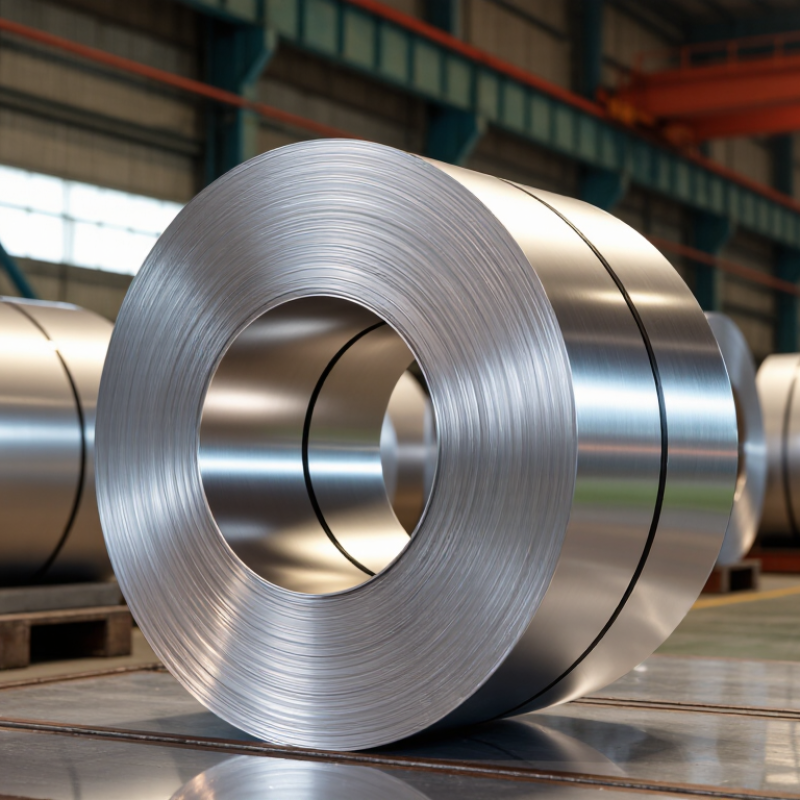
How to Source Custom Stainless Steel Coil in 2026?

Define Custom Stainless Steel Coil Requirements

Define Custom Stainless Steel Coil Requirements

A custom stainless steel coil starts with a measurable application, not a vague grade request. Specify the environment, forming method, operating temperature, and contact media.

World Stainless reported about 62.2 million tonnes of crude stainless steel production in 2024. That scale does not make every grade interchangeable. Grade 304 may suit general fabrication, while chloride exposure can require a higher-molybdenum option.

Write the details into a purchase specification. Include thickness, width, inside diameter, coil weight, surface finish, edge condition, hardness, and dimensional tolerances.

Reference ASTM A480/A480M or EN 10088 where appropriate. Request a material test certificate, heat number, chemical analysis, and mechanical results.

USGS Mineral Commodity Summaries 2025 estimated global nickel mine production at roughly 3.7 million metric tons in 2024. Nickel content can influence both grade selection and price risk.

I sometimes over-specify tolerances; that can raise cost without improving performance.

Tips:

Confirm the final fabrication route before ordering. Ask whether the coil will be slit, stamped, rolled, or welded.

Test a sample under real forming conditions. A bright finish is not automatically a corrosion solution.

Also define acceptable coil telescoping, weld marks, packaging, and traceability.

Small omissions become expensive disputes.

Compare Stainless Steel Grades, Finishes, and Dimensions

How to Source Custom Stainless Steel Coil in 2026?

Choosing the correct stainless steel grade is the first practical decision. Grade 304 suits many indoor, food-processing, and general fabrication projects. Grade 316 offers better resistance in coastal or chemical environments because of its molybdenum content. Grade 430 costs less, but it usually provides lower corrosion resistance. Confirm the required mechanical properties, surface condition, and certification before ordering. A mill test certificate should match the delivered coil, not merely the quotation.

Tips: Define the application clearly. Specify thickness, width, coil weight, inner diameter, outer diameter, and allowable tolerances. Also state whether the coil will be cut, stamped, welded, or formed. Small dimensional differences can create serious production waste. They often seem harmless.

Finish selection deserves equal attention. A 2B finish provides a smooth, practical surface for many industrial uses. BA offers a brighter appearance, while No. 4 brushed finishes can hide minor handling marks. Request physical samples or approved surface standards. I have seen attractive samples fail during actual production because the finish changed after forming. This is easy to overlook.

Review edge condition, flatness, packaging, and moisture protection with the supplier.

Even a strong grade can disappoint when the coil arrives with damaged edges or inconsistent thickness. Leave room for inspection, because specifications are sometimes clearer on paper than on the factory floor.

Evaluate Suppliers, Certifications, and Manufacturing Capabilities

When sourcing custom stainless steel coil in 2026, I treat supplier evaluation as a production audit, not a price comparison. The International Stainless Steel Forum reported about 62.6 million tonnes of global stainless crude steel output in 2024. Traceability matters. Ask for heat numbers, grade, surface finish, thickness tolerance, and the original mill test certificate. Do not accept a generic PDF. Verify chemistry, yield strength, tensile strength, and elongation against ASTM A240 or EN 10088 requirements. Independent PMI testing on arrival provides inexpensive insurance for critical applications.

Certification needs context. ISO 9001 confirms a quality-management system, but it does not prove every coil meets your drawing. ISO’s 2023 survey recorded more than 1.2 million ISO 9001 certificates worldwide, so a certificate logo alone is weak evidence. Check ISO 14001, calibration records, nonconformance logs, audit dates, and certificate scope. Ask whether the supplier controls melting, hot rolling, annealing, pickling, slitting, and edge finishing internally. Then request a sample coil or test strip. Measure camber, burr height, flatness, and coil weight. Capability claims can be slippery. Reported capacity is not reserved capacity. World Steel Association data placed global crude steel production near 1.88 billion tonnes in 2024, reminding buyers that broad market volatility can affect stainless inputs. I would also question unusually short lead times; sometimes the promise is better than the process.

Request Quotes and Verify Quality, Lead Times, and Costs

When sourcing custom stainless steel coil in 2026, send a precise RFQ. Include grade, thickness, width, surface finish, edge condition, coil weight, inner diameter, and required standard. State whether you need 304, 316L, or another grade. A vague request invites vague pricing. It can also create expensive rework.

Ask suppliers to separate base metal, alloy surcharge, processing, packaging, freight, and testing costs. The International Stainless Steel Forum reported about 58.4 million tonnes of global crude stainless production in 2023. That scale does not guarantee your preferred gauge will be available. Request the mill location, production slot, minimum order quantity, and quote validity period. Confirm whether lead time starts after deposit, drawing approval, or raw-material allocation. These details often change the real delivery date.

Quality checks should match the application. Request a heat-number traceable mill test certificate, preferably EN 10204 3.1, plus dimensional and surface inspection records. ASTM A240 or EN 10088 may support specification control, but they do not replace independent inspection. Verify chemical composition, tensile results, thickness tolerance, and finish under suitable lighting. World Steel Association outlooks have repeatedly highlighted uneven regional demand, so freight and scheduling risks deserve separate pricing. I would not trust an attractive quote without a written tolerance table. Small omissions matter. A sample coil may look excellent, yet slit edges or coil shape can fail production. Include corrective-action terms before approval.

How to Source Custom Stainless Steel Coil in 2026?

Compare common stainless steel grades by indicative production lead time and normalized material-cost index before requesting quotations. These planning benchmarks apply to standard mill-finish coil and should be verified with current supplier RFQs, mill certificates, inspection records, and Incoterms.

Cost index: 304 = 100. Lead times are indicative business-day planning values for custom slitting, thickness, width, surface finish, and export documentation. Confirm chemistry, mechanical properties, dimensional tolerances, surface condition, packaging, delivery date, and total landed cost in the final quotation.

Finalize Contracts, Inspection Plans, and Delivery Terms

Custom stainless steel coil sourcing in 2026 requires more than comparing mill prices. The International Stainless Steel Forum reported 62.2 million tonnes of stainless crude steel production in 2024, a 7% annual increase. This growth makes supplier capacity, alloy control, and delivery reliability important contract issues.

Specify grade, thickness, width tolerance, coil weight, surface finish, edge condition, and core dimensions. Include chemical limits and mechanical requirements from the agreed ASTM or EN specification. The contract should define test certificates, heat numbers, sampling frequency, and rejection procedures. Require independent inspection when order value or application risk is high. Inspectors should verify markings, dimensions, surface quality, packaging, and corrosion protection before loading. Small details matter.

A realistic inspection plan should state who pays, when notice is given, and how defects are corrected. Do not rely on certificates alone. OECD analysis projects global steel excess capacity may reach about 721 million tonnes by 2027, increasing the need to screen suppliers carefully. Delivery terms must identify the Incoterm, loading port, insurance responsibility, customs documents, and delay remedies. Add a shipment window, not only a target date. Keep buffer time.

I would also request production photographs and sealed sample records. That step feels old-fashioned. It still helps. One weakness remains: forecasts can change quickly, so overly strict clauses may create unnecessary disputes. Review freight assumptions, inspection dates, and currency exposure before signing.

How to Source Custom Stainless Steel Coil in 2026? - Finalize Contracts, Inspection Plans, and Delivery Terms
sourcing Dimension Recommended Requirement Contract or Inspection Evidence Typical 2026 Planning Data Priority
1. Stainless Steel Grade Specify the exact grade and applicable standard, such as 304/304L, 316/316L, 430, or duplex 2205. State whether dual certification is acceptable.
  • Material Test Certificate (MTC)
  • Heat or lot number traceability
  • Chemical composition and mechanical properties
304/304L and 316/316L are widely used austenitic grades; 316/316L is generally selected where improved chloride and corrosion resistance is required. Required
2. Product Dimensions Define thickness, width, inner diameter, outer diameter, coil weight, edge condition, and allowable dimensional tolerances.
  • Approved dimensional drawing
  • Thickness and width inspection records
  • Coil identification label
Common cold-rolled coil thickness ranges are approximately 0.20–3.00 mm, while width is often specified from 600–1,500 mm depending on the processing line. Required
3. Surface Finish Select the finish according to the final application: 2B, BA, No. 4, brushed, polished, or custom surface roughness.
  • Reference sample or approved visual standard
  • Surface roughness measurement where applicable
  • Inspection for scratches, pits, roll marks, and stains
2B is a common cold-rolled finish; No. 4 is commonly used for architectural and appliance applications; roughness limits should be stated numerically when critical. Required
4. Applicable Standards List the governing material and product standards, such as ASTM A240/A240M, EN 10088-2, or JIS G4305, and identify the controlling standard if multiple standards are referenced.
  • Standard edition and revision date
  • Compliance statement on the MTC
  • Deviation approval procedure
Use one primary standard for acceptance and clearly document any equivalent-grade comparison to avoid disputes over chemistry or tolerances. Required
5. Contract Quantity State total metric tons, number of coils, permitted quantity variation, minimum coil weight, and whether partial shipment is allowed.
  • Purchase order quantity
  • Coil-by-coil packing list
  • Weighing records or certified scale tickets
A practical quantity tolerance is often negotiated at ±5% for standard production orders, but the final percentage should match the buyer’s production plan. Commercial
6. Inspection and Testing Plan Approve an Inspection and Test Plan (ITP) before production, defining hold points, witness points, sampling frequency, acceptance criteria, and responsible parties.
  • Pre-production document review
  • In-process dimensional checks
  • Final visual, chemical, mechanical, and packaging inspection
For critical applications, use 100% visual inspection and documented sampling for dimensions, chemistry, tensile properties, hardness, and surface roughness. Required
7. Third-Party Inspection Define whether an independent inspection agency is required and whether inspection costs are included in the quoted price.
  • Inspection notification period, commonly 5–7 working days
  • Inspection report
  • Nonconformity and corrective-action record
For new suppliers or high-value orders, a pre-shipment inspection is commonly scheduled after production and before cargo release. Recommended
8. Packaging and Protection Require moisture-resistant wrapping, corrosion protection, edge protectors, secure strapping, suitable pallets or skids, and handling marks.
  • Packaging specification
  • Photographs before loading
  • Package and coil identification
Packaging should prevent condensation, telescoping, edge damage, and movement during road, rail, or ocean transport. Required
9. Production Lead Time Make the lead time start date explicit: contract signature, approved drawings, deposit receipt, or final technical approval.
  • Production schedule
  • Milestone updates
  • Delay notification requirement
Typical planning lead time is approximately 4–10 weeks for standard cold-rolled coil; custom slitting, special finishes, or small quantities may extend the schedule. Commercial
10. Delivery Terms Select the Incoterms® 2020 rule and named place, such as FCA, FOB, CIF, or DAP. Define when risk, freight, insurance, and customs responsibility transfer.
  • Commercial invoice
  • Packing list and transport document
  • Certificate of origin where required
For containerized cargo, FCA is often suitable when the buyer controls the main carriage; CIF includes cost, insurance, and freight to the named port but not import clearance. Required
11. Shipment Documentation List every document required before shipment and identify the submission deadline for document review.
  • Commercial invoice
  • Packing list
  • Bill of lading or sea waybill
  • MTC and inspection report
Send scanned shipping documents for review before originals or electronic release instructions are finalized. Required
12. Payment and Security Define currency, payment milestones, bank charges, retention or letter-of-credit terms, and conditions for releasing the final balance.
  • Pro forma invoice
  • Approved payment schedule
  • Documentary compliance checklist
A commonly negotiated structure is a deposit at order confirmation with the balance payable against compliant shipping documents, subject to buyer approval. Commercial
13. Nonconformance and Claims Establish notice periods, evidence requirements, replacement or credit options, responsibility for return freight, and limits for latent defects.
  • Nonconformance report
  • Photographs and test results
  • Corrective-action and disposition record
Record visible transport or surface damage promptly after receipt and preserve labels, packaging, and traceability documents until the claim is closed. Required
14. Sustainability and Compliance Request applicable declarations for recycled content, restricted substances, environmental management, and supply-chain due diligence when required by the destination market.
  • Material composition declaration
  • Environmental or product declaration where applicable
  • Regulatory compliance statement
Requirements vary by application and destination; include only verifiable claims supported by controlled records and current regulatory references. Recommended
15. Final Contract Approval Attach the technical specification, approved drawing, ITP, packaging standard, delivery schedule, Incoterms® rule, and agreed remedies to the signed contract.
  • Signed contract and purchase order
  • Revision-controlled attachments
  • Authorized deviation log
Do not rely on quotation notes alone; every critical requirement should appear in a signed, revision-controlled contract package. Required
Planning note: Final specifications should be confirmed against the buyer’s application, destination-market regulations, applicable material standards, and the agreed Incoterms® 2020 rule before contract signature.
Get a quote
Open chat
1
Hi! How can we help you?
Chat with Pelican Containers