What Is Overlay Welded Pipe and Where Is It Used?
Overlay Welded Pipe is a steel pipe with a corrosion-resistant alloy bonded to its internal or external surface. The overlay may contain nickel, chromium, stainless steel, or other engineered alloys. It protects the structural pipe while preserving its pressure-bearing strength.
Dr. John C. Lippold, a respected welding metallurgy expert, offers a useful principle: “The weld metal must suit the service environment, not merely the deposition process.” That point matters. A pipe carrying hot sour gas faces different risks than one transporting seawater, abrasive slurry, or concentrated chemicals. Material selection cannot be based on price alone.
The manufacturing process usually involves controlled welding, often using strip cladding, wire arc welding, or related deposition methods. Heat input, dilution, layer thickness, and surface preparation require close control. Small defects can become serious under pressure and repeated thermal cycling. They should not be ignored.
Inspection is practical, not decorative. Technicians may check chemical composition, bond quality, hardness, wall thickness, and surface discontinuities. Ultrasonic testing, visual examination, and positive material identification can support reliable acceptance decisions. However, performance still depends on design, welding procedures, installation, and operating conditions. No overlay is universally suitable.
Overlay Welded Pipe is commonly used in oil and gas gathering systems, refineries, chemical plants, power stations, desalination facilities, and mining pipelines. Inside a pipe, the alloy layer may appear only a few millimeters thick. Its role is much larger: reducing corrosion, erosion, maintenance interruptions, and premature replacement. Yet engineers should review every application carefully. A strong-looking overlay can still fail when the environment is misunderstood.
What Is an Overlay Welded Pipe?
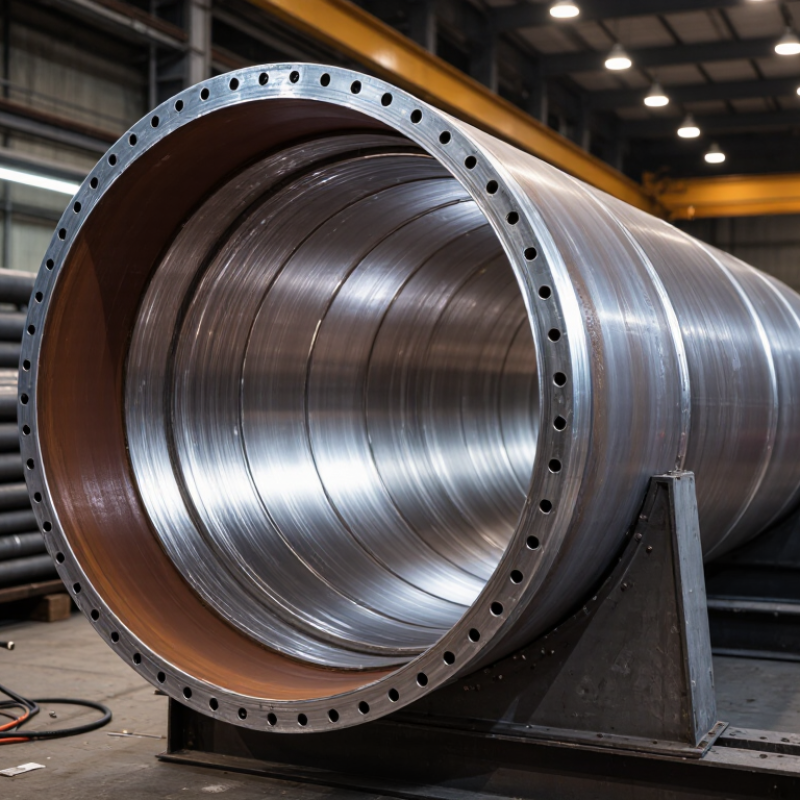
An overlay welded pipe combines a strong carbon-steel pipe with a corrosion-resistant alloy layer. The alloy is deposited onto the inner surface through controlled welding, creating a metallurgical bond rather than a loose liner. Common overlay materials include stainless steel, nickel alloys, and other corrosion-resistant grades. The steel body provides pressure strength. The overlay protects the bore.
In field projects, technicians inspect the surface with ultrasonic testing, positive material identification, and hardness checks. Welding procedures also require qualification under ASME Section IX, while API Specification 5LD supports requirements for corrosion-resistant alloy line pipe. The AMPP IMPACT study estimates that corrosion costs exceed US$2.5 trillion annually, equal to about 3.4% of global GDP. That figure explains the appeal of overlay technology in oil and gas gathering lines, chemical plants, power stations, and desalination systems.
Overlay welded pipe can reduce expensive alloy usage compared with manufacturing an entire pipe from nickel alloy. It also handles sour fluids, chlorides, and high-temperature service when designed correctly. But it is not a magic shield. Poor dilution control, incomplete coverage, or damaged weld areas can create weak points. Real projects need careful corrosion assessment, not optimistic assumptions. The design may save money, although inspection costs remain significant.
How Is Overlay Welding Applied to Pipe Surfaces?
Overlay welding applies a corrosion- or wear-resistant alloy onto the outer or inner pipe surface. The process begins with abrasive cleaning, dimensional checks, and removal of oil, rust, and moisture. A qualified welding procedure then controls heat input, travel speed, and shielding gas.
Common methods include submerged arc welding, gas metal arc welding, and plasma transferred arc welding. Operators deposit one or more alloy layers, often nickel-, chromium-, or cobalt-based. Each pass overlaps the previous bead, creating a dense protective surface.
Interpass temperature matters. Excessive heat can increase dilution and weaken corrosion resistance.
Inspection is practical and unforgiving. Technicians measure coating thickness, examine bead shape, and test for cracks or porosity using non-destructive methods. Procedure qualification should follow recognized requirements, such as ISO 15614-7 or applicable pressure-equipment codes. Small defects can become serious under pressure and cyclic loading.
US$2.5 trillion annually
The NACE IMPACT study estimated global corrosion costs at about US$2.5 trillion annually, equal to roughly 3.4% of global economic output. It also indicated that 15–35% of corrosion costs could be reduced through better management practices. That figure explains overlay welding’s appeal in pipelines, chemical processing, power generation, and slurry transport.
Yet overlay is not a universal fix. Poor surface preparation, uneven dilution, or residual stress can shorten service life. Real projects sometimes reveal design assumptions that looked acceptable on paper. Engineers should match alloy chemistry, pipe grade, temperature, flow velocity, and inspection access before selecting the overlay system.
Which Materials and Weld Layers Are Commonly Used?
Overlay welded pipe combines a structural pipe with a metallurgically bonded protective layer. The inner pipe commonly uses carbon steel or low-alloy steel for strength and cost control. The overlay faces the process fluid. It helps resist corrosion, erosion, heat, or combined damage. These pipes serve mining slurry, chemical processing, power, and energy systems. In a slurry line, elbows may develop deep grooves while straight sections remain smooth. That contrast often guides material selection.
Common overlay materials include stainless steels, nickel-based alloys, cobalt alloys, and chromium-rich iron alloys. Stainless steel suits many wet corrosive services. Nickel alloys handle severe chemicals and elevated temperatures. Chromium-rich alloys perform well against abrasive particles. Cobalt alloys can retain hardness during heating, but machining may be difficult. The correct choice depends on chloride level, pH, temperature, flow velocity, and solids content. A material chart alone is not enough.
Weld layers also have different functions. A buffer layer can reduce dilution from the base pipe. A corrosion-resistant layer then protects the surface. Wear applications may need one or several hardfacing layers. Thicker deposits can extend service life, yet they may increase residual stress and cracking risk. Qualified procedures control heat input, interpass temperature, and bead sequence. Ultrasonic testing and visual inspection help confirm bonding and surface condition. Small defects matter. Poor surface preparation can undermine an otherwise suitable alloy. The choice is not foolproof. Repair areas should be evaluated carefully, not accepted automatically.
What Are the Main Benefits of Overlay Welded Pipe?
What Is Overlay Welded Pipe and Where Is It Used?
Overlay welded pipe is a steel pipe covered with a corrosion-resistant alloy layer. The layer is applied through controlled welding, often on the inner surface. This design protects the base pipe while preserving its structural strength. In practical maintenance work, engineers select it for pipelines carrying abrasive slurry, seawater, chemicals, or hot process fluids. Typical locations include mining plants, power facilities, refineries, desalination systems, and industrial pumping stations.
The main benefit is longer service life under harsh conditions. The welded overlay resists corrosion, erosion, and certain high-temperature attacks better than ordinary carbon steel. It can reduce wall-thickness loss around elbows, reducers, and other turbulent areas. Less replacement. Fewer shutdowns. Maintenance teams may also reduce material use because a strong base pipe does not need to be made entirely from an expensive alloy. Careful welding can create a reliable metallurgical bond, which helps the lining remain stable during pressure changes and vibration.
However, overlay welded pipe is not a universal fix. Poor surface preparation, uneven thickness, or excessive heat can weaken performance. Selection must consider fluid chemistry, flow speed, operating temperature, and inspection requirements. Some projects also face higher initial fabrication costs. That trade-off deserves honest calculation. In the field, a lower purchase price can become expensive when corrosion causes repeated repairs. Experienced technicians usually verify overlay thickness with testing and inspect weld quality before installation.
What Is Overlay Welded Pipe and Where Is It Used?
Overlay welded pipe is a base pipe covered with a metallurgically bonded alloy layer to improve resistance to corrosion, abrasion, erosion, or high-temperature service.
The chart shows representative nominal overlay thicknesses commonly selected for different service objectives. Corrosion-resistant overlays are often thinner because they primarily protect the surface from chemical attack, while abrasion-resistant hardfacing is generally thicker to withstand material loss. Actual thickness depends on operating temperature, pressure, fluid composition, particle size, flow velocity, and required service life.
Main Benefits
- Improves resistance to corrosion, erosion, abrasion, and high-temperature degradation.
- Extends pipe service life without replacing the entire pressure-containing pipe.
- Reduces maintenance frequency, shutdown time, and material consumption.
- Allows the use of a strong, economical base pipe with a specialized surface alloy.
Where Is Overlay Welded Pipe Used?
Overlay welded pipe is used where ordinary steel pipe wears too quickly. A tougher alloy layer is welded onto the inner surface or outside diameter. This design protects the pipe while preserving a strong structural base. The result suits demanding service conditions.
Mining operations use it for slurry lines carrying sand, rock, and mineral particles. These particles can scour an unprotected pipe within months.
In cement plants, overlay welded pipe handles abrasive powders and hot process materials. Power stations also use it around ash-handling systems and coal transport lines.
The correct alloy depends on temperature, particle size, flow speed, and chemical exposure.
Oil and gas facilities may install it in pipelines exposed to corrosion, erosion, or sour production fluids. Chemical plants use it for transfer lines, elbows, and sections near pumps. Dredging equipment benefits from its resistance to sand-filled water. Waste-processing facilities can use it where mixed solids damage conventional steel.
Field experience shows that bends and reducers often fail earlier than straight pipe. They deserve closer inspection. Weld quality, overlay thickness, and heat-affected zones should be checked before installation. Ultrasonic testing can reveal weak bonding or uneven coverage.
A common mistake is choosing hardness alone. A very hard layer may crack under impact or thermal cycling. Service data must guide the final specification, even when the initial selection seems obvious.
