What Is a Mining Truck and How Does It Work?
What Is a Mining Truck and How Does It Work? This question reaches beyond size, speed, and impressive photographs. A Mining Truck is a specialized haulage machine built to move blasted rock, ore, or waste across challenging mine roads. Its wide tires cross uneven benches, while a reinforced frame carries loads that ordinary highway trucks cannot manage. The work looks simple. It is not.
Mining engineer Jeffrey K. Hustrulid offers a useful industry perspective: “Production is valuable only when the operation remains safe, controlled, and economically sound.” His statement captures the machine’s real purpose. A typical truck receives material from an excavator, then transports it to a crusher, stockpile, or dumping area. Diesel-electric systems convert engine power into wheel movement. Hydraulic brakes, retarding systems, cameras, and onboard monitoring help control the vehicle on steep grades. Dispatch software may also assign routes and track payloads.
The details matter. A loaded truck may climb slowly, with its engine working heavily and its tires gripping loose gravel. Operators watch temperatures, brake pressure, blind spots, and road conditions. Maintenance teams inspect suspension parts, wheel studs, fluid levels, and structural cracks. Small defects can become serious downtime.
Yet the technology is not flawless. Automation can reduce exposure to hazards, but it cannot remove every judgment call. A sensor may misread dust, and a smooth dashboard may hide worn components. Mining operations must balance productivity with inspection, training, and responsible planning. Understanding how a Mining Truck works means studying the whole system, not just the vehicle.
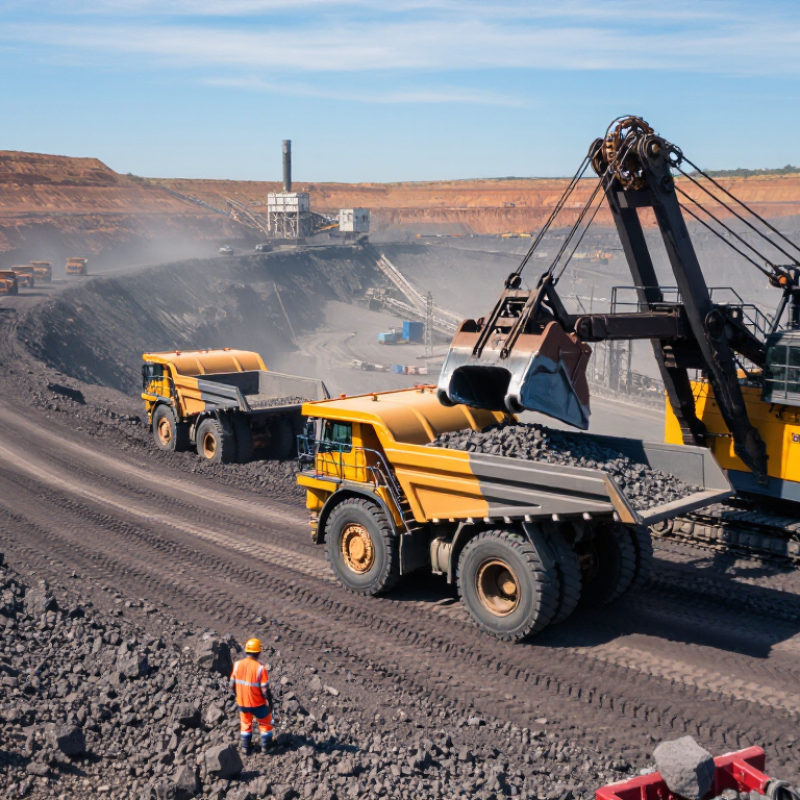
What Is a Mining Truck?
A mining truck is a heavy off-highway vehicle designed to move rock, ore, and overburden. It works mainly in open-pit mines, where haul roads connect loading areas with crushers, stockpiles, or waste dumps. Unlike highway trucks, it is built for extreme loads, steep gradients, rough ground, and repeated short cycles. Large tires, a reinforced frame, and a deep steel body help it survive harsh conditions. Payload capacity varies widely, from several dozen tonnes to well over 300 tonnes.
An excavator or shovel fills the truck body with blasted material. The operator then checks the load, route, brakes, and surrounding equipment before moving. Power comes from a diesel engine, an electric drive system, or both, depending on the design. During travel, the truck’s suspension absorbs uneven ground while traction systems help maintain control. At the dumping point, hydraulic cylinders raise the body and release the material. The truck then returns for another cycle. The machine is powerful.
Reliable work depends on more than engine size. Road drainage, tire temperature, visibility, and payload distribution can change performance quickly. Dust may hide other vehicles, while wet surfaces can increase stopping distance. Onboard monitoring systems provide useful data, but they do not replace physical inspections or trained judgment. A mining truck can carry an enormous load, yet small maintenance failures may create serious delays. Its design is impressive, but daily discipline still determines how safely and efficiently it works.
What Is a Mining Truck and How Does It Work?
Mining trucks are heavy-duty haul vehicles designed to transport blasted rock, ore, and overburden between an excavation site and a crusher, stockpile, or waste dump. Typical payload capacities range from about 40 to 360 metric tonnes, with larger trucks requiring wider haul roads, stronger loading equipment, and more powerful braking systems.
The chart uses representative payload capacities for common mining truck classes. Actual capacity varies by vehicle configuration, body design, mine conditions, and local operating requirements.
What Are the Main Types of Mining Trucks?
What Is a Mining Truck and How Does It Work?
A mining truck moves blasted rock, ore, and waste between loading and dumping points. Its design depends on terrain, payload, and mine depth. Rigid haul trucks dominate large open-pit operations. Their stiff frames carry heavy loads across wide haul roads. Many exceed 200 tonnes of payload, although exact capacity varies by mine plan and local regulations.
Articulated dump trucks use a hinged frame and perform better on steep, muddy, or uneven ground. Underground mining trucks are shorter and narrower, allowing them to turn inside confined tunnels. Some underground models use battery power, which can reduce diesel exhaust and heat. Trolley-assist trucks receive electricity through overhead lines while climbing selected routes. The International Energy Agency’s Global Critical Minerals Outlook 2024 projects that clean-energy mineral demand may rise several times by 2040. This pressure is changing fleet decisions, but electric equipment is not automatically practical everywhere. Charging time, ventilation, and grid capacity still matter. The categories also overlap. A truck may be articulated, autonomous, and battery-powered at once.
Tips: Match the truck to the road before comparing payload. Check tire wear, brake temperature, turning radius, and cycle time during real shifts. MSHA recorded 41 deaths in U.S. metal and nonmetal mines in 2023, showing why haul-road controls remain essential. A larger truck can move more material, but it can also increase stopping distance and road damage. Mine planning is rarely perfect. Field measurements should challenge the spreadsheet.
What Systems and Components Make It Work?
What Is a Mining Truck and How Does It Work?
What Systems and Components Make It Work?
A mining truck is a mobile system built to move broken rock across steep, uneven haul roads. Its powertrain usually combines a large diesel engine with an electric generator and wheel motors. This diesel-electric layout controls heavy loads smoothly. It also reduces mechanical complexity at the wheels.
The frame carries the payload body, while hydraulic cylinders raise it during unloading. Heavy-duty suspension absorbs shocks from rocks and potholes.
Steering, braking, cooling, and tire-pressure systems must work together. A retarder or dynamic brake controls speed on long descents.
This matters because a loaded truck can weigh several hundred tonnes.
According to the International Energy Agency’s Global Critical Minerals Outlook 2024, demand for key energy-transition minerals could rise sharply by 2035. More extraction means more pressure to improve haulage efficiency. The U.S. Department of Energy’s Mining Industry Energy Bandwidth Study identifies material transport as a major energy user, although results vary by mine design and ore type. That variation is easy to underestimate.
Onboard payload sensors prevent overloading and uneven distribution. Cameras, radar, and proximity detection support operator awareness.
Telematics records fuel use, idle time, tire temperature, and maintenance faults. Data helps, but it is not magic.
Dust can obscure sensors, and poor road maintenance can defeat an excellent suspension system. In field operations, small delays often reveal bigger design weaknesses.
How Are Mining Trucks Used and Maintained?
Mining trucks move blasted rock, ore, and overburden between loading areas and processing sites. Their large bodies carry heavy loads across steep, uneven haul roads. Operators must control speed, maintain safe spacing, and watch blind zones carefully. A loaded truck may need much more distance to stop. Dust can also hide pedestrians, berms, or loose rocks.
Maintenance begins with disciplined daily inspections. Technicians check tires, wheel nuts, brakes, steering, lights, hydraulic lines, and fire-suppression equipment. Fluid leaks often leave clear stains beneath the engine or transmission. Tire pressure deserves special attention because heat builds quickly during long hauling cycles. Uneven wear may reveal alignment problems or poor road conditions.
Scheduled servicing includes oil analysis, filter replacement, brake testing, suspension checks, and structural inspections. Maintenance teams record operating hours, fault codes, component changes, and unusual vibrations. These records help identify repeated failures before they cause costly downtime. Clean access steps and handrails matter too. Small safety details prevent serious falls.
No maintenance plan is perfect. A rushed inspection can miss a cracked weld or a slow hydraulic leak. For that reason, operators should report unfamiliar sounds immediately. Managers should compare inspection reports with real working conditions, not just completed checklists. Practical judgment still matters, especially after heavy rain, extreme heat, or a difficult haul.
