
en es

Top IPE Beam Suppliers for Global Buyers

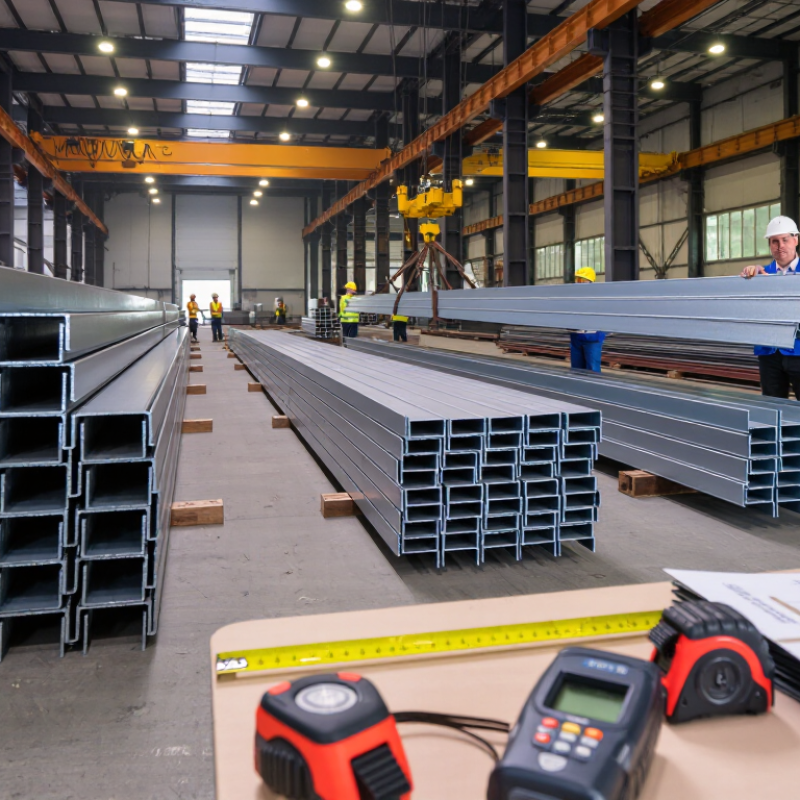
Choosing reliable IPE BEAM suppliers requires more than comparing prices in a spreadsheet. Global buyers must examine production standards, material traceability, dimensional accuracy, and delivery performance. An experienced supplier should provide mill certificates, heat numbers, inspection records, and clear confirmation of EN 10365 dimensions. These documents matter when a beam arrives at a busy fabrication yard, where a few millimeters can affect connection plates, crane handling, and installation time.

Structural steel authority Dr. Ulrike Kuhlmann has stated, “Steel structures must be designed with safety, durability, and constructability in mind.” This principle also applies to supplier selection. A capable IPE BEAM manufacturer should understand S235, S275, and S355 grades, along with EN 10025 requirements. Buyers should also review rolling tolerances, surface condition, cutting services, packaging, and port arrangements. Certification alone is not enough.

Details decide outcomes.

In practice, supplier research is rarely perfect. A company may show impressive factory photographs yet provide slow technical replies. Another may offer a lower quote but exclude testing, coating, or inland transport. That difference can quietly damage the final budget. Global buyers should request recent project references and verify production capacity before placing large orders. Independent inspection can add cost, but it may reveal straightness issues, incorrect markings, or documentation gaps early. The strongest supplier is not always the cheapest one. It is the partner that communicates clearly, records every batch, and accepts reasonable scrutiny. Even then, buyers should keep reviewing assumptions, because steel markets, freight schedules, and project specifications can change without warning.
Top IPE Beam Suppliers for Global Buyers

What IPE Beams Are and Why Global Buyers Use Them

What IPE Beams Are and Why Global Buyers Use Them

IPE beams are European I-section structural members with parallel flanges. Their profile gives strong bending resistance without excessive steel weight. EN 10365 defines common IPE dimensions, masses, and section properties for consistent engineering communication.

Global buyers often select IPE beams for warehouse frames, mezzanines, bridges, and equipment supports. Their standard geometry simplifies drawings, cutting, transport, and site assembly. The World Steel Association’s World Steel in Figures 2025 reports about 1.88 billion tonnes of crude steel production in 2024. This scale supports broad availability, but availability does not guarantee the correct grade or tolerance.

In project reviews, I have seen buyers compare price before checking section properties. That is a costly habit. Eurocode 3 design checks must consider bending, buckling, shear, connections, and fire exposure. A lighter beam may reduce freight costs, yet it can require stronger connections. IPE is efficient, not automatically suitable. I still question calculations that ignore local corrosion, lifting damage, or real site tolerances.

Tips: Request mill certificates, heat numbers, dimensional inspection records, and coating details. Confirm EN 10204 documentation when traceability matters. Compare kilograms per metre, not only the quoted piece price. Ask whether the section is hot-rolled and whether the declared yield strength matches your design assumptions. Weather, storage, and cutting losses deserve attention too.

Key Specifications for Comparing IPE Beam Suppliers

Top IPE Beam Suppliers for Global Buyers

Comparing IPE beam suppliers starts with dimensional accuracy. Check section height, flange width, web thickness, and mass per metre against EN 10365. Small deviations can affect connections, bearing plates, and calculated loads. Ask for tolerances, not only nominal sizes. A supplier should state whether measurements follow EN 10034 or an equivalent standard.

Material grade requires equal attention. Confirm the steel grade, yield strength, impact performance, and delivery condition. Request a batch-specific EN 10204 3.1 inspection certificate. It should match the heat number stamped on the beam or listed in packing records. Independent testing adds confidence when the project carries unusual loads. I once saw a certificate with correct values but unclear traceability. That detail deserved further checking.

Production experience becomes visible in practical details. Reliable suppliers explain ultrasonic testing, surface inspection, straightness control, and cutting accuracy without vague promises. Compare bundle weight, piece counts, lifting points, and corrosion protection. Export packaging should withstand rain, salt air, and repeated handling. Delivery records matter too; a perfect beam arriving late can still disrupt construction. Ask for recent dimensional reports, sample photos, and a realistic lead time. The cheapest offer is not always the most useful. No checklist is perfect. Recheck assumptions with a structural engineer before ordering.

Key Specifications for Comparing IPE Beam Suppliers

This comparison uses nominal dimensions and mass for common IPE sections defined in EN 10365. Larger sections generally provide greater structural depth and load-carrying potential, while mass indicates approximate steel consumption per metre. Confirm tolerances, steel grade, surface condition, certification, and delivery requirements with each supplier.

How to Evaluate IPE Beam Manufacturers and Exporters

Top IPE Beam Suppliers for Global Buyers

Evaluating IPE beam manufacturers requires more than comparing prices. Check production experience, rolling capacity, and access to independent quality testing. A reliable supplier should provide mill certificates, heat numbers, chemical results, and mechanical test data. Verify that the documents match the actual beam bundle. Standards matter. Confirm the required grade, dimensions, tolerances, and surface condition before placing an order.

Inspect how the manufacturer controls production. Ask about billet sourcing, rolling temperature, straightening, cutting accuracy, and batch traceability. Request recent inspection records, not only prepared certificates. Photos can help, but they cannot replace an on-site audit or third-party inspection. No audit is perfect. A strong supplier should still accept reasonable checks without becoming defensive. Sample beams should show clean edges, consistent flange thickness, and minimal visible distortion.

Export capability deserves equal attention. Review packaging methods, bundle labels, loading plans, and moisture protection for long-distance shipping. Confirm whether the exporter handles customs documents, certificates of origin, and agreed delivery terms correctly. Ask for realistic lead times and clear communication procedures. A low quotation may exclude testing, inland transport, or port charges. That mistake can become expensive. Check previous shipment references where possible, while remembering that one successful order proves little. A dependable exporter explains risks early and records every specification in the sales contract.

International Standards, Certifications, and Quality Controls

Top IPE Beam Suppliers for Global Buyers

International Standards, Certifications, and Quality Controls

Reliable IPE beam sourcing begins with clear standards. Buyers should confirm compliance with EN 10025 for structural steel grades and EN 10365 for section dimensions. These references help verify yield strength, chemical composition, mass, and profile geometry. The purchase contract should state the required grade, tolerance class, surface condition, and delivery length. Vague specifications create avoidable disputes.

Certification must match the destination market. An ISO 9001 certificate indicates a documented quality management system, but it does not prove every beam is defect-free. A mill test certificate should show the heat number, steel grade, mechanical results, chemical analysis, and applicable standard. Traceability matters. The same heat number should appear on labels, bundles, and inspection records. Buyers can also request independent inspection before shipment, including dimensional checks, visual examination, and ultrasonic testing when project risks justify it.

Quality control is strongest when evidence is practical and consistent. Inspectors should measure flange width, web depth, thickness, straightness, and beam length with calibrated tools. Photos of markings and bundle conditions can support later claims. Still, paperwork is not physical quality. A certificate may be complete while packaging is weak or corrosion appears after sea transport. This process is not flawless. Buyers should review supplier performance, sampling methods, and corrective actions instead of trusting certificates alone. Clear records, realistic tolerances, and direct communication reduce unpleasant surprises at the construction site.

Top IPE Beam Suppliers for Global Buyers - International Standards, Certifications, and Quality Controls

A practical, company-neutral qualification framework for comparing IPE beam suppliers against internationally recognized specifications, certification requirements, and inspection controls.
Evaluation Category Buyer Requirement Applicable International Standard Required Supplier Evidence Recommended Acceptance Check
Product Geometry IPE sections must match the specified nominal height, flange width, web thickness, flange thickness, mass, and sectional tolerances. EN 10365
EN 10034
Mill dimensional inspection report and product datasheet identifying the IPE series and nominal section size. Verify random pieces with calibrated height, flange-width, web-thickness, and flange-thickness instruments.
Steel Grade Supply the grade specified in the purchase order, such as S235JR, S275JR, or S355JR, with the required thickness-dependent properties. EN 10025-2 Heat number, grade designation, chemical analysis, yield strength, tensile strength, and elongation results. Match the grade, heat number, and test results on the inspection certificate with the delivered bundle markings.
Mechanical Performance Mechanical properties must meet the specified minimum yield strength, tensile strength, elongation, and impact-energy requirements. EN 10025-2
EN ISO 6892-1
EN ISO 148-1
Heat-specific tensile and Charpy impact test results, where impact testing is required by the selected grade. Review results against the applicable grade and thickness range; request independent retesting for disputed lots.
Chemical Composition Carbon, manganese, silicon, phosphorus, sulfur, and other specified elements must remain within the limits for the ordered grade. EN 10025-2
EN ISO 14284
Cast or heat analysis included on the material test certificate, with the corresponding heat number. Confirm that the certificate reports both the required elements and the correct product heat identification.
Material Traceability Every bundle should remain traceable from production heat through testing, marking, packing, and shipment. EN 10204 Type 3.1 inspection certificate, bundle list, permanent or durable markings, and packing identification. Check that bundle tags, mill marks, certificates, and shipping documents carry consistent heat and section information.
Inspection Certificate For internationally traded structural steel, provide product-specific results rather than only a general quality statement. EN 10204:2004, Type 3.1 Manufacturer-issued certificate validated by an authorized inspection representative independent of the manufacturing department. Ensure the certificate identifies the purchaser or order, product specification, quantity, heat number, tests, and compliance statement.
Surface Quality Surface condition should be suitable for the intended fabrication, coating, welding, and corrosion-protection process. EN 10163-3 Surface inspection procedure, repair records, and declared surface-quality class or acceptance level. Inspect for cracks, seams, laminations, excessive scale, harmful corrosion, and unacceptable repair marks.
Weldability The ordered grade and thickness must be suitable for the planned welding process and fabrication procedure. EN 10025-2
EN 1011-2
Declared carbon-equivalent information, material certificate, and welding guidance for the specified grade and thickness. Have the fabricator confirm preheating, heat input, consumable selection, and hydrogen-control requirements before production.
Quality Management The supplier should operate a documented quality-management system covering purchasing, production, testing, nonconformity control, and corrective action. ISO 9001 Valid certification issued by an accredited certification body, including scope and validity dates. Verify the certificate scope covers steel production, processing, testing, or trading activities relevant to the purchase.
Environmental Controls Environmental controls should address energy use, emissions, waste, water, and legal compliance within the declared operational scope. ISO 14001 Current environmental-management certificate and, where relevant, product carbon or environmental data supported by defined methodology. Confirm certificate validity and request documented environmental data when sustainability reporting is part of the project requirement.
Occupational Safety Production and handling activities should be managed through documented occupational health and safety procedures. ISO 45001 Current occupational-health-and-safety management certificate and relevant site-safety procedures. Review certificate scope and request evidence of incident management and corrective-action processes when required by the buyer.
Independent Inspection Third-party inspection should be available for high-value, safety-critical, or contractually controlled shipments. Contract-specific inspection plan
EN 10204
Approved inspection and test plan, sampling procedure, witness or hold-point records, and independent inspection report. Define inspection points before production, including document review, dimensional checks, visual inspection, sampling, and release approval.
Loading and Preservation Bundles must be safely secured, clearly identified, protected from avoidable damage, and prepared for the agreed transport mode. Purchase specification
Applicable transport regulations
Packing list, bundle photographs, weight information, lifting points, and loading plan. Check bundle quantity, gross and net weight, identification tags, moisture exposure, edge condition, and securing method before dispatch.
Documentation Package Commercial, technical, inspection, and shipping documents should be complete and consistent before final payment or release. Contract requirements
EN 10204
Sales contract, pro forma or commercial invoice, packing list, bill of lading, certificate of origin where required, and material certificates. Cross-check product description, section size, grade, quantity, heat numbers, weights, consignee details, and shipping terms.
Buyer note: Certification availability and inspection scope should be confirmed directly in the purchase contract. The applicable edition of each standard, project specification, delivery condition, and national regulatory requirement should be stated before order placement.

Ordering, Shipping, and Import Considerations for IPE Beams

Top IPE Beam Suppliers for Global Buyers

Ordering, Shipping, and Import Considerations for IPE Beams

Buying IPE beams internationally requires more than comparing the price per tonne. Confirm the required section, steel grade, length, surface condition, and quantity first. A practical purchase order should reference dimensional tolerances and the applicable standard, such as EN 10365. Request mill test certificates before production begins. Check heat numbers against the bundled beams during inspection. Small mismatches can create expensive delays.

Shipping details deserve equal attention. IPE beams are usually shipped in strapped bundles, but long sections need careful loading plans. Ask the supplier for bundle weight, dimensions, loading photographs, and the proposed container or vessel arrangement. Moisture trapped beneath plastic wrapping may cause surface rust during a long voyage. This is not always structural damage, but it can complicate acceptance. Use clear Incoterms and confirm who pays for inland transport, export clearance, marine freight, and unloading.

Import preparation often decides whether the order arrives smoothly. Verify the correct HS classification with a qualified customs broker, because classification rules may vary by destination. Prepare the commercial invoice, packing list, certificate of origin, bill of lading, and inspection records. Check whether your country requires product certification or additional steel documentation. I have seen buyers focus heavily on mill price and overlook port storage charges. That approach needs reconsideration. A reliable supplier should answer technical questions clearly, disclose realistic lead times, and explain what happens when dimensions or documents are incorrect. Even experienced buyers should recheck the final shipment data. A spreadsheet can still be wrong.

Get a quote
Open chat
1
Hi! How can we help you?
Chat with Pelican Containers