
Choosing the right Mountain Bike in 2026 requires more than comparing prices and suspension travel. PeopleForBikes reported that 112 million Americans rode bicycles in 2022, showing strong and expanding demand for better equipment. However, that figure covers all bicycle types, not only mountain bikes. The difference matters. A trail rider needs control, while a cross-country racer values efficiency and climbing speed.
Market research from Grand View Research identifies rising demand for full-suspension bikes, improved materials, and performance-focused designs. Yet technology can distract buyers. Carbon frames, electronic shifting, and oversized brakes may look impressive. They may not suit a beginner’s local trails. Wheel size, frame reach, suspension setup, tire width, and bike fit deserve closer attention. A 140 mm trail bike can feel confident on rocky descents but inefficient on long pavement sections.
Keith Bontrager’s well-known advice remains useful: “Strong, light, cheap. Pick two.” His warning reflects a real purchasing compromise. Durability, low weight, and affordability rarely arrive together. A reliable decision starts with honest riding conditions, body measurements, maintenance skills, and budget. Visit a qualified shop, test the riding position, and inspect how easily the controls reach your hands. Small details matter.
No checklist is perfect. I still believe many buyers choose more bike than they need. The best choice may be less dramatic, but more comfortable, serviceable, and ridden regularly. This guide examines the evidence, the trade-offs, and the practical mistakes riders often discover after buying.
How to Choose the Right Mountain Bike in 2026?
Define the ride before comparing components. Cross-country bikes usually offer 100–120 mm of suspension travel. They feel efficient on climbs, tight turns, and long pedal-heavy routes. The 2024 Outdoor Participation Trends Report recorded about 9.1 million U.S. mountain-bike participants in 2023. That broad audience includes fast racers and casual trail riders. Travel alone cannot describe every rider.
Trail bikes typically use 130–150 mm. This range suits mixed terrain, including rocky climbs, roots, and moderate drops. I have found that 140 mm often feels like the most balanced choice. It still pedals willingly, but it absorbs mistakes better than a short-travel race bike. That rule is imperfect. Frame geometry, wheel size, rider weight, and suspension setup can change the experience dramatically.
Enduro bikes commonly provide 160–180 mm. They favor steep descents, repeated impacts, and technical terrain over effortless climbing. The 2024 Global Mountain Bike Market Report from Grand View Research identifies performance and trail riding as important market segments, but market growth does not prove personal fit. A longer fork cannot fix poor braking control or incorrect sag. Set suspension with measured sag, check tire pressure at the trailhead, and test the bike on familiar ground. Short rides can mislead. A bike that feels impressive in a parking lot may feel heavy after a two-hour ascent.
Wheel size changes how a mountain bike feels on real trails. A 29er rolls over roots and loose rocks with less interruption. Its larger wheel maintains momentum through rough sections. Taller riders often appreciate its stable position and longer contact patch. However, smaller riders may find tight switchbacks less natural. I noticed this when slow corners demanded more body movement. A 27.5-inch wheel can feel quicker and easier to place. Neither option is automatically better.
Tire width matters as much as wheel diameter. For general trail riding, 2.2 to 2.4-inch tires offer balanced speed and grip. A 2.5 or 2.6-inch tire adds comfort on sand, wet roots, and sharp stones. The extra volume can reduce harsh impacts. It may also feel slower on smooth climbs. Tire pressure should match rider weight, casing strength, and terrain. Start conservatively, then adjust in small steps. Check for rim strikes after each ride.
I usually choose a 29er with 2.4-inch tires for mixed mountain routes. It handles rough descents confidently without feeling excessively heavy. Still, my choice is not universal. A lighter rider may prefer narrower tires and a more agile wheel. I once selected tires that were too wide for a muddy route. They collected dirt and made climbing frustrating. That mistake changed my setup. Study your local trails, test pressure carefully, and leave room to revise your decision.
How to Choose the Right Mountain Bike in 2026?
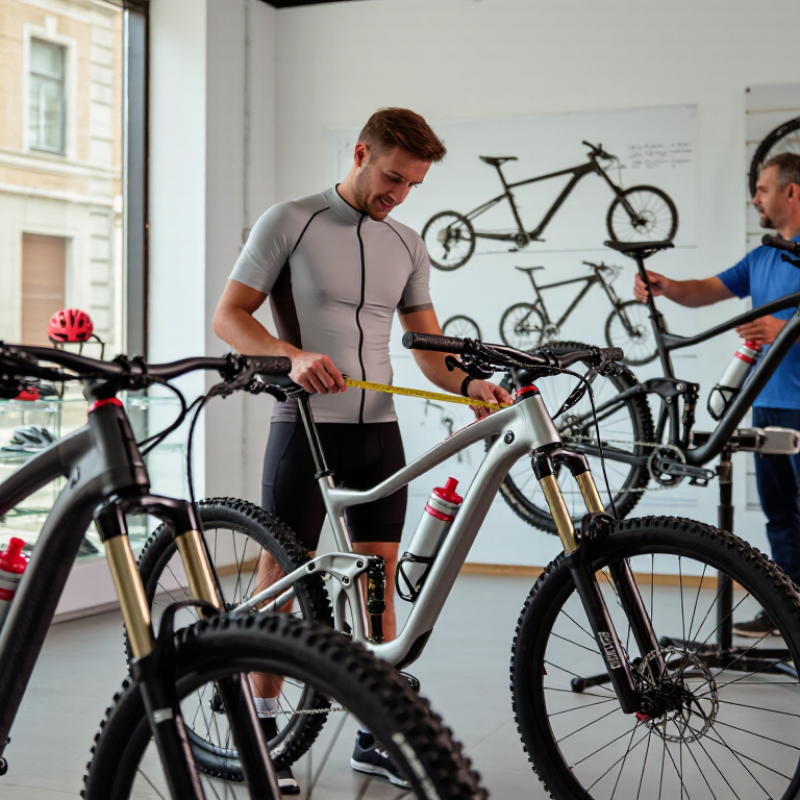
A mountain bike should fit your body before it impresses your eyes. I measure stack and reach with riding shoes, not casual footwear. Stack affects your handlebar height, breathing position, and confidence on steep descents. Reach influences how stretched you feel while climbing and cornering. A longer reach can feel stable, but it may punish smaller riders on tight trails.
Control also depends on dropper-post travel. Measure the distance from the saddle rails to the frame insertion point. Then check your available inseam and leave room for full compression. More travel is not always better. If the saddle cannot drop completely, your hips may hit it during sharp turns. I once chose excessive travel and struggled on technical switchbacks. That mistake still shapes my recommendations.
Crank length deserves a careful look. Cranks between 170 and 180 millimeters can provide useful leverage, especially on steep climbs. However, longer cranks increase pedal-strike risk over rocks and roots. Riders with shorter legs may prefer less length, even when strength is not an issue. Check the bike’s bottom-bracket height and your local terrain together. Spin slowly over a familiar rocky section. Listen for contact. Fit is partly measurement, partly movement, and my own first impression has sometimes been wrong.
Verify fit and control by comparing stack, reach, dropper-post travel, and crank length. The ranges below represent common modern trail-bike reference values, not a universal fit prescription.
Stack and reach should be compared within the same frame size and riding position. A longer reach can improve stability but may feel stretched, while a higher stack can provide a more upright and controlled position. Dropper travel should allow the saddle to lower fully without restricting movement. Crank lengths around 170–180 mm are common, with the final choice depending on rider height, leg length, ground clearance, and riding style.
Choosing a mountain bike in 2026 means comparing control, maintenance, and terrain fit. The drivetrain deserves close attention. A 1×12 system offers twelve gears and removes the front derailleur. Many current setups provide roughly 500% gear range. That helps on steep climbs and fast fire roads. However, tight gear steps can feel less forgiving when cadence changes suddenly. In my workshop experience, beginners often choose range before checking chain security and shifting quality.
Four-piston brakes create more pad contact and resist heat during long descents. Professional testing reports commonly measure braking force, fade, and rotor temperature, not just lever feel. The 2024 ISO 4210 safety framework also emphasizes controlled braking performance under repeated loads. Bigger calipers are not automatically better. Poor setup, contaminated pads, or small rotors can still weaken stopping power. A heavier rider may need stronger thermal control.
Tips: Choose the lowest climbing gear you can use smoothly. Check the brake rotor size and pad material together. For tubeless rims, inspect rim tape, valve seals, and tire compatibility. Tubeless systems can reduce pinch flats and allow lower pressures, often around 20–28 psi for trail riding, depending on weight and casing. Industry tire-pressure tests show lower pressure improves grip, but excessive softness increases rim strikes. I have made that mistake on rocky trails. Also, not every “tubeless-ready” setup seals easily; small air leaks can become an annoying evening repair.
Your riding area should guide the motor choice. In many European-style systems, an EPAC uses pedal assistance up to 250 W and cuts support at 25 km/h. The motor should assist only while you pedal. It may feel gentle on technical climbs, especially when traction matters. Check the bike’s compliance label, manual, and local trail rules before buying.
A Class 1 e-bike also provides pedal assistance only, but support usually ends at 20 mph. That higher limit can help on wide fire roads and long approaches. It may not be accepted on every narrow trail or protected route. Definitions can differ by country, state, park, or land manager. Do not trust a sales description alone.
Test the bike uphill, not only in a showroom. Notice whether assistance starts smoothly near a loose rock garden. Check battery placement, brake control, tire width, and suspension adjustment. A heavier frame can feel stable downhill, yet tiring during repeated climbs.
I once underestimated reach and handlebar height; the motor felt powerful, but my wrists hurt after one hour. That mistake still matters.
Ask for the continuous power rating, assistance cutoff speed, charger details, and service documentation. A large battery is useful, but range changes with mud, temperature, rider weight, and elevation. Choose the legal category that matches your regular trails, not the fastest number on the display.
If for some reason you did not find the service or product you need, you can always leave a request for a free consultation and get an answer.