
Selecting the right Amplifier Audio Board can significantly impact your audio experience. The market is filled with various options, each tailored to different needs. It's essential to evaluate what features are most important to you.
When considering an Amplifier Audio Board, think about your primary usage. Are you looking for high-power output for large venues or a compact solution for home use? Understanding your requirements will help narrow down choices. Some boards offer advanced features like Bluetooth connectivity, while others focus on pure audio performance.
Equally, don't overlook the compatibility with your existing audio setup. Not all boards work seamlessly with every system. Research and read reviews from trusted sources to gauge reliability. Reflect on any past purchasing mistakes, as they can inform your decision-making process. The ideal Amplifier Audio Board should not only fit your criteria but also enhance your overall sound quality, making thoughtful selection crucial.
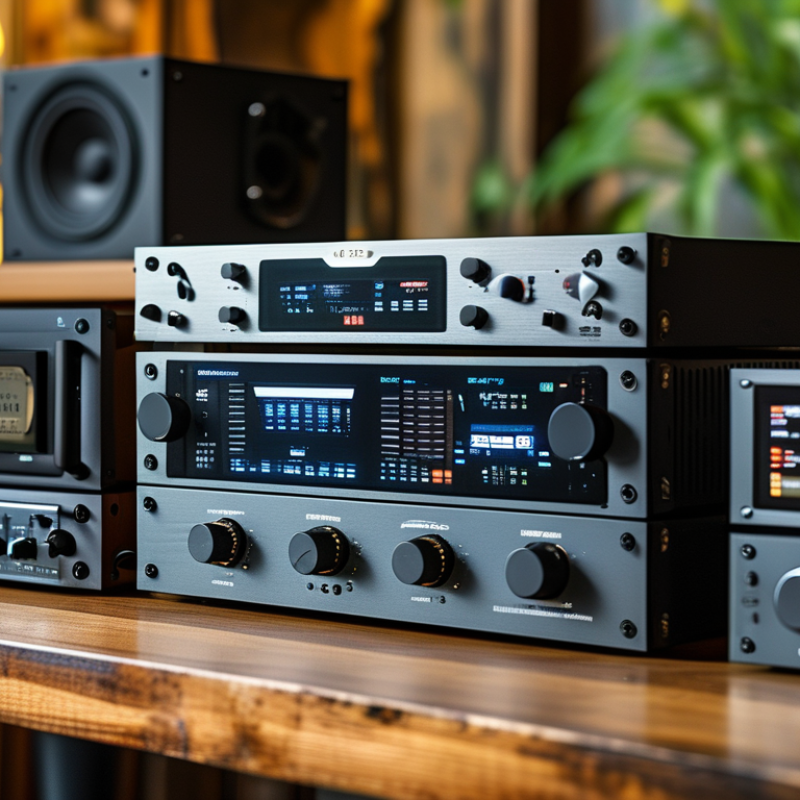
When selecting an amplifier audio board, understanding the basics is critical. Amplifiers boost audio signals, making sound clearer and more powerful. Different designs and configurations influence performance. For instance, Class D amplifiers are energy-efficient and ideal for compact setup spaces. According to a recent industry report, market growth for audio amplifiers is forecasted to rise by 5.2% annually, driven by increased demand for high-quality sound systems.
Consider the power output of the amplifier. Higher wattage can enhance sound levels without distortion. The ideal power output depends on your speaker specifications and room size. For instance, a small room may require only 20-50 watts, while larger spaces demand over 100 watts for optimal performance.
Tips: Always check compatibility with existing audio equipment. Test the audio board with various music genres to assess performance. Remember that price does not always guarantee quality; explore user reviews and professional evaluations. Be cautious of overly high specifications, as they can lead to disillusionment if not matched with suitable speakers.
The impedance rating is another crucial aspect. It affects how the amplifier interacts with speakers. Standard options are 4, 6, and 8 ohms. Mismatching the impedance can damage components or result in poor performance. Balancing these factors can ensure a better audio experience. Prioritize research before making your purchase.
When selecting an amplifier audio board, several key features play a critical role. Power output is one of the most important specifications. Most audio experts recommend at least 50 watts per channel for clear sound in mid-sized rooms. This ensures that listeners enjoy dynamic range without distortion. Moreover, according to a recent report from the Audio Engineering Society, a balanced power supply leads to better sound quality and reduced noise.
Another essential factor is connectivity. Modern amplifiers often include Bluetooth and Wi-Fi options for seamless streaming. Statistics show that 70% of users prefer wireless capabilities in their devices. A versatile amplifier can pair with multiple devices, which increases its usability. Consumers should also consider the audio formats supported by the amplifier. High-resolution audio is becoming more popular. Look for boards that can handle FLAC, ALAC, and DSD formats.
Furthermore, pay attention to the build quality. A solid chassis can minimize vibration and improve longevity. Some lower-quality boards may have flimsy constructions. This affects performance and can lead to issues over time. It's also vital to assess user reviews and expert opinions to gain insights into reliability and sound performance. Balancing features with price is essential, as investing in an amplifier without key functions can lead to dissatisfaction.
| Feature | Description | Importance |
|---|---|---|
| Power Output | Measured in watts, indicates how much power the amplifier can deliver to the speakers. | High |
| Impedance | The resistance of the speakers, typically 4, 6, or 8 ohms. | High |
| THD (Total Harmonic Distortion) | A measure of distortion in the audio signal, lower values are preferable. | Medium |
| Input/Output Options | Variety of connections (RCA, XLR, USB) that allow compatibility with different audio sources. | High |
| Size and Form Factor | Physical dimensions and design, important for fitting in your space. | Medium |
| Cooling Mechanism | Active (fans) or passive (heat sinks) cooling to prevent overheating. | Medium |
| Price | Cost of the amplifier; important to match the budget with features. | High |
When selecting an amplifier audio board, understanding the different types can greatly influence your choice. Common types include Class A, Class AB, and Class D amplifiers.
Class A amplifiers are known for their excellent sound quality, but they are less efficient. They generate more heat and require better cooling. This can increase your system's overall cost. Class D amplifiers, however, are compact and highly efficient. They are perfect for portable devices and battery-operated systems.
Data from the International Audio Engineering Society indicates that Class D amplifiers account for over 50% of the market share in consumer audio devices. Their increasing popularity stems from their ability to deliver high sound quality while reducing energy consumption. Meanwhile, Class AB amplifiers serve as a middle ground, providing a balance of efficiency and sound quality with a wider application range.
Selecting the right amplifier depends on your specific use case. Home audio systems might benefit from the sound fidelity of Class A. However, if energy efficiency is your goal, Class D is a solid choice. Consider the overall system requirements. A mismatch could lead to less optimal performance, affecting audio clarity or volume. Always assess your needs carefully.
When choosing an amplifier audio board, compatibility with existing equipment is crucial. Start by checking the power requirements of your speakers and the output of the amp. If they don’t match, you won’t achieve optimal performance.
Tip: Use a multimeter to measure impedance. This will help you find a compatible audio board. Ensure that your new amplifier can handle the load from your speakers.
Consider the connections available on the amplifier. Match them with your audio sources. If you have a Bluetooth-enabled device, look for an amp with wireless capabilities.
Tip: Always read user reviews. Feedback can reveal potential issues with compatibility that may not be obvious. Remember, just because an amp looks good on paper doesn't mean it will work seamlessly in your setup. Compatibility often requires some trial and error.
Lastly, don’t forget about size and layout. Ensure the amplifier fits your space and integrates well with other equipment. A cramped setup can lead to overheating issues.
Tip: Plan your setup layout in advance. Visualizing can help you avoid spatial problems and optimize sound quality. It's essential to find a balance that works for your needs.
When choosing an amplifier audio board, budget considerations often dictate your options. A recent industry report suggested that about 70% of consumers prioritize price over brand loyalty. This statistic challenges the notion that spending more guarantees better performance. You can find effective amplification solutions in budget ranges, typically from $50 to $150, which offer decent sound quality for home use.
However, value for money can be misleading. An inexpensive model might have lower power output and fewer features, which raises concerns about long-term satisfaction. According to a survey from an audio engineering report, unsatisfied customers often cited inadequate power as a significant drawback. Therefore, investing in a reliable board that meets your specific audio needs requires thorough research. Look at specifications like RMS power output, distortion levels, and connectivity options.
Don’t overlook the importance of expert reviews. They often highlight practical experiences rather than just technical specs. Peer-reviewed studies emphasize that user experiences can vary widely based on the setup and environment. A board that works well in one setting might fall short in another. Balancing price with quality requires understanding your unique requirements and environment before making a decision.
If for some reason you did not find the service or product you need, you can always leave a request for a free consultation and get an answer.