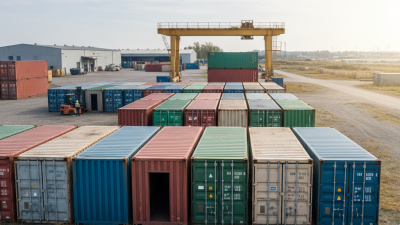
Choosing the right 40ft container for your business can be daunting. It involves understanding your specific needs and the unique offerings of each container type. Industry expert Sarah Johnson, a logistics consultant with over a decade of experience, emphasizes, “Selecting the right 40ft container can significantly impact your supply chain efficiency.”
Consider your shipping requirements. A 40ft container is versatile and can accommodate various goods, but not every container suits every business. Pay attention to factors like weight limit, material options, and intended use.
Moreover, it’s essential to evaluate your long-term needs. Sometimes, businesses rush into a decision, leading to costly adjustments later. Reflect on your storage and transport needs carefully to avoid missteps. A well-chosen 40ft container can enhance efficiency, while a poor choice may hinder operations.
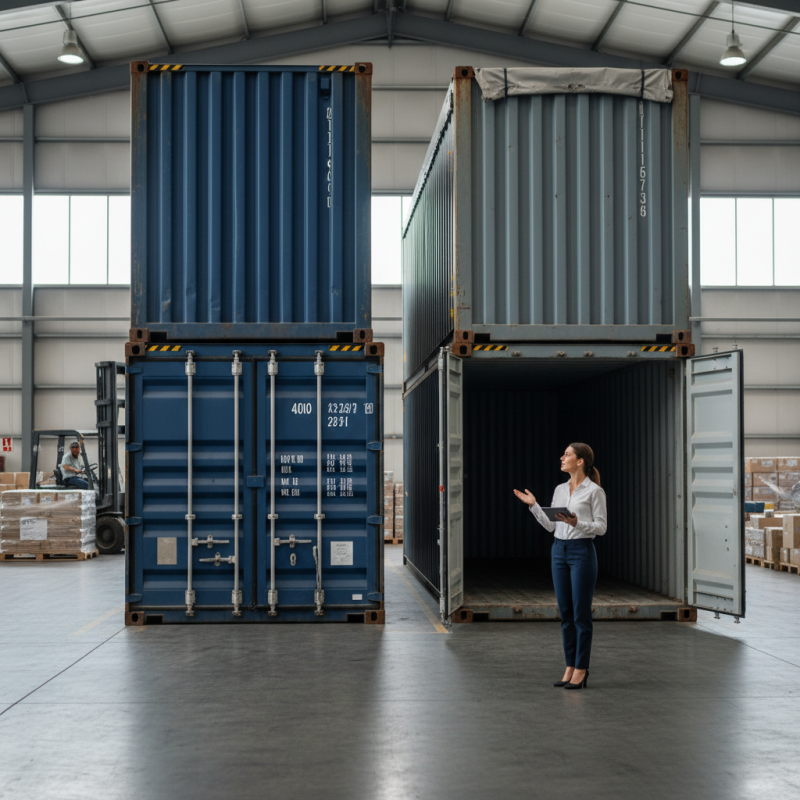
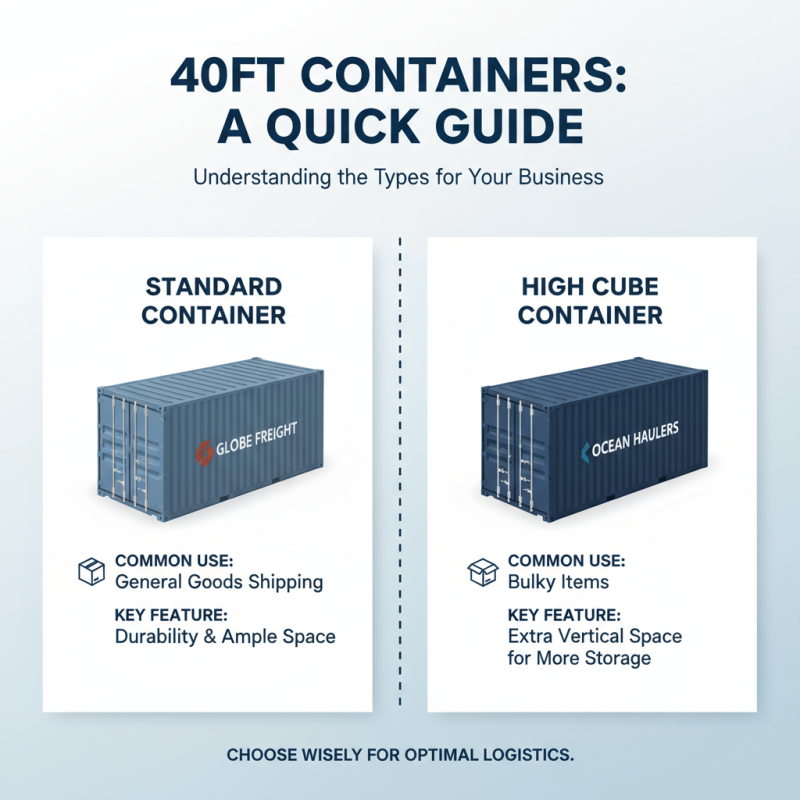
When selecting a 40ft container for your business, understanding the options is crucial. Various types are available, each designed for specific purposes. Standard containers are commonly used for shipping goods. They offer durability and ample space. High cube containers provide extra height, ideal for bulky items. The extra vertical room can help maximize storage efficiency.
Reefer containers are temperature-controlled. They’re perfect for perishable goods like food. However, these containers require a reliable power source. This can complicate logistics, especially in remote areas. Additionally, consider the condition of the container. Used containers may show wear and tear, impacting safety and performance.
Avoid overlooking the importance of ventilation. Some cargo may require airflow to prevent damage. Ventilated containers come with openings that allow for air circulation. It’s also wise to evaluate the container’s insulation. Proper insulation can protect contents in extreme temperatures. Each choice carries its own set of advantages and potential challenges. Take the time to reflect on your business needs before making a decision.
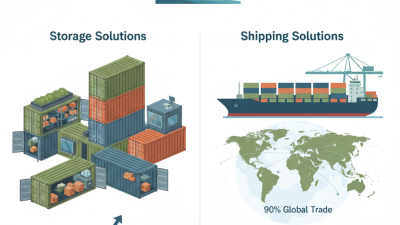
Choosing the right 40ft container starts with understanding your business needs. Different industries have varying requirements for storage and transportation. According to a report by the International Maritime Organization, over 70% of global trade is conducted via shipping containers. This highlights the significance of selecting the right size and type for efficient operations.
Assess your inventory to determine how much space you truly need. For instance, if your business often experiences fluctuations in stock levels, a 40ft container provides flexibility. It can hold up to 2,350 cubic feet, accommodating large shipments. However, improper assessment can lead to wasted space, which is common among businesses that lack detailed planning.
Consider the nature of your goods. Some products, like perishables, may require specialized containers with temperature control. According to the World Shipping Council, around 15% of containers are underutilized due to incorrect sizing. Reflect on your storage and transport conditions to avoid this pitfall. A tailored approach to container selection can enhance efficiency and reduce costs.
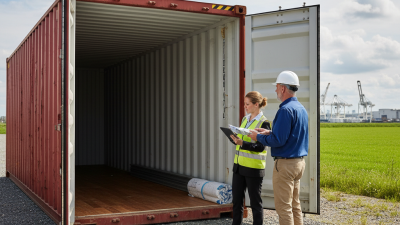
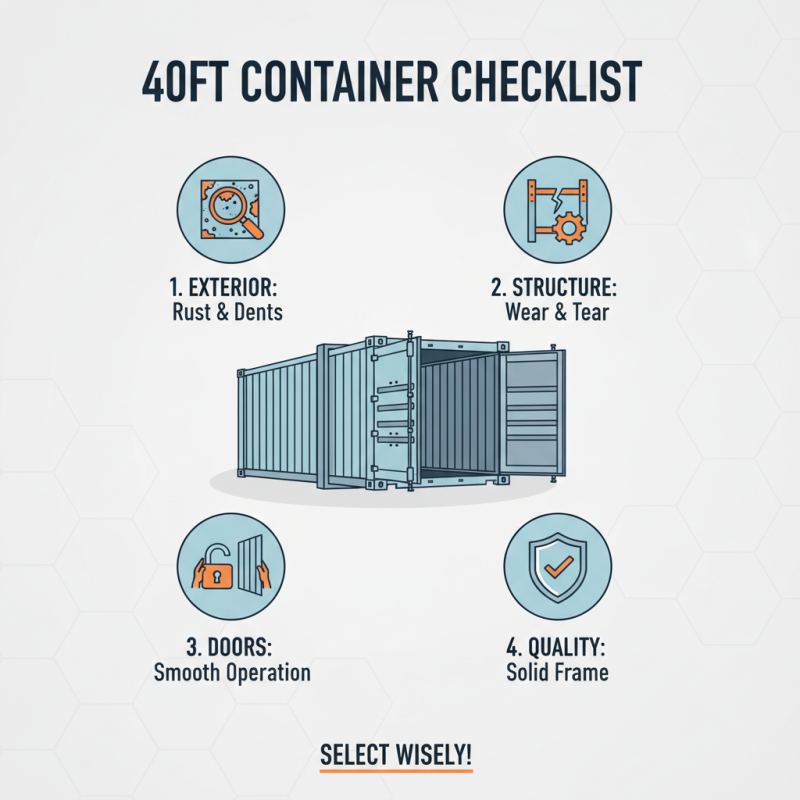
When selecting a 40ft container, evaluating its condition and quality is crucial. Start by inspecting the exterior for rust and dents. Look for signs of wear and tear, which can indicate structural issues. A well-maintained container should have a solid frame and no major damages. Check the doors to ensure they open and close smoothly. Any difficulty in this aspect may suggest internal issues.
Inside, examine the flooring for damage or signs of water exposure. A damp floor can lead to mold, compromising your cargo. Look for any lingering odors, which can indicate past contents. Ask for maintenance records if available. This helps assess how well the container has been cared for.
It’s also important to consider the container's history. A container that has been used for shipping goods might differ in condition from one stored unused for years. Be cautious; not all containers are equal. Taking the time to evaluate these aspects can save money and ensure that your shipping solutions meet your business needs effectively.
When selecting a 40ft container, transportation and delivery options play a crucial role. Choosing the best logistics can make or break your experience. Think about how the container will be moved. Will it be transported by ship, truck, or rail? Each method has different costs and timelines.
It’s important to consider the delivery location. Remote sites may require special vehicles. Communication with your logistics provider is essential. Clear instructions help avoid delays. Keep in mind that not all providers offer the same services. Some might lack experience with bulky containers.
Analyze potential challenges. Heavy-duty roads might be necessary for delivery. Also, check the container's condition upon arrival. A damaged container can lead to complications. Sometimes minor flaws go unnoticed. If the quality is not up to par, it could affect your operations. It’s wise to document these details immediately.
When considering the purchase or leasing of a 40ft container, budgeting becomes crucial. The average cost to buy a used 40ft shipping container ranges from $2,000 to $4,500, depending on condition. Leasing prices may vary, typically costing between $100 to $300 per month. These figures emphasize the necessity of evaluating your business's financial capacity before making a decision.
One aspect to analyze is the total cost of ownership. Maintenance is an often-overlooked expense. Containers may require repair work over time, which adds to your overall budget. Data from industry reports indicates that businesses should allocate at least 10% of the acquisition cost annually for maintenance. This can strain budgets if unanticipated repairs arise.
Consider your usage needs as well. If your storage requirements change, leasing might offer flexibility. However, long-term leases may lead to costs that exceed the purchase price. You must analyze your operational needs versus financial limits. Reflecting on the long-term outcomes of each option can help clarify the decision-making process.
| Feature | Purchase Cost (USD) | Leasing Cost (Monthly - USD) | Condition | Usage |
|---|---|---|---|---|
| Standard 40ft Container | 2,500 | 150 | Used | General Storage |
| Refrigerated 40ft Container | 4,500 | 300 | New | Perishable Goods |
| Flat Rack 40ft Container | 3,200 | 200 | Used | Heavy Equipment |
| High Cube 40ft Container | 3,000 | 180 | New | Stackable Goods |
| Open Top 40ft Container | 3,500 | 250 | Used | Oversized Cargo |
If for some reason you did not find the service or product you need, you can always leave a request for a free consultation and get an answer.