
Choosing the best Gantry Mill is a practical decision, not a simple equipment purchase. The right machine should match your materials, workspace, production volume, and future plans. A small fabrication shop may need a compact model for steel plates and repair work. A high-volume manufacturer may require a rigid, enclosed system with automatic tool changing.
Real experience shows that specifications can be misleading. A larger working envelope does not always mean better productivity. Spindle power, table stability, axis travel, and chip evacuation often matter more. Check how the machine performs under real cutting loads. Ask suppliers for test results, reference customers, service records, and clear installation requirements. These details reveal more than a polished brochure.
Think beyond the machine price. Tooling, operator training, maintenance, energy use, and downtime can change the total cost significantly. A reliable Gantry Mill should provide consistent accuracy across long production runs. It should also remain serviceable when a sensor fails or a coolant line becomes blocked. That happens.
This guide examines the factors experienced buyers should evaluate before making a commitment. It considers machine construction, control systems, cutting capacity, safety features, supplier support, and return on investment. It also questions common assumptions. The most expensive option may be unnecessary. The cheapest option may become costly later. Careful comparison creates a more dependable choice for your business.
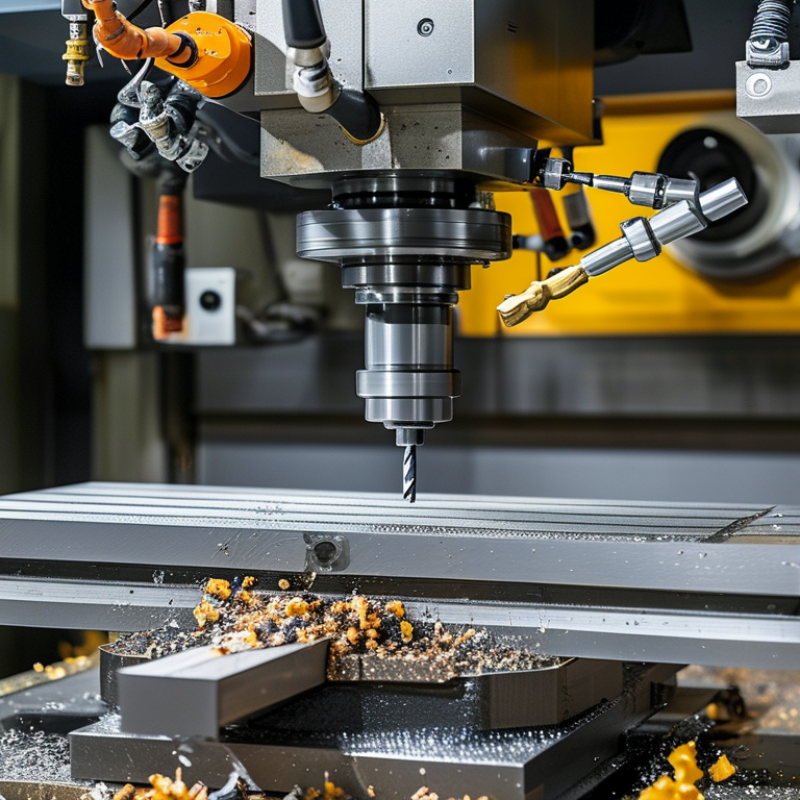
Choosing a gantry mill starts with the part, not the machine’s advertised capacity. Measure the largest finished dimensions, including rotations during loading and inspection. Add space for clamps, pallets, fixtures, and safe tool access. A tight fit is not a clever fit. I once saw a job fail because the part fit the table, but the spindle could not reach its rear edge. That mistake was expensive.
For X travel, compare the part length with usable travel, not the catalog maximum. Leave room for cutter approach, edge finding, and chip clearance. Y travel must cover the part width, fixture overhang, and operator access.
Z travel is often underestimated. Calculate part height, fixture height, tool length, and clearance above the workpiece. Then check the distance from the spindle nose to the table at both limits. The numbers must work together.
A simple layout drawing can expose problems before installation. Mark the part, fixture, tool, and spindle centerline to scale. Include door openings and loading equipment. A 2,000-millimeter travel may still be inadequate for a long part with awkward clamping. Plan for future jobs, but avoid paying for empty space that weakens process control. Recheck your measurements with the actual cutting tools. Drawings can hide practical interference.
Choosing the best gantry mill starts with the workpiece, not the largest motor. Spindle power determines how aggressively the machine can remove material. For steel plates, deep pockets, and long cutting cycles, higher power helps maintain cutting performance. However, power alone can mislead. A powerful spindle with weak torque may struggle during slow, heavy cuts.
Torque matters most when the tool engages deeply or runs at lower speeds. Check the torque curve, not only the peak rating. A machine producing stable torque at 6,000 RPM may outperform one with impressive power at maximum speed. During shop evaluations, listen for spindle hesitation and watch for chatter around corners. Small vibrations often reveal poor rigidity before a catalog does.
A 6,000–24,000 RPM range offers flexibility. Lower speeds suit large cutters, aluminum profiling, and demanding steel work. Higher speeds support small tools, light finishing, and detailed aluminum components. Yet 24,000 RPM is not automatically better. Tool balance, bearing quality, cooling, and machine rigidity must support it. Otherwise, heat and vibration can shorten tool life. I once focused too heavily on top speed and underestimated low-speed torque. That decision looked efficient on paper, but heavy roughing exposed the weakness. Ask for test cuts using your real material, cutter diameter, and depth. Numbers become useful when they survive actual production conditions.
Choosing a gantry mill requires more than comparing spindle power or table size. Verify positioning accuracy near ±0.01 mm under defined conditions. Ask for repeatability data, not a sales promise. Request tests at several positions across the working envelope. A machine may perform well near the center, then drift at the corners. That matters when machining large molds, plates, or precision fixtures. In my experience, temperature is often underestimated. A workshop can change several degrees during one shift. Steel scales, ball screws, and the frame expand differently. Even a small shift can move a hole pattern beyond tolerance.
Tips: Run a warm-up cycle before testing. Record room temperature, machine temperature, feed rate, and tool condition. Use a calibrated laser interferometer or certified measuring system. Check both directions. Repeat the test after several hours. Ask how thermal compensation is calibrated and audited. If compensation depends on one sensor, be cautious. More sensors do not automatically mean better accuracy. Keep the test file and raw data.
When reviewing thermal compensation, examine the control logic and maintenance process. Does it correct axis growth in real time? Can operators see active offsets and alarms? A reliable supplier should explain uncertainty and environmental limits in writing. I would also inspect a finished part after overnight production. That practical check may expose drift that a short demonstration misses.
±0.01 mm is not a permanent guarantee. It is a condition to verify. Compensation can hide mechanical problems. Pair it with alignment checks, lubrication records, and periodic calibration. I still treat one successful test as insufficient evidence.
How to Choose the Best Gantry Mill for Your Business
A gantry mill must match the material, not just the workpiece size. The World Steel Association reported 1.88 billion tonnes of crude steel production in 2024. USGS Mineral Commodity Summaries 2025 estimated global primary aluminum output at about 72 million metric tons. These materials behave very differently during cutting. Steel demands higher rigidity and stable torque. Aluminum often allows higher spindle speed, but it can create chatter across thin sections.
Start with table load. Add the workpiece, fixture, pallets, and cutting fluid. I normally include a practical safety margin of 25% to 50%. This is not a universal rule. Local engineering standards and machine data must control the final decision. ASM Handbook machining references show that cutting forces change with alloy, tool geometry, depth of cut, and feed rate. A large table does not guarantee a strong machine. Check column deflection, guideway design, spindle bearing capacity, and the distance between the cutter and support structure. Shorter overhangs usually improve surface finish.
Tips: Request test cuts using your hardest material and largest planned tool. Measure vibration, spindle load, dimensional drift, and chip evacuation. Review the results with an experienced machinist. A spreadsheet can still miss real-world chatter. That is where many purchasing assumptions fail. Ask for load charts, accuracy data, and maintenance records. Verify them independently, because optimistic specifications are not rare.
Match table load, structural rigidity, and cutting forces to the workpiece material.
A gantry mill should be judged by production cost, not purchase price alone. Calculate five-year ownership costs before comparing specifications. Add the machine price, installation, training, tooling, energy, maintenance, and financing fees. Subtract realistic resale value. Then divide the total by productive hours, not available hours.
For example, a $420,000 machine with $95,000 in five-year operating costs and 7,500 productive hours costs about $68.67 per hour. That figure changes quickly when downtime is ignored. It often is.
Tips: Request maintenance records from comparable installations. Ask technicians about spindle servicing, lubrication, alignment checks, and control-system failures. Estimate spare-part delivery times. A low hourly cost means little if one damaged component stops production for three weeks. Use your own job history when possible. Supplier estimates can be optimistic.
Investment payback requires a careful production model. Compare current outsourcing costs with the mill’s hourly cost, expected capacity, and labor requirements. Include setup time, inspection, scrap, and realistic utilization.
If the machine creates $180,000 in annual savings and requires a $515,000 total investment, simple payback is about 2.9 years.
That calculation is useful, but incomplete. Demand may weaken. Operators may need more training than expected. Maintenance costs can rise after warranty coverage ends.
Build a conservative case, then test it against a stronger order pipeline and a slower one. Perfect forecasts do not exist. Reliable decisions come from transparent assumptions and regular review.
If for some reason you did not find the service or product you need, you can always leave a request for a free consultation and get an answer.