
China’s automotive supply chain is expanding in scale and technical complexity, putting the Harness Connector in a critical role. OICA reported 93.5 million motor vehicles produced worldwide in 2023, up 10% from 2022. The IEA’s Global EV Outlook 2024 estimated that electric-car sales would exceed 17 million that year. These trends increase demand for connectors that can manage tight packaging, vibration, heat, and growing electrical loads. Small parts. Serious consequences.
As IEA Executive Director Fatih Birol said, “The continued growth of electric cars, batteries and renewables is reshaping the global energy landscape.” That shift makes supplier capabilities worth examining, not just headline production volume. For buyers, details matter: terminal retention, sealing, material consistency, tooling control, and the ability to trace quality across batches. A low unit price may look attractive, but a poor fit can slow assembly and create costly rework.
This guide introduces ten Harness Connector manufacturers in China and considers their product focus, manufacturing strengths, and market presence. It is not a certification or a substitute for factory audits, sample testing, and application-specific validation. Rankings can simplify a complicated market. They can also miss smaller suppliers with strong engineering teams. Treat the list as a starting point, then check drawings, test records, and delivery performance before making a sourcing decision.
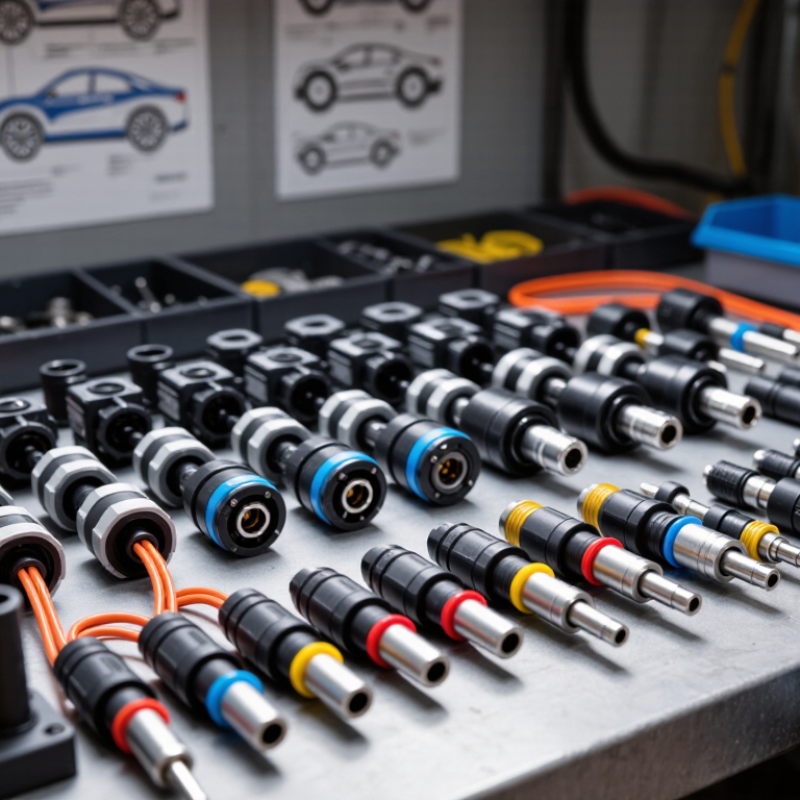
China’s harness connector industry is supported by a vast vehicle manufacturing base and a rapid shift toward electrification. The China Association of Automobile Manufacturers reported 31.28 million vehicles produced in 2024, including 12.89 million new energy vehicles. The International Energy Agency’s Global EV Outlook 2025 also reports that electric car sales in China exceeded 11 million in 2024.
These figures point to strong demand for connectors used in power, signal, and battery systems. The numbers do not tell the whole story, though. Production growth alone cannot reveal how consistently parts perform under vibration, heat, and moisture.
Manufacturers serve automotive, industrial equipment, and other sectors, with automotive applications placing especially tight demands on fit and durability. In a vehicle assembly plant, even a small terminal mismatch can slow installation or trigger inspection work. Electric platforms add high-voltage connections and more complex signal networks, while compact designs leave less room for routing and service access.
Buyers therefore assess more than price: they often examine material traceability, testing capacity, process control, and the supplier’s ability to maintain stable output.
The market is broad, but capability varies. A factory may produce large volumes yet still need improvement in defect tracking or tooling consistency. That distinction deserves closer attention when comparing manufacturers.
Reports describe expanding vehicle output; they do not independently verify every supplier’s quality, delivery performance, or engineering depth. Reliable evaluation still requires product records, sample testing, and a clear review of manufacturing processes.
Evaluating harness connector manufacturers in China requires evidence from the production floor, not just a polished catalogue. Grand View Research valued the global automotive wiring harness market at USD 49.7 billion in 2022 and projected 4.8% annual growth from 2023 to 2030. The International Energy Agency reported that electric car sales were expected to reach about 17 million in 2024, exceeding one-fifth of global car sales. These figures point to rising demand and more demanding electrical applications. Numbers help. Not enough.
Request test records for contact resistance, terminal retention, temperature cycling, vibration, and sealing. Check that results identify the connector variant, wire gauge, and production lot. Then compare samples against approved drawings, including pin positions and latch dimensions. A connector may fit by hand yet loosen under vibration. That detail is easy to miss.
Review material traceability, tooling maintenance, process-change approval, and defect handling. Ask how the factory contains a faulty lot and reports corrective actions. Where applicable, assess assembly workmanship against IPC/WHMA-A-620, and verify that quality-system certificates are current and within scope. A site audit can reveal gaps that documents hide. No scorecard is perfect; sample testing still cannot predict every field condition. I would also check whether the supplier can explain a failed test plainly, not merely send a revised chart.
China Top 10 Harness Connector Manufacturers
Top 10 Harness Connector Manufacturers in China
Choosing among the top 10 harness connector manufacturers in China takes more than comparing catalog prices. Start with the application: a vehicle, appliance, industrial cabinet, or outdoor device. Each setting brings different demands for vibration, heat, moisture, and mating cycles. Ask for drawings, material specifications, and test records for the exact connector series. A polished sample is useful, but consistent production matters more. Samples tell part.
Tips: Share your wire gauge, pin count, operating temperature, and expected order volume when requesting a quote. Ask how contacts are crimped and inspected. If possible, test samples with your own wires and housings. This can reveal fit issues that a catalog photo will not show.
Compare suppliers on engineering support, production controls, delivery communication, and willingness to explain limitations. Request details on tooling ownership, batch traceability, and inspection methods. A factory visit or live production review may help verify what documents cannot show. Still, even a careful checklist can miss small process changes between batches. Keep your own acceptance criteria clear, and confirm any design revisions in writing before production begins.
Leading harness connector manufacturers compete through more than connector variety. Strong product lines offer stable contact resistance, secure locking features, and housings that tolerate vibration, heat, and moisture. Small details matter. A latch should engage clearly, while terminals should resist loosening after repeated connection cycles. Some product catalogs look similar, but material choice and tooling consistency can create meaningful differences.
Applications shape these strengths. In vehicles, sealed connectors help protect wiring near engine bays and underbody areas. Industrial equipment often needs robust interfaces that withstand dust, oil, and frequent servicing. In medical devices and communications equipment, compact housings and reliable signal paths may matter more than heavy-duty sealing. Manufacturers with flexible tooling can support varied wire gauges and custom pin layouts, though customization may increase lead times.
Buyers can compare rated current, operating temperature, ingress protection, and mating-cycle data against actual use conditions. Samples should be tested with the intended cable, crimp tool, and enclosure; a connector rarely performs alone. Specifications can miss awkward assembly steps. Not always. A connector that passes bench tests may still be difficult to install in a crowded panel, so production trials deserve attention.
Selecting a suitable Chinese harness connector supplier requires more than comparing unit prices. Start with the connector’s operating conditions: current, voltage, temperature, vibration, moisture, and installation space. Share drawings and wire specifications, then ask the supplier to confirm materials, contact plating, locking structure, and tolerances in writing. Fit matters. A housing that looks correct may still loosen under vibration or make assembly difficult.
Request samples made with the intended materials and production process. Check insertion and withdrawal force, terminal retention, continuity, and fit with your actual mating parts. Ask how production lots are inspected and how defects are traced. Clear answers matter more than polished brochures. If a supplier cannot explain how it handles a failed batch, pause before placing a large order. Communication can be imperfect; clarify every open point.
Tips: Compare quotations using the same drawings, quantities, and test requirements. Request inspection records and sample approval before mass production. Keep a small buffer for engineering changes, since connector details sometimes need revision after assembly trials. Small details count. A short review of packaging, labels, and delivery consistency can also reveal how carefully the supplier manages routine work.
If for some reason you did not find the service or product you need, you can always leave a request for a free consultation and get an answer.