
en es

China Top 10 Home Surge Protector Manufacturers

A Home Surge Protector can look like a simple plug-in device, but choosing one calls for more than checking its price or outlet count. Protection ratings, grounding, indicator lights, warranty terms, and the equipment inside each unit all deserve attention. Electrical engineer Thomas Domitrovich, a specialist in surge protection, has emphasized a practical point: effective protection should be considered as part of a coordinated electrical system, not as a single device. That distinction matters. A protector cannot correct faulty wiring or replace sound installation.

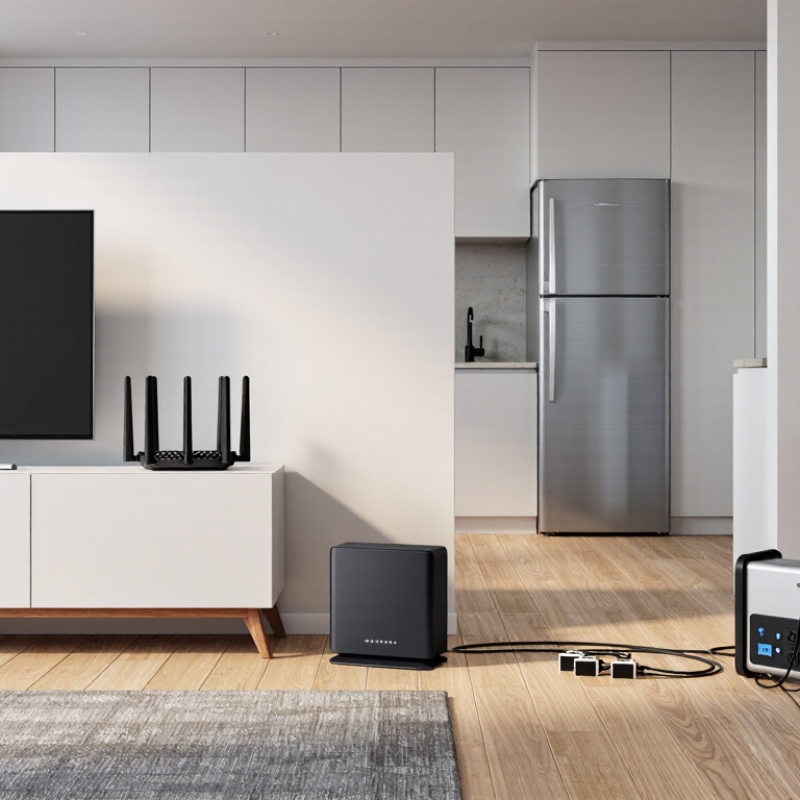
Small details count. Think of a router beside a living-room television, a refrigerator on a kitchen circuit, or a computer in a home office. Each setup has different needs. Some products focus on convenient outlet access; others provide higher stated surge-current ratings or additional connection options. Bigger numbers alone do not tell the whole story. Check the product documentation and suitability for your home.

This guide introduces China’s top 10 Home Surge Protector manufacturers and compares the details buyers should examine, including product ranges, technical information, quality systems, and export experience. It is a starting point, not a substitute for independent verification. Manufacturer claims can vary, and availability changes. The less obvious parts matter, too. A careful comparison can help buyers ask better questions before choosing a supplier or device.
China Top 10 Home Surge Protector Manufacturers

What Home Surge Protectors Do and How They Work

A home surge protector helps reduce brief voltage spikes that may reach appliances through power lines. These surges can occur during storms or when large equipment switches on and off. Inside many protectors, components such as metal-oxide varistors respond to excess voltage by diverting some energy away from connected devices. The response happens quickly. A small indicator light may show that protection is active, but it cannot prove that every component is still working perfectly.

Choose a protector with a joule rating suited to the equipment and a clamping voltage appropriate for household electronics. Check its condition after a significant surge, and replace it if the status light goes out or the casing is damaged. Keep it uncovered, dry, and away from heat. Do not plug one surge protector into another; this can create unsafe loading. Some models also include coaxial or network connections, which matter only if those cables enter the home. A protector is not a guarantee against every event, and it does not replace proper grounding or professional electrical work. Ratings can be confusing, and a higher number alone may not tell the whole story. Read the product specifications carefully.

China’s Home Surge Protection Manufacturing Landscape

China Top 10 Home Surge Protector Manufacturers

China’s Home Surge Protection Manufacturing Landscape

China’s home surge protection sector combines component sourcing, product design, assembly, and testing across a broad industrial network. Manufacturers commonly work with metal-oxide varistors, thermal disconnectors, circuit boards, and flame-retardant housings. These parts must fit together reliably inside compact devices installed near household distribution panels or sensitive appliances.

Production capability varies. Some factories focus on high-volume assembly, while others offer engineering support, custom enclosures, or different protection ratings. A polished catalog alone says little about performance. Buyers should review test reports, production controls, traceability, and the conditions used for surge testing. Ask how units respond after repeated events, not only during a single laboratory test. Details matter.

Export-oriented suppliers may adapt documentation and packaging for different markets, but requirements and installation practices can differ. Clear product labeling and consistent technical data help installers choose suitable devices. A factory visit can reveal practical details, such as incoming component checks and how finished units are sampled. It may also expose gaps. Testing can look orderly on paper yet vary between production batches, so independent verification remains valuable. No supplier can remove every risk; careful selection and correct installation still matter.

China Top 10 Home Surge Protector Manufacturers - China’s Home Surge Protection Manufacturing Landscape

A product-and-capability overview of ten common residential surge-protection segments. This is not a company ranking; no company or brand names are included.

No. Product Segment Typical Residential Application Classification or Test Waveform Key Data to Verify Manufacturing and Selection Focus
1 AC Type 1 Surge Protective Device (SPD) At the service entrance where the installation’s lightning-protection design calls for partial lightning-current protection. Type 1; tested using an impulse current waveform of 10/350 μs under IEC 61643-11. Impulse current rating (Iimp), maximum continuous operating voltage (Uc), pole arrangement, and applicable system earthing arrangement. High-energy impulse testing, robust current paths, thermal protection, and suitability for the specified service-entry installation.
2 AC Type 2 SPD Residential distribution boards for protection against induced lightning surges and switching overvoltages. Type 2; tested using an 8/20 μs impulse current waveform under IEC 61643-11. Nominal discharge current (In), maximum discharge current (Imax), Uc, voltage protection level (Up), and short-circuit withstand or backup protection requirements. Compact DIN-rail construction, thermal disconnection, clear status indication, and coordination with upstream and downstream protection.
3 Combined Type 1+2 AC SPD Service-entry or main-board installations where both Type 1 and Type 2 protection functions are required in one device. Combines Type 1 impulse-current and Type 2 discharge-current test classifications; check the ratings for each function separately. Iimp, In, Imax, Uc, Up, pole configuration, and coordination conditions stated in the product documentation. Integration of high-energy and 8/20 μs surge-handling stages, with verified thermal behavior and installation instructions.
4 AC Type 3 SPD Near sensitive household equipment as a supplementary protection stage, typically downstream of distribution-board protection. Type 3; tested with a combination-wave generator using 1.2/50 μs voltage and 8/20 μs current waveforms. Uc, Up, rated load current where applicable, connection method, and coordination with upstream SPDs. Point-of-use formats, protective coordination, safe enclosure design, and clear limits on use as a stand-alone device.
5 Single-phase 1P+N SPD Single-phase residential circuits; the appropriate arrangement depends on the supply and earthing system. Type 1, Type 2, or Type 3 variants are available; classification is determined by the tested device, not by the pole count. Protection mode, Uc for each mode, In or Iimp as applicable, Up, and compatibility with the installation’s neutral and earthing arrangement. Correct phase-to-neutral and neutral-to-earth protection design, reliable disconnection, and installation diagrams suited to the target system.
6 Three-phase 3P+N SPD Three-phase, four-wire residential or residential-building distribution boards. Type 1, Type 2, or Type 1+2 versions; select according to the installation risk assessment and protection design. System voltage, number of protected modes, Uc, In/Imax or Iimp as applicable, Up, and required backup protection. Consistent protection across phases, suitable neutral protection, clear wiring identification, and coordination for the specific earthing system.
7 Photovoltaic (PV) DC SPD Residential rooftop solar installations, on the DC side of the PV system where required by the system design. DC SPD requirements differ from AC SPD requirements; select a product specifically rated for PV DC use and the applicable standard. Maximum PV system voltage, Ucpv, discharge ratings, polarity and configuration, and compatibility with the PV array and inverter. DC arc and thermal safety, correct PV voltage rating, enclosure suitability, and clearly documented connection arrangements.
8 Data and communication-line SPD Telephone, Ethernet, antenna, or other signal lines entering a home or connecting sensitive equipment. Selected according to the protected circuit and the applicable signal-line protection standard; AC power SPD classifications do not by themselves define signal-line performance. Operating voltage, signal type and frequency, insertion loss, connection type, and applicable surge test ratings. Matching the protector to the line’s electrical and transmission characteristics while maintaining signal integrity and suitable grounding.
9 Replaceable-cartridge SPD Distribution boards where replacement of a surge module without replacing the complete base is part of the maintenance plan. The cartridge retains the classification and ratings of its specific SPD design; replace only with a compatible specified module. Module compatibility, rated Uc and discharge ratings, end-of-life indication, and whether the base remains serviceable after module operation. Secure cartridge retention, dependable electrical contacts, clear replacement coding, and visible status indication.
10 SPD with remote status contact Homes or residential buildings with monitored distribution boards or building-management systems. The contact is a monitoring feature; the SPD’s Type 1, Type 2, or Type 3 classification must be assessed separately. SPD protection ratings, contact configuration, contact rating, terminal arrangement, and the defined status signal. Reliable status transmission, electrical separation of monitoring and power circuits, and unambiguous end-of-life indication.

Data note: The table describes established SPD categories, test-waveform conventions, and specification fields; it does not represent manufacturer market shares, sales figures, or a verified ranking. Actual ratings vary by model and must be checked against the product datasheet, applicable standard, supply system, and installation design.

Standards reference: IEC 61643-11 covers low-voltage power-system SPDs and their requirements and test methods. For products sold or installed in China, confirm the applicable current Chinese national standards and local regulatory requirements for the specific product and application.

Profiles of 10 Leading Chinese Home Surge Protector Manufacturers

China’s home surge protector sector includes manufacturers with different strengths, production scales, and testing practices. Ten leading Chinese manufacturers show how product design varies across household needs. Some focus on compact power strips for apartments and small offices. Others produce wall-mounted units, socket protectors, or modular devices for residential panels.

Several profiled manufacturers emphasize high-temperature plastics, tight terminal connections, and visible status indicators. Their engineers commonly select metal-oxide varistors, thermal protection, and flame-retardant housings. Factory teams also inspect clamping voltage, leakage current, response time, and endurance during quality checks. Some facilities maintain automated assembly lines, while others depend more heavily on skilled manual inspection. That difference can affect consistency.

Practical experience matters. A well-designed protector should fit firmly into a crowded socket without blocking nearby plugs. Clear wiring labels also help installers avoid costly mistakes. Export-oriented producers often prepare documentation for IEC 61643-11 and applicable national requirements. However, compliance claims still require independent verification. Not every catalog specification reflects long-term household performance.

The comparison is not perfect. Public data may omit failure rates, supplier changes, or aging results. Buyers should request recent test reports, sample units, warranty terms, and traceable production records. A useful profile examines those details, not just factory size or marketing language. Small improvements can matter. A stronger enclosure, better heat dissipation, or cleaner soldering may protect appliances during an unstable power event.

Comparing Product Ranges, Certifications, and Manufacturing Capabilities

China’s leading home surge protector manufacturers offer more than basic power strips. Their product ranges often include wall-mounted units, extension boards, USB protectors, and DIN-rail devices. Some also produce whole-house protection for distribution panels. Buyers should compare clamping voltage, maximum discharge current, response time, and rated energy. These figures reveal practical protection levels.

Certifications help separate tested products from attractive packaging. Reliable factories commonly work with IEC 61643-11, relevant GB/T standards, CE requirements, and RoHS controls. ISO 9001 can indicate organized quality management, but it does not prove every product is safe. Ask for current test reports, certificate scopes, and laboratory details. Small differences matter.

Manufacturing capability is equally important. Strong suppliers may use automated assembly, flame-retardant housings, thermal disconnects, and end-of-line electrical testing. Traceable batch numbers can connect a finished unit to its components and inspection records. Experience matters here. A factory producing millions of units may still struggle with customized designs or short runs. No supplier is perfect. Some catalogs also hide weak warranty terms or unclear replacement procedures. Visiting a facility, when possible, reveals storage conditions, calibration practices, and whether quality checks happen consistently. A careful comparison should examine product depth, certification validity, production control, and after-sales evidence together.

Key Factors for Evaluating and Selecting a Manufacturer

When evaluating China’s top home surge protector manufacturers, do not rank them by price or catalog size alone. Ask for test reports against IEC 61643-11, including maximum discharge current, nominal discharge current, and voltage protection level. These figures show how the device handles a surge and how much voltage reaches household equipment. A reliable factory should also explain its thermal disconnect design, response testing, and replacement process in clear language.

The IEA Electricity 2024 report forecasts global electricity demand to rise by about 4% in both 2024 and 2025. This makes stable protection more important as homes use more connected appliances. Check whether the manufacturer performs batch testing, tracks components, and keeps serial records. An ISO 9001 certificate helps, but it does not prove every unit works correctly. Request recent laboratory evidence, not only a scanned certificate. Independent testing through a competent, accredited laboratory is stronger.

The Global E-waste Monitor 2024 recorded 62 million tonnes of electronic waste in 2022. Only 22.3% was formally collected and recycled. Select products with replaceable modules, durable enclosures, and transparent material declarations. A low quote can still be expensive. I would inspect factory samples, wiring quality, indicator visibility, and packaging before signing. Certifications may look impressive. They can still hide weak production control.

Get a quote
Open chat
1
Hi! How can we help you?
Chat with Pelican Containers