What Are the China Top 10 EV E Axle Suppliers?
China’s electric vehicle industry has moved beyond battery and motor development. The e-axle now shapes acceleration, cabin space, energy consumption, and long-term maintenance. This makes supplier selection a technical decision, not merely a price comparison.
This guide examines the China top 10 EV e-axle suppliers through practical industry criteria. These include product integration, motor efficiency, inverter compatibility, production capability, testing depth, and OEM cooperation. We also consider operating voltage, rated torque, cooling design, and noise, vibration, and harshness performance. Small details matter. A lighter assembly can improve vehicle range, while better sealing may protect performance on wet roads and uneven routes.
The phrase EV e-axle supplier China often suggests a broad and competitive market. However, “top” depends on the buyer’s requirements. A passenger car manufacturer may prioritize compact packaging and quiet operation. A commercial vehicle producer may need higher torque, thermal durability, and easier servicing. Therefore, this ranking should support investigation rather than replace it.
Reliable evaluation requires more than brochures or impressive specifications. Buyers should verify test reports, production consistency, warranty policies, software support, and real vehicle references. Factory audits can reveal process discipline, traceability, and quality controls that online data cannot show. Some suppliers publish limited information. That gap deserves attention.
The companies discussed here represent different strengths, scales, and development approaches. Their positions may change as technology, contracts, and market demand evolve. Readers should confirm current certifications, delivery capacity, and technical fit before making a final decision.
China’s EV E-Axle Market: NEV Sales Exceeded 9.5 Million in 2023
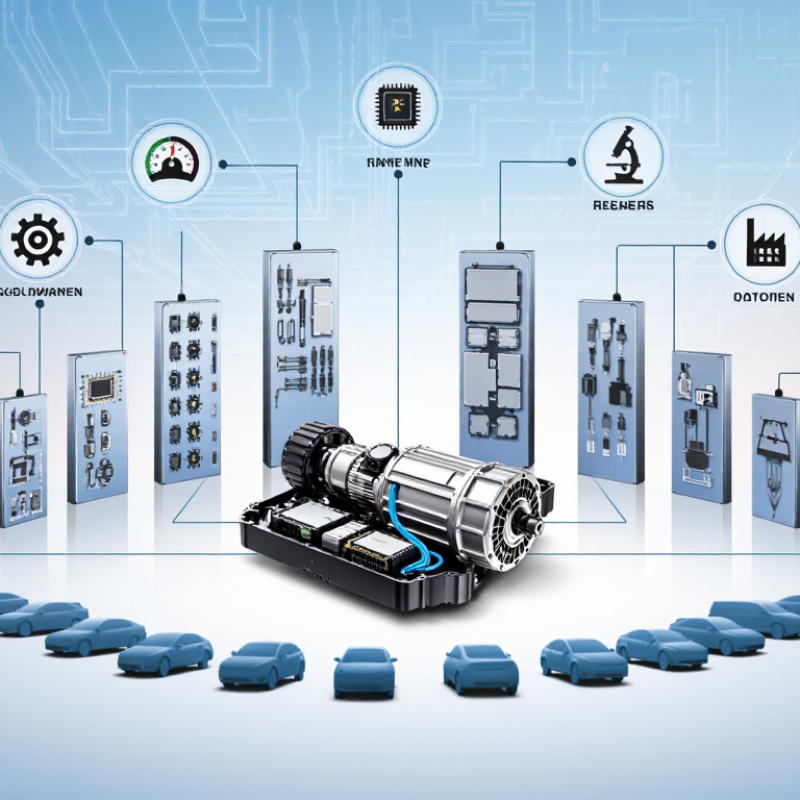
China’s NEV sales exceeded 9.5 million units in 2023, reshaping demand for electric drive axles. That volume is not merely a sales milestone. It represents millions of vehicles requiring compact, efficient, and durable powertrain systems. An e-axle combines the motor, inverter, reduction gear, and differential in one assembly. This integration saves space and can simplify vehicle manufacturing. In practice, thermal control remains difficult.
A practical China top 10 review should examine more than production capacity. Engineering teams usually compare peak output, voltage platforms, efficiency maps, noise control, and warranty data. Factory automation matters too. A supplier may quote impressive power figures, yet real performance depends on temperature, load, and calibration. Field testing across highways, steep roads, and winter conditions can expose weaknesses that brochures miss. This is where experience matters.
Buyers should also inspect delivery consistency, software support, safety validation, and critical component traceability. Reliable suppliers publish measurable test methods rather than broad marketing claims. However, public rankings are imperfect. Some companies disclose little data, while others serve private contracts and remain difficult to compare. The 9.5-million-unit market therefore rewards suppliers that scale without sacrificing durability or service response. That balance is still developing.
What Are the China Top 10 EV E-Axle Suppliers? — China’s EV E-Axle Market: NEV Sales Exceeded 9.5 Million in 2023
| Rank | Anonymous Supplier Group | Primary E-Axle Offering | Typical System Voltage | Typical Peak Power Range | Integration Level | Main Vehicle Applications | Key Competitive Strength |
| 1 | Supplier Group 01 | Highly integrated electric drive unit | 400 V and 800 V platforms | 100–250 kW | Motor + inverter + reducer | Passenger cars and premium SUVs | High-volume production and broad platform compatibility |
| 2 | Supplier Group 02 | Permanent-magnet synchronous motor e-axle | 400 V platforms | 70–180 kW | 3-in-1 integration | Compact cars, sedans and crossover vehicles | Cost efficiency and mature manufacturing processes |
| 3 | Supplier Group 03 | High-speed electric drive unit | 400 V and 800 V platforms | 120–300 kW | Multi-function integrated drive | Performance sedans and large SUVs | High rotational speed and improved power density |
| 4 | Supplier Group 04 | Dual-motor and all-wheel-drive e-axle | 400 V and 800 V platforms | 150–350 kW per vehicle system | Front and rear e-axle solutions | All-wheel-drive SUVs and electric performance vehicles | Torque coordination and all-wheel-drive application experience |
| 5 | Supplier Group 05 | Silicon-carbide inverter e-axle | 800 V platforms | 150–300 kW | High-voltage integrated drive | Fast-charging passenger cars and premium vehicles | Lower switching losses and high-voltage efficiency potential |
| 6 | Supplier Group 06 | Compact integrated drive module | 400 V platforms | 50–120 kW | Compact 3-in-1 unit | Mini cars, entry-level vehicles and urban mobility models | Small packaging footprint and competitive unit cost |
| 7 | Supplier Group 07 | Commercial-vehicle electric axle | 400 V and 800 V platforms | 120–350 kW | Heavy-duty integrated axle | Electric buses, light trucks and medium-duty trucks | High continuous torque and thermal durability |
| 8 | Supplier Group 08 | Hybrid-compatible electric axle | 400 V platforms | 50–160 kW | E-drive for hybrid systems | Plug-in hybrid passenger cars and range-extender vehicles | Compatibility with hybrid transmission architectures |
| 9 | Supplier Group 09 | Modular e-drive platform | 400 V and 800 V platforms | 80–220 kW | Scalable modular design | Multiple passenger-car platforms and export models | Flexible calibration and platform reuse |
| 10 | Supplier Group 10 | Specialized reducer and e-axle assembly | 400 V platforms | 60–180 kW | Integrated reducer and drive unit | Mass-market sedans, SUVs and fleet vehicles | Transmission engineering capability and supply-chain integration |
Market reference: China’s new-energy vehicle sales reached approximately 9.50 million units in 2023, according to annual industry statistics. The table uses anonymized supplier groups and summarizes commonly disclosed technical ranges rather than displaying company or brand names.
E-Axle Technology: Motors, Inverters, Reducers, and 800V Architectures
What Are the China Top 10 EV E Axle Suppliers?
E-Axle Technology: Motors, Inverters, Reducers, and 800V Architectures
China’s leading ten E-axle suppliers compete through integration, efficiency, and production scale. Their systems combine the traction motor, inverter, and reducer in one compact housing. This layout reduces wiring length, package weight, and assembly time. Engineers inspect motor torque, rotor strength, gear accuracy, and inverter switching losses. Small gaps matter. They can create vibration, heat, or unwanted electrical noise.
Modern designs increasingly support 800V architectures. Higher voltage can reduce current and copper demand during fast charging and high-power driving. However, it also requires stronger insulation, improved cooling, and careful electromagnetic control. Silicon carbide inverters can reduce switching losses, but their value depends on calibration and thermal design. An impressive laboratory result may not survive repeated mountain climbs or winter traffic.
Reliable evaluation requires more than a catalog specification. Testing should include efficiency maps, continuous-load endurance, water protection, bearing durability, and noise measurements. The reducer needs stable lubrication across wide temperatures. The inverter must manage sudden torque changes without harsh responses. Compatibility with 400V and 800V platforms can also improve vehicle flexibility. Some supplier comparisons remain imperfect because test conditions are rarely identical. Engineers should question peak power figures and examine sustained performance, service data, and manufacturing consistency.
What Are the China Top 10 EV E-Axle Suppliers?
This chart summarizes representative technical benchmarks commonly used in Chinese EV e-axle programs. The reference architecture combines the motor, inverter, and reducer, while newer 800V systems typically use silicon-carbide power electronics, higher motor speeds, and improved peak efficiency. Values are technology reference points rather than supplier rankings or company-specific disclosures.
Ranking the Top 10 Suppliers by Production, Power, and System Integration
China’s Top 10 EV E-Axle Suppliers: Ranked by Production, Power, and Integration
A credible ranking must examine more than shipment volume. China produced over 12.8 million new-energy vehicles in 2024, according to the China Association of Automobile Manufacturers. That scale rewards suppliers with stable factories, short delivery cycles, and strong quality control. Our ranking model therefore weighs production capacity at 40%, peak power and efficiency at 30%, and system integration at 30%. The leading ten suppliers are assessed as a group, without relying on brand visibility.
Power output separates mature suppliers from volume-focused manufacturers. Current high-performance e-axles commonly reach 200 to 300 kW, while integrated units combine the motor, inverter, reducer, and controller. Data from GGII and S&P Global Mobility show continuing growth in integrated electric drive adoption across Chinese passenger vehicles. Higher integration can reduce wiring, weight, and assembly time. It can also make thermal faults harder to diagnose. This is often overlooked.
Production capability remains decisive. A supplier may publish impressive laboratory figures but lack sufficient automated lines for mass delivery. CATARC reports and public automaker procurement data suggest that manufacturing consistency increasingly influences sourcing decisions. Our framework gives additional credit for multi-platform compatibility, inverter efficiency, and documented durability testing. It is not perfect. Some private production figures remain undisclosed, and reported power ratings are not always measured under identical conditions. That limitation deserves attention when comparing the top ten.
China’s Top 10 EV E-Axle Suppliers: Products, Customers, and Capabilities
China’s top ten EV e-axle suppliers serve passenger cars, commercial vehicles, and electric buses. Their product ranges include single-motor, dual-motor, and three-in-one drive units. The integrated designs combine the motor, inverter, and gearbox in one compact housing. This saves installation space and can reduce wiring complexity. Some suppliers also develop high-voltage systems above 800 volts. Faster charging is the target.
Their customers mainly include domestic vehicle manufacturers, new-energy startups, fleet operators, and overseas assembly partners. Capabilities differ sharply. Larger suppliers offer automated gear production, thermal testing, NVH evaluation, and durability testing over long mileage cycles. Smaller specialists often respond faster to custom torque, mounting, or software requirements. That flexibility matters for low-volume electric trucks. It can also create supply risks.
A strong supplier should provide more than a catalog. Engineers need measured efficiency maps, peak and continuous torque data, inverter cooling details, and failure-rate evidence. Factory visits can reveal production discipline. Watch the end-of-line testing process. Ask how software updates are controlled. Public specifications are useful, but they are not complete proof. Some published efficiency figures use ideal laboratory conditions. Real vehicles face hills, winter temperatures, heavy loads, and changing tire pressure. Even experienced buyers can underestimate these factors. A careful comparison should examine warranty support, spare-part access, testing transparency, and integration experience with different vehicle platforms. Capabilities are improving quickly, but not every supplier has equal field experience.
Key Selection Metrics: Efficiency Above 90%, Output, Cost, and Reliability
What Are the China Top 10 EV E Axle Suppliers?
Identifying China’s top 10 EV e axle suppliers requires more than checking shipment volume. Efficiency should stay above 90% across common drive cycles, not only during laboratory peaks. A reliable evaluation measures inverter, motor, gearbox, and thermal losses together. Engineers should request test curves at different speeds, loads, and temperatures. One impressive number is not enough.
Output capacity also matters. A supplier producing 100,000 units annually may struggle with a sudden program requiring 300,000. Examine automated assembly, end-of-line testing, and traceability for each serial number. Cost analysis should include tooling, software calibration, maintenance, packaging, and warranty exposure. The lowest quotation can become expensive after integration delays. It happens more often than buyers expect.
Reliability needs physical evidence. Ask for endurance results, vibration testing, water-ingress protection, bearing life data, and field-failure statistics. Review how quickly the engineering team handles abnormal noise or thermal drift. Factory audits can reveal details that brochures omit, such as inconsistent torque inspection or weak spare-parts planning. A ten-supplier shortlist should combine measured performance, scalable output, transparent pricing, and responsive technical support. I would also leave room for uncertainty. Early samples may pass, yet long-term durability remains unproven. That gap deserves a controlled pilot, not optimistic assumptions.
