Why Cargo Shipping Containers are Essential for Global Trade and Logistics
In the intricate web of global trade, cargo shipping containers are a vital component that facilitates the efficient movement of goods across international borders. According to a report by the World Trade Organization (WTO), approximately 90% of the world's trade is carried by sea, with cargo shipping containers playing a crucial role in this process. These modular units are designed for easy loading, transport, and unloading, allowing for increased efficiency and reduced shipping costs. The Global Container Shipping Market Report indicates that the market size is expected to reach USD 15.5 billion by 2026, highlighting the growing importance of cargo shipping containers in supporting international commerce.
The rise in e-commerce and globalization has further intensified the demand for cargo shipping containers, making them essential not only for manufacturers and retailers but for economies worldwide. According to the International Maritime Organization (IMO), the shipping industry, which heavily relies on cargo containers, moves over 11 billion metric tons of goods annually, underscoring their critical role in supply chain logistics. As businesses strive to meet growing consumer demands, understanding the significance of cargo shipping containers becomes imperative for stakeholders in the logistics sector, paving the way for advancements in technology and operational strategies to enhance global trade networks.
Importance of Cargo Shipping Containers in Global Supply Chains
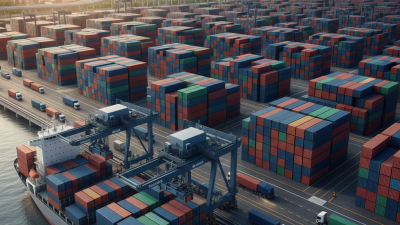
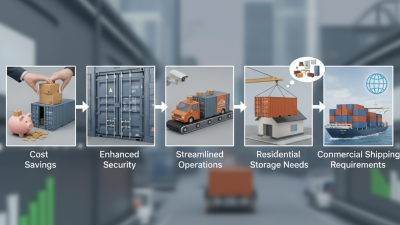
Cargo shipping containers play a pivotal role in global supply chains by providing a standardized method for transporting goods across vast distances. Their uniform size and durability allow for seamless transfer between different modes of transport, such as ships, trucks, and trains. This interoperability significantly reduces handling times and minimizes the risk of damage, ensuring that products reach their destinations in optimal condition. The ability to stack containers efficiently also maximizes space utilization in shipping vessels, leading to cost savings and increased shipping capacity.
Moreover, the use of cargo shipping containers enhances security and tracking throughout the supply chain. Modern containers are equipped with advanced technology, such as GPS tracking and electronic seals, allowing businesses to monitor their shipments in real time. This transparency fosters trust among stakeholders, as they can verify the location and condition of their goods at any stage of transit.
Additionally, the standardized nature of containers simplifies customs processes, expediting clearance and reducing delays, which is crucial in today’s fast-paced global market. Overall, cargo shipping containers are indispensable for maintaining the efficiency and reliability of global supply chains.
Historical Development of Shipping Containers and Their Standardization
The historical development of shipping containers has been pivotal in shaping global trade logistics. Initially introduced in 1956, the first container ship transformed the maritime industry, streamlining the process of loading and unloading cargo. The subsequent standardization of container dimensions—encompassing the 20-foot and 40-foot containers—allowed for interoperability across different modes of transport, vastly improving efficiency in logistics operations. According to industry reports, container manufacturing in China is set to reach a remarkable output of 29.89 million cubic meters by 2024, demonstrating a year-on-year increase of 193.42%. This surge highlights China's dominance in the global container manufacturing sector, underpinning its critical role in facilitation of international trade.
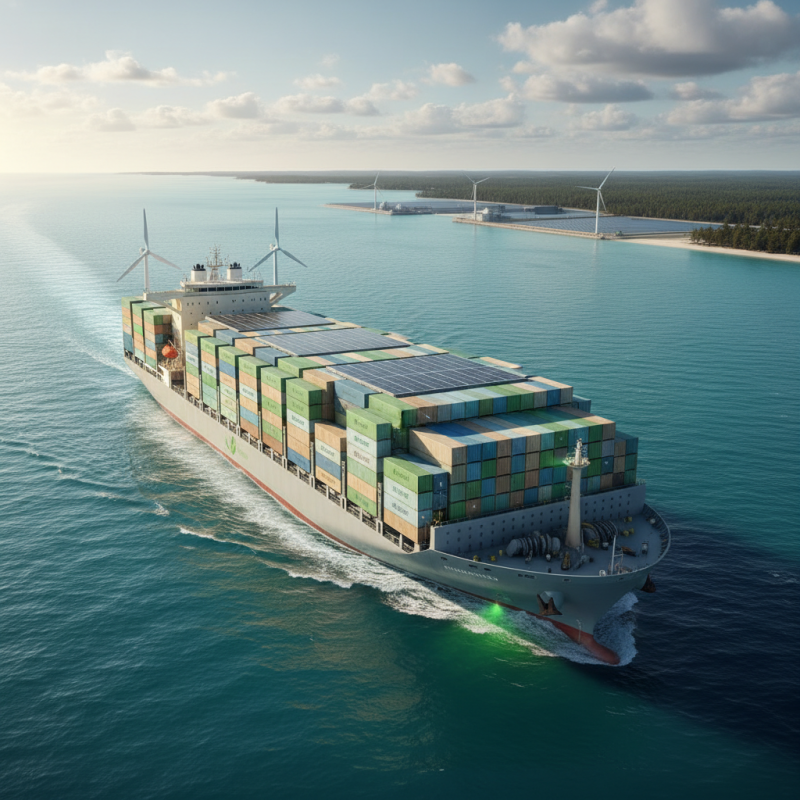
The significance of inland shipping has also grown, serving as a vital component of a comprehensive transportation system. In China, advancements in inland navigation are essential for regional economic growth and optimizing industrial layouts. As shipping practices evolve, discussions continue regarding the future trajectory of container ship sizes. While some industry experts assert that the trend towards larger vessels will persist, others argue that we may be approaching a saturation point. Regardless, the development of innovative projects, such as electric container ships, emphasizes a collective movement towards sustainable shipping solutions, positioning the industry steadily towards a greener future.
Impact of Containerization on Shipping Efficiency and Cost Reduction
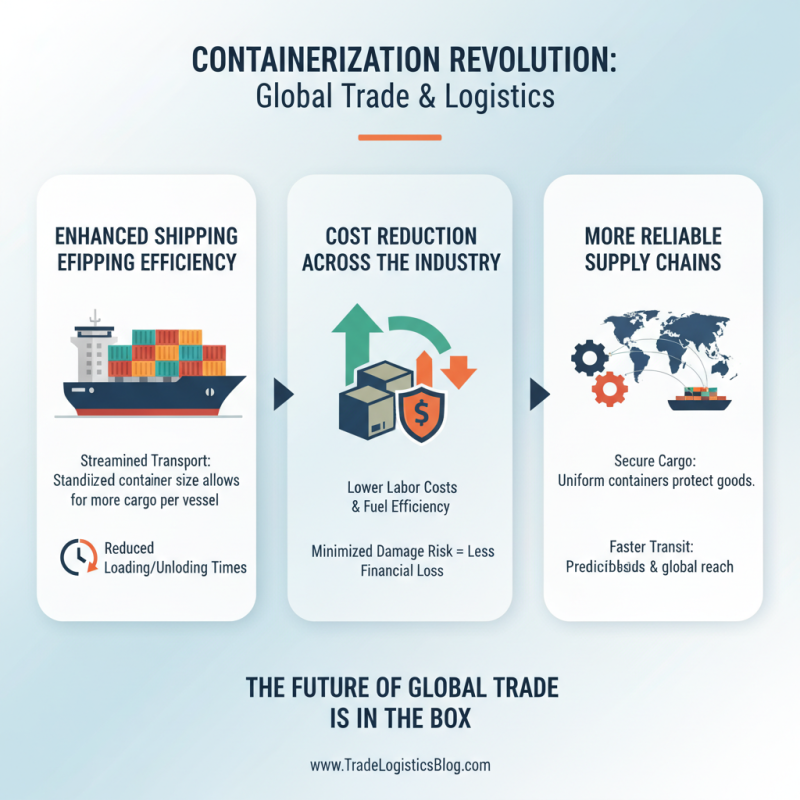
Containerization has revolutionized global trade and logistics, significantly enhancing shipping efficiency and driving cost reductions across the industry. The emergence of cargo shipping containers has streamlined the process of transporting goods, allowing ships to carry more cargo in a standardized format. This shift not only decreases loading and unloading times but also minimizes the risk of cargo damage, leading to more reliable supply chains.
The market data underscores the importance of containerization in global logistics. The global container ship market is anticipated to grow from $15.37 billion in 2025 to $21.40 billion by 2032, reflecting a compound annual growth rate (CAGR) of 4.8% during this forecast period. Further emphasizing this trend, the shipping containers market is projected to reach USD 12 billion by 2033. The Asia-Pacific (APAC) region holds a significant share, accounting for 41.6% of the global shipping container market, highlighting the region's critical role in facilitating international trade through efficient logistics solutions.
This growing market reflects the vital role that containerization plays in modern logistics. As companies continue to seek ways to enhance operational efficiency and reduce costs, the ongoing investment in cargo shipping infrastructure will be crucial in supporting the growth of global trade. The expected increase in the shipping containers market size to approximately USD 15.01 billion by 2034 further illustrates the expanding influence of containerization on logistics strategies worldwide.
Statistics on Container Shipping Volume and Global Trade Growth Trends
The significance of cargo shipping containers in global trade is underscored by impressive statistics that highlight their volume and the growth trends in trade. According to recent data, over 90% of the world’s trade is carried by sea, with container shipping volumes increasing steadily over the past two decades. In 2000, around 80 million twenty-foot equivalent units (TEUs) were transported, a figure that has surged past 200 million TEUs in recent years. This exponential growth reflects not only the rising demand for goods across borders but also the efficiency and scalability of container shipping.
Moreover, global trade has experienced a robust expansion, driven by globalization and advancements in logistics technology. The World Trade Organization forecasts that global merchandise trade volume growth will rise by approximately 4% annually, highlighting the critical role of container shipping in facilitating trade. The ability to move vast quantities of products quickly and economically has become a cornerstone of international business, making cargo shipping containers an indispensable asset in the logistics framework. As countries continue to enhance their supply chains and expand market access, the reliance on container shipping will likely intensify, propelling further innovations and growth in the logistics sector.
Why Cargo Shipping Containers are Essential for Global Trade and Logistics - Statistics on Container Shipping Volume and Global Trade Growth Trends
| Year |
Global Container Shipping Volume (TEU) |
Global Trade Growth Rate (%) |
Number of Shipping Routes |
| 2018 |
1.8 billion |
3.0% |
5,000 |
| 2019 |
1.9 billion |
2.4% |
5,100 |
| 2020 |
1.7 billion |
-5.0% |
4,800 |
| 2021 |
2.0 billion |
9.2% |
5,300 |
| 2022 |
2.1 billion |
5.7% |
5,500 |
| 2023 |
2.2 billion |
3.5% |
5,700 |
Environmental Considerations and Innovations in Container Shipping Practices
The environmental impact of cargo shipping containers has garnered increasing attention in recent years. According to a report by the International Maritime Organization (IMO), shipping accounts for approximately 2.5% of global greenhouse gas emissions. This figure underlines the necessity for innovations in container shipping practices to minimize environmental harm. One significant development is the adoption of eco-friendly containers made from sustainable materials, which not only reduces waste but also enhances the lifecycle of these units.
Moreover, the industry is witnessing a shift towards digital tracking and monitoring technologies. These innovations can help optimize shipping routes, thereby decreasing fuel consumption. For instance, a study by VesselFinder reveals that efficient route planning can reduce emissions by up to 15%. Shipping companies implementing these technologies are not just complying with environmental regulations; they are also benefiting from lower operational costs and improved delivery efficiency.
**Tip:** When selecting a shipping partner, inquire about their sustainability practices and the use of eco-friendly materials in their container fleet. This can significantly reduce your carbon footprint while enhancing your corporate responsibility profile.
**Tip:** Keep an eye on the latest technological trends in the shipping industry. Integrating advanced tracking systems can streamline your logistics operations, leading to both cost savings and a more environmentally responsible supply chain.