
en es

2026 Best Tissue Tape Types for Global Buyers?

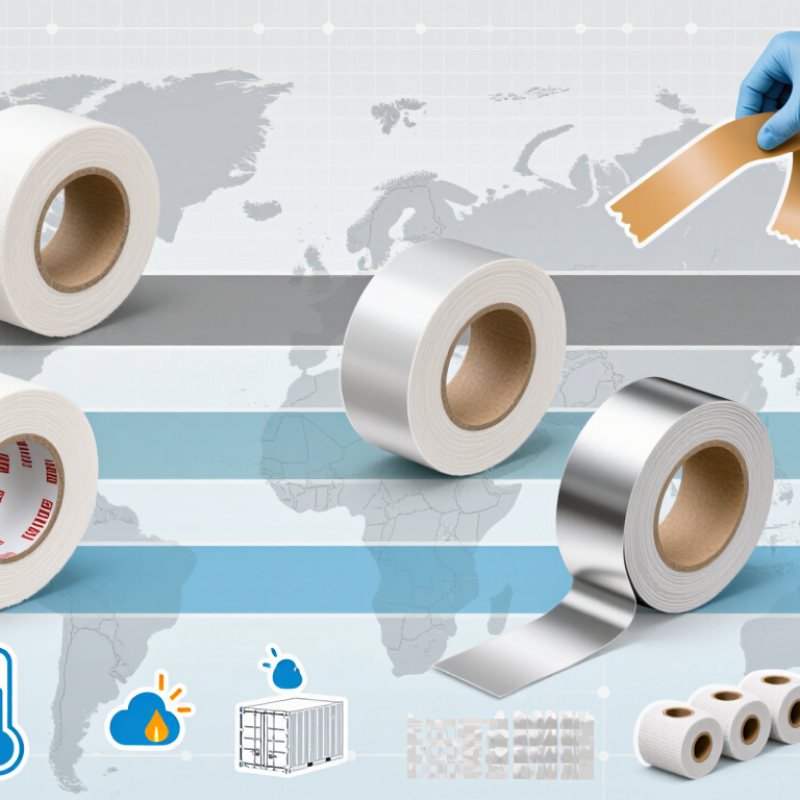
Choosing the right Tissue Tape in 2026 requires more than comparing roll prices. Global buyers must match tape construction with substrates, climate, converting equipment, and final use. Common options include single-coated nonwoven tape, double-coated tissue tape, PET-reinforced tissue tape, and transfer-style adhesive products. Each behaves differently under pressure, heat, humidity, and repeated handling.

Dr. István Benedek, a respected pressure-sensitive adhesive researcher, emphasized a practical principle: “Adhesive performance is always a system property, not a tape property.” This idea remains highly relevant for international purchasing teams. A tape that bonds firmly to cardboard may fail on low-energy plastics. A strong rubber adhesive may perform well in a dry warehouse, yet soften inside a hot shipping container. Small details matter. Check peel adhesion, shear strength, tack, liner release, aging resistance, and application temperature. Test the actual surfaces, not only laboratory panels.

Reliable sourcing also involves roll width, splice control, packaging protection, documentation, and batch consistency. Acrylic adhesives often support better aging resistance, while rubber-based systems may offer faster initial grab. Neither is automatically superior. That is the difficult part. Buyers sometimes choose the strongest tape and still experience lifting edges, adhesive transfer, or liner waste. A controlled trial can expose these weaknesses early. This guide compares the best Tissue Tape types for global buyers, while recognizing an uncomfortable truth: “best” depends on the application, destination climate, and production reality.
2026 Best Tissue Tape Types for Global Buyers?

What Is Tissue Tape and How Is It Used?

Tissue tape is a pressure-sensitive adhesive tape with a thin paper-like carrier. Its soft structure makes it easy to tear, cut, and conform to light curves. Many versions use adhesive on one side, while double-sided tissue tape bonds two surfaces together. The carrier may contain paper fibers, nonwoven material, or a reinforced layer for better handling.

Global buyers often select tissue tape for carton sealing, paper splicing, gift wrapping, labeling, lightweight mounting, and craft assembly. A double-sided type can hold a paper sign on a clean board without visible fasteners. A reinforced grade may perform better when rolls face tension during converting. For fragile paper, a lower-tack adhesive can reduce surface damage. It feels simple.

Performance depends on more than adhesive strength. Buyers should check bond time, peel strength, shear resistance, storage temperature, and humidity tolerance. Dusty, oily, or textured surfaces can weaken contact. A tape that works well in a dry warehouse may fail in a humid coastal shipment. That assumption fails.

During evaluation, apply samples to the actual materials and press them with similar force. Test them after several hours and again after temperature changes. I would not rely only on a supplier data sheet; test results can vary with liner quality, roll aging, and application pressure. One practical mistake is choosing the strongest adhesive for every use. Excessive tack may tear paper, leave residue, or make repositioning impossible. Procurement teams should also confirm roll width, length, core size, packaging, and batch consistency before placing large orders.

Key Tissue Tape Types and Their Structural Differences

2026 Best Tissue Tape Types for Global Buyers?

Tissue tape is not one uniform product. Its carrier structure changes handling, strength, and adhesive performance. Flat tissue tape has a smooth, dense carrier. It usually offers clean converting and stable die-cutting. Crepe tissue tape uses a lightly crimped carrier. It conforms better to curved surfaces but may stretch during application. Reinforced tissue tape includes fibers or scrim inside the carrier. This structure improves tear resistance and dimensional stability.

Single-sided tissue tape has adhesive on one face and often supports mounting, sealing, or light bundling. Double-sided tissue tape places adhesive between the tissue carrier and a release liner. It can bond two surfaces with a neat, hidden joint. Water-based, hot-melt, and solvent-based adhesives also create different results. Tack, shear strength, temperature resistance, and aging behavior should be checked separately. One value rarely explains the whole performance.

Tips: Ask for the carrier GSM, thickness tolerance, peel data, and liner type. Test the tape on the real substrate, not only on laboratory paper. Check storage conditions, especially in humid ports. A tape that performs well in a dry factory may release poorly after long transit. I have seen buyers compare only adhesive strength and overlook edge lifting. That is an expensive lesson. Request samples from more than one production lot. Small variations matter. Surface energy, pressure, and application speed can change the final bond.

2026 Best Tissue Tape Types for Global Buyers? - Key Tissue Tape Types and Their Structural Differences

Tissue Tape Type Basic Structure Adhesive Configuration Typical Thickness Key Performance Characteristics Common Applications Main Buying Considerations
Single-Coated Tissue Tape Thin tissue-paper carrier with adhesive on one side and a non-adhesive surface or release treatment on the other side. One adhesive coating; may use acrylic, rubber-based, or hot-melt adhesive systems. Commonly about 60–150 μm, depending on the carrier and adhesive coat weight. Flexible, conformable, easy to tear, and suitable for joining or mounting where bonding is required on only one side. Splicing, labeling, lightweight bundling, paper joining, and general industrial assembly. Check unwind behavior, tearability, adhesion to the target surface, and resistance to temperature and humidity.
Double-Coated Tissue Tape Tissue-paper carrier coated with adhesive on both sides and normally covered by a release liner. Two adhesive layers, which may be identical or optimized separately for the liner and the application surface. Commonly about 80–250 μm, excluding the release liner. Good conformability, balanced handling strength, and reliable bonding of two surfaces without visible mechanical fasteners. Nameplates, signage, envelopes, point-of-sale materials, foam bonding, insulation, and light-to-medium-duty mounting. Evaluate liner release, converting performance, initial tack, final adhesion, and compatibility with low-surface-energy plastics.
Transfer Tissue Tape A continuous adhesive film carried on a release liner, with no permanent tissue carrier after application. Adhesive layer exposed after liner removal; acrylic and rubber-based systems are commonly used. Often about 40–150 μm, excluding the release liner. Very thin bond line, high flexibility, clean die-cutting, and good suitability for laminating thin materials. Paper converting, graphic arts, membrane bonding, nameplates, labels, and thin-film lamination. Confirm the adhesive’s shear strength, liner stability, resistance to edge ooze, and compatibility with automated dispensing.
Reinforced Tissue Tape Tissue carrier strengthened with embedded or laminated filaments, scrim, or synthetic fibers, with adhesive applied to one or both sides. Single-coated or double-coated construction; adhesive selection depends on the required holding power and substrate. Commonly about 100–300 μm, depending on reinforcement and adhesive weight. Higher tensile strength, improved dimensional stability, and better resistance to stretching than unreinforced tissue tape. Heavy-duty splicing, carpet and flooring installation, packaging reinforcement, and industrial joining. Compare reinforcement direction, tensile strength, tear behavior, thickness tolerance, and whether the tape remains hand-tearable.
Removable Tissue Mounting Tape Usually a thin tissue carrier with a removable or differential adhesive system and a release liner. Often double-coated, with adhesive designed to provide temporary holding and controlled removal. Commonly about 80–220 μm, excluding the liner. Temporary attachment, clean removal under specified conditions, and reduced risk of substrate damage when correctly matched. Temporary signage, exhibition graphics, repositionable displays, sample mounting, and short-term fixing. Test dwell time, removal angle, surface cleanliness, paint quality, temperature, and residue after removal.
High-Temperature Acrylic Tissue Tape Tissue carrier coated with an acrylic adhesive formulated for elevated-temperature or demanding environmental exposure. Usually single- or double-coated acrylic adhesive; some constructions use differential adhesive layers. Commonly about 80–250 μm, excluding the release liner where applicable. Better resistance to aging, ultraviolet exposure, oxidation, and temperature variation than many general-purpose rubber-based tapes. Automotive trim, appliance assembly, electronics, signage, insulation, and durable industrial laminating. Review the actual continuous and short-term temperature ratings, aging data, substrate preparation, and final bond development time.
Water-Based Acrylic Tissue Tape Tissue carrier coated with a water-based acrylic adhesive and commonly supplied with a paper or film release liner. A water-dispersed acrylic adhesive layer, normally applied to one or both sides. Commonly about 70–220 μm, excluding the release liner. Low-solvent manufacturing profile, good aging performance, and balanced adhesion for paper, films, foams, and selected plastics. Paper converting, envelope production, labels, graphic materials, foam lamination, and general assembly. Check drying uniformity, moisture sensitivity, minimum application temperature, initial tack, and long-term shear performance.
Technical note: Thickness ranges are typical market ranges for the tape construction only and can vary by adhesive formulation, carrier weight, reinforcement, release liner, and manufacturing specification. Actual performance should be confirmed through supplier technical data and application testing.

How to Compare Adhesion, Breathability, and Skin Comfort

2026 Best Tissue Tape Types for Global Buyers?

Choosing tissue tape is not only about strong adhesion. Global buyers should compare how the tape behaves on real skin, under movement, and in humid conditions. A tape may hold firmly on dry skin but lift after sweat appears. Adhesion should remain reliable without causing painful removal. Ask suppliers for peel, shear, and loop tack data. Testing at different temperatures is also important.

Adhesion should remain reliable without causing painful removal.

Breathability affects comfort during longer wear. A thin tissue carrier can help moisture escape, reducing clamminess beneath the tape. However, thinner does not always mean better. Some lightweight tapes tear during application or lose stability around joints. Skin comfort also depends on adhesive chemistry, residue, edge softness, and removal force. Sensitive-skin users may need a gentler adhesive, even if its initial tack is lower. No tape wins every test. That is worth remembering.

Tips: Apply samples to clean, dry skin for several hours. Check redness, itching, edge lifting, and residue after removal. Compare results after light movement and perspiration. Request technical files, safety information, and batch consistency records before placing a large order. Review local labeling and product requirements for each market. A small trial often reveals problems that laboratory figures miss. Some evaluations may feel subjective, and buyer expectations can differ. Record both measured results and user feedback before deciding.

Which Tissue Tape Fits Medical, Industrial, and Everyday Applications?

Medical tissue tape is designed for skin contact, not maximum strength. Paper-based tape suits light dressing fixation and allows easy tearing by hand. Nonwoven tape usually conforms better around knuckles, elbows, and curved skin. Silicone adhesive can reduce discomfort during removal, while acrylic adhesive may provide firmer, longer-lasting contact. However, “hypoallergenic” does not mean risk-free. Test a small area when skin sensitivity is uncertain, and follow clinical handling requirements.

Industrial applications require a different balance. Double-sided tissue tape can mount nameplates, foam strips, labels, and lightweight panels. Acrylic adhesives often perform well across changing temperatures, but rubber-based options may offer faster initial grab. Dust, oil, and textured surfaces can weaken the bond. A clean metal panel feels simple; a powder-coated surface is less predictable. Test adhesion after 24 hours, not only after pressing the tape.

For everyday use, tissue tape works well for paper crafts, gift wrapping, temporary signs, and small repairs. Choose a lighter adhesive when clean removal matters. Choose a stronger grade for smooth plastic or painted wood. Avoid assuming a thicker tape is always better. It may leave more residue or show through thin paper. Storage also matters: heat and humidity can quietly reduce performance. Real results depend on surface preparation, pressure, temperature, and time. That part is easy to overlook.

Global Buying Factors: Quality, Compliance, Packaging, and Supply Chain

2026 Best Tissue Tape Types for Global Buyers?

Global buyers should match tissue tape construction with the application, not only the quoted price. Double-sided tissue tape suits lightweight paper, foam, and plastic bonding. Reinforced tissue tape offers better handling during converting and die-cutting. For delicate surfaces, a low-tack option can reduce residue and surface damage. A sample roll should pass peel, shear, aging, and unwind checks under realistic temperatures.

Quality depends on more than adhesive strength. Buyers should request technical data, batch records, and clear test conditions. Ask whether the tissue carrier tears cleanly at the required width. Small defects often appear near the roll edges. They matter during automated production. I have found that a strong initial bond can still fail after humidity exposure. That result deserves investigation, not excuses.

Compliance documents should match the destination market and intended use. Confirm material composition, restricted-substance statements, and safety documentation where applicable. Packaging should protect rolls from dust, moisture, crushing, and excessive heat. Inner plugs, sealed cartons, and readable lot labels improve warehouse control. Supply chain reviews should cover lead time, backup raw materials, production capacity, and inspection procedures. A supplier may promise stable delivery, yet port delays and seasonal demand can disrupt plans. Build a practical buffer. It will not solve every problem. Forecasts are imperfect, especially for new markets. Regular communication, pre-shipment inspection, and retained samples create stronger evidence when quality questions arise.

Get a quote
Open chat
1
Hi! How can we help you?
Chat with Pelican Containers