
Choosing the right Hole Saw For Metal depends on the material, its thickness, and how often you will make the cut. A hole saw that works well on thin steel may struggle with stainless plate. The difference shows up quickly: rough edges, a smoking pilot bit, or teeth that dull before the job is done. Not ideal.
For occasional holes in mild steel, a quality bi-metal saw is often a practical choice. Its hardened teeth can handle many workshop tasks without the cost of a specialist cutter. Carbide-tipped hole saws may be better for repeated cuts or tougher metals, but they need careful setup and a compatible drill. Check the manufacturer’s guidance before choosing a tooth style or operating speed. Slower speeds, steady pressure, and cutting fluid can help control heat, especially in stainless steel. The exact speed depends on the saw’s diameter and the metal, so avoid guessing from appearance alone.
Details matter. Secure the workpiece, use eye protection, and clear metal chips with the drill stopped. A pilot bit helps keep the saw centered, while a firm grip reduces the chance of sudden twisting. I’d be wary of any claim that one saw is best for every metal; even a good cutter can disappoint when matched to the wrong material. This guide compares common hole saw types, explains what to check before buying, and helps you choose a suitable option for your project.
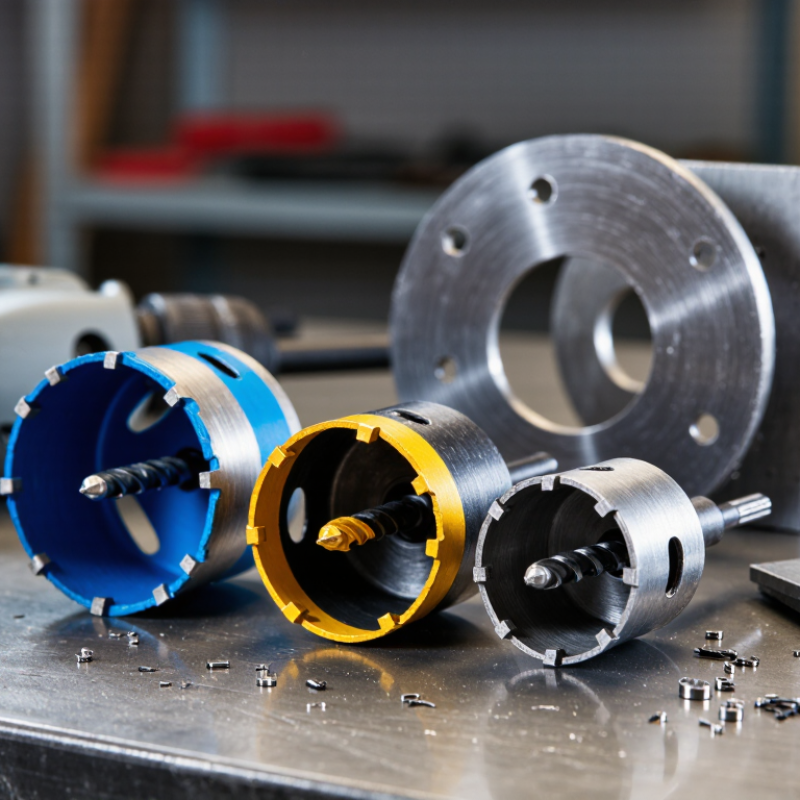
For general metalwork, a bi-metal hole saw is a dependable choice for thin sheet, mild steel, and pipe. Its high-speed-steel teeth are joined to a tougher steel body, helping the cutter flex without breaking easily. Variable tooth pitch can reduce chatter and leave a cleaner edge. For stainless steel or repeated cuts through thicker stock, a carbide-tipped hole saw usually lasts longer and cuts more aggressively. It also needs steady pressure; forcing it can chip the teeth. It is easy to overestimate toughness.
Tooth choice matters because metal can hold heat at the cutting edge. ASM International’s materials-property data put 304 stainless steel’s thermal conductivity at roughly 15 W/m·K near room temperature, so heat does not disperse quickly. This supports using a slower speed, cutting fluid, and pauses to clear chips. A pilot drill helps keep the saw centered, especially on curved pipe. Match the saw’s recommended speed to the metal thickness and diameter, rather than treating every cut alike.
Tips: Clamp the work securely, mark the center, and start gently. Keep the saw square as the teeth engage. If chips turn blue or the cut squeals, stop and check speed, lubrication, and tooth condition. A small test cut is worthwhile; real materials can behave less neatly than a spec sheet suggests.
A hole saw’s best tooth material depends on both the metal and its thickness. ASM International’s alloy-property tables list thermal conductivity at about 16 W/m·K for 304 stainless steel and 167 W/m·K for 6061 aluminum. Stainless steel retains heat near the cut, so use a sharp, heat-resistant cutter, steady pressure, and cutting fluid. Aluminum spreads heat faster, but its soft, sticky chips can clog the teeth. Keep the gullets clear.
Thickness matters. Thin sheet can snag as the teeth break through, leaving a rough edge or a distorted panel. Clamp it firmly and ease pressure near breakthrough. For mild steel and thin stock, a bi-metal hole saw is often practical; thick or hard stainless may call for carbide-tipped teeth. Match the saw’s cutting depth to the workpiece, too. A deep cut traps chips against the cup wall.
The Machinery’s Handbook discusses how cutting speed and feed must suit the work material; a single speed setting will not fit every alloy or diameter. Run slower on stainless than on aluminum, and clear chips before they pack tightly. Coolant helps. One caveat: alloy condition and saw geometry also matter, so thickness alone cannot predict tool life. Check the cutter’s operating guidance and test on scrap when the material is unfamiliar.
| Metal Type | Typical Thickness | Suitable Hole Saw | Cutting Guidance | Selection Notes |
|---|---|---|---|---|
| Mild or carbon steel | Thin sheet to about 6 mm (¼ in), subject to saw depth | Bi-metal hole saw with high-speed-steel cutting teeth | Use a low-to-moderate speed, steady feed, and cutting fluid for thicker stock. Clear chips periodically. | A general-purpose choice for occasional cuts. For thicker plate or repeated production work, consider an annular cutter or another tool rated for the job. |
| Stainless steel | Thin sheet to about 6 mm (¼ in), depending on the saw’s cutting depth and rating | Bi-metal saw with cobalt-alloy teeth, or a purpose-rated carbide-tipped hole saw | Run slowly, apply consistent pressure, and use suitable cutting oil. Avoid pausing while the teeth rub against the work. | Stainless can work-harden when overheated or rubbed. Choose a saw explicitly rated for stainless steel and follow its speed guidance. |
| Aluminum | Thin sheet to about 6 mm (¼ in), depending on saw depth | Sharp bi-metal hole saw; a suitable carbide-tipped model may be used for repeated cuts | Use a steady feed and clear chips to reduce clogging. A lubricant suitable for aluminum can help prevent chips sticking to the teeth. | Secure the work firmly. Aluminum is relatively soft, so sharp teeth and effective chip removal matter more than force. |
| Cast iron | Thin sections; check the saw’s rated cutting depth | Carbide-tipped hole saw specifically rated for cast iron | Use controlled pressure and a speed recommended by the tool maker. Manage dust and wear appropriate eye and respiratory protection. | Cast iron is abrasive and can wear ordinary teeth quickly. Confirm that the saw is designed for this material. |
| Very thin metal sheet | Approximately 1.5 mm (1⁄16 in) or less | Fine-tooth bi-metal hole saw, or a sheet-metal hole cutter designed for thin stock | Clamp the sheet between sacrificial backing boards where practical; use a slow, controlled start to limit grabbing and distortion. | Thin sheet can catch or deform. Support it close to the cut and keep hands clear of the rotating tool. |
| General rule: Match the saw to the metal and its thickness, check the saw’s maximum cutting depth, and follow the manufacturer’s speed and lubricant recommendations. Clamp the work securely, use eye protection, and do not exceed the limits of the drill or hole saw. | ||||
Bi-Metal and Carbide-Tipped Hole Saws
Both types can cut metal, but they suit different workloads. A bi-metal hole saw has hardened steel teeth joined to a more flexible body. It is a practical choice for mild steel, aluminum, and occasional cuts through thin sheet. The teeth tolerate small amounts of vibration, which helps during ordinary shop work. Keep the saw steady, though. Thin metal can grab or deform if the tool twists.
Carbide-tipped hole saws use hard cutting tips that resist wear, making them useful for repeated cuts or tougher materials such as stainless steel. They can last longer under demanding conditions, but their teeth are less forgiving of chatter and sudden side pressure. Secure the workpiece, use a suitable cutting fluid, and clear chips often. Heat changes everything. A slow, controlled feed is usually safer than forcing the cut.
For a few holes in mild steel, bi-metal is often the sensible, lower-cost option. For frequent work or harder metal, carbide tips may justify their higher cost. Neither type is automatically best; thickness, hole diameter, tool stability, and cutting speed all matter. A detail easy to overlook is chip clearance: packed chips can raise heat and spoil an otherwise clean cut. Even a good saw can struggle when the setup is poor.
Bi-metal and carbide-tipped hole saws compared across common selection factors.
How to read this chart: Scores are qualitative ratings from 1 (lower) to 5 (higher), not standardized test measurements. Bi-metal saws are a versatile, typically lower-cost choice for general metalwork and tolerate impact well. Carbide-tipped saws are often preferred for hard or abrasive metals, but are generally less tolerant of rough handling. Check the saw maker’s specifications for the material and thickness you plan to cut.
Choosing a hole saw for metal starts with the hole diameter, but the material matters just as much. Measure the opening carefully, including any clearance needed for a fitting or fastener. A saw that is slightly oversized can leave a rough, awkward gap. For mild steel and thinner sheet, a bi-metal saw is often a practical choice. Carbide-tipped teeth can suit tougher metals, but check the saw’s stated material range rather than assuming it works on every alloy.
Tooth design affects how cleanly the saw cuts. Thin sheet can snag, so choose a suitable finer or variable tooth pattern and keep the work firmly clamped. Thicker stock needs teeth that clear chips effectively. Slow the drill down, apply cutting fluid where appropriate, and pause to remove packed chips. It takes longer. That is usually better than forcing the cut and overheating the teeth. One detail is easy to overlook: a tooth pattern that works well in steel may not suit aluminum or a layered metal panel.
Match the arbor to both the saw’s mounting system and your drill. Check the arbor’s capacity, shank size, and pilot-bit fit, especially for larger diameters that place more load on the tool. The pilot bit helps steady the start, but it does not replace clamping the workpiece. Even with careful selection, the first cut may reveal that the speed or tooth choice needs adjusting; metal thickness and condition can vary more than expected.
Choose a hole saw rated for metal, with tooth material suited to the workpiece. For many general jobs, a bi-metal saw is suitable; harder alloys may need a carbide-tipped cutter. Check the saw’s stated capacity before cutting. Mark the center, then clamp the work securely to a bench or drill-press table. Never steady loose sheet metal by hand. Wear safety glasses and hearing protection, and keep loose clothing and gloves away from rotating parts. Keep it steady. Thin sheet can vibrate sharply, so backing it with scrap wood may reduce chatter and rough edges.
Set the drill to a low speed and hold it square to the surface. Apply cutting fluid suitable for the metal, then use light, even pressure. Let the teeth cut; forcing the drill can overheat the saw or twist the tool suddenly. Do not force it. Stop if the cutter chatters, binds, or produces smoke, and check the setup before continuing. Metal heats quickly. After cutting, switch off and unplug the drill before clearing chips or removing the hot metal slug. Use a brush, not your fingers. There is no single feed rate that suits every metal or thickness, so adjust gently and pay attention to how the saw behaves.
If for some reason you did not find the service or product you need, you can always leave a request for a free consultation and get an answer.