
Business buyers are rethinking how goods move through crowded streets. A cargo electric bike can carry tools, parcels, or groceries while using less curb space than a delivery van. The case is practical, but not automatic. Payload, range, service access, and rider comfort all affect daily performance.
The World Economic Forum’s 2020 report, The Future of the Last-Mile Ecosystem, projected that urban delivery vehicles could increase by 36% by 2030, with related emissions rising by 32%. Those figures make cleaner delivery options worth examining. They do not prove that every route suits a bike. A steep hill, distant depot, or heavy load can change the calculation quickly.
Small details matter. Can the bike fit through a narrow service entrance? Will its battery cover a full shift in cold weather? Can local technicians repair it without long delays? The seven models in this guide are assessed through business-focused criteria, including carrying capacity, estimated range, safety features, and support options. Specifications come from manufacturers, so buyers should verify real-world performance with a loaded test ride. That step is easy to skip.
A cargo electric bike may reduce van use on suitable routes, but it is not a universal replacement. This shortlist is designed to help businesses compare options, identify trade-offs, and ask better questions before investing.
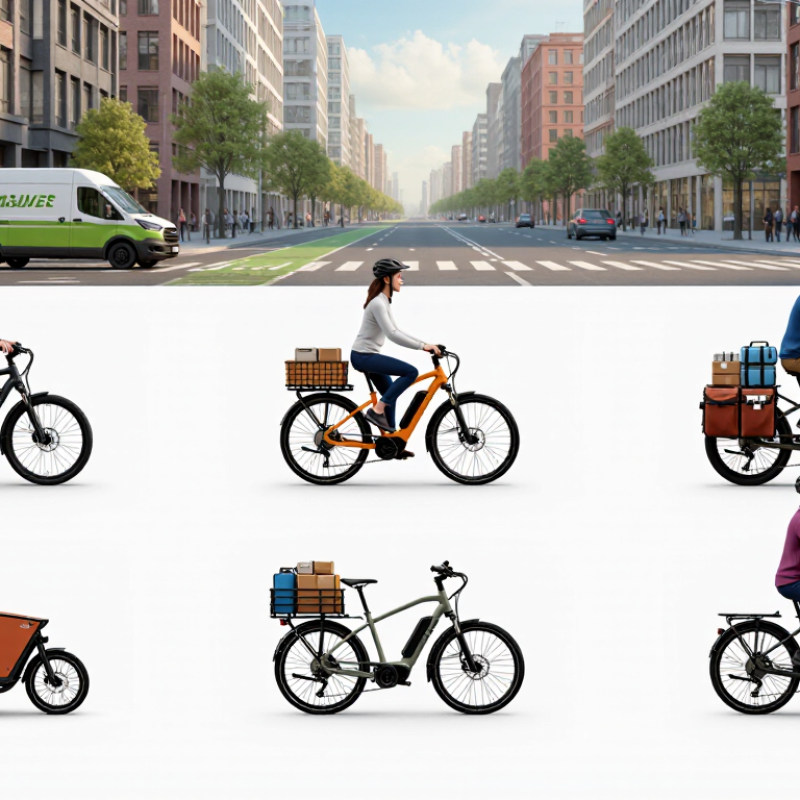
7 Best Cargo Electric Bikes for Business Buyers?
Cargo electric bikes are pedal-assisted cycles built to carry goods, tools, or passengers. Their frames often include reinforced racks, longer wheelbases, and stable loading areas. Unlike standard e-bikes, cargo models prioritize payload capacity, balance, and daily durability. They are not simply larger bicycles.
Market classifications usually include long-tail, front-loader, compact cargo, and heavy-duty models. Long-tail designs carry loads behind the rider. Front-loaders place cargo between the handlebars and front wheel. Compact models fit narrow streets and storage rooms. Heavy-duty versions support larger payloads but may require more space and stronger charging facilities.
Commercial use cases vary sharply. Couriers may need weather protection and quick battery changes. Grocers often value insulated boxes and predictable range. Tradespeople may prefer lockable tool storage, puncture-resistant tires, and a low step-over frame. Property teams can use them for campus inspections, maintenance rounds, and short-distance deliveries. I have found that route length matters less than stop frequency. Ten short stops can drain time through loading and parking.
Business buyers should check the rated payload, not just the motor output. Battery range also changes with hills, cold weather, cargo weight, and riding speed. Local classification rules may limit speed, dimensions, or where the cycle can operate. Specifications can look convincing. Real-world testing is still necessary. A prototype route with 20 kilograms of cargo may reveal awkward steering, slow loading, or insufficient storage. That inconvenience is useful evidence, not failure.
For business buyers comparing seven cargo electric bikes, payload comes first. A bike carrying 120 kilograms needs a different frame, brakes, and wheelbase from one carrying 60 kilograms. The European Cyclists’ Federation’s CycleLogistics research estimates that cargo bikes could replace about 25% of motorised urban delivery trips. That opportunity depends on real routes, not showroom figures. Measure daily loads, kerbs, slopes, and stop frequency. Range claims can mislead. A 500Wh battery may cover 40 miles unloaded, but heavy cargo, cold weather, hills, and frequent acceleration reduce that figure sharply.
Motor power should be judged with torque, not peak wattage alone. Higher torque helps when starting beside a loaded van or climbing a short ramp. However, a larger motor can increase battery use and purchase cost. Compare the total cost of ownership over three years. Include the bike, battery replacements, charging electricity, tyres, brakes, servicing, insurance, financing, and lost revenue during repairs. The National Renewable Energy Laboratory’s fleet research repeatedly highlights maintenance and downtime as important parts of electrification economics. A neat spreadsheet can still lie. Real routes are messier.
Tips: Ask suppliers for payload-rated braking data and tested range under load. Record energy use on your busiest route for two weeks. Consider modular batteries, secure cargo boxes, and technician response times. The cheapest bike may become expensive after one failed delivery day. Check local operating requirements before purchase.
| Rank | Bike Configuration | Best Business Use | Maximum Payload | Typical Real-World Range | Motor Output | Battery Capacity | Estimated Purchase Price | Estimated 3-Year TCO | Operational Assessment |
|---|---|---|---|---|---|---|---|---|---|
| 1 | Heavy-Duty Front-Loader | Urban delivery routes, tools, parcels, and high-volume freight | 200–250 kg including rider | 70–110 km | 500 W nominal 750–1,000 W peak | 600–1,000 Wh | US$7,000–10,000 | US$11,000–15,000 | Highest payload capacity and excellent stability, but requires more storage space and has a higher initial investment. |
| 2 | Longtail Commercial E-Bike | Parcel delivery, maintenance crews, and mixed urban operations | 180–200 kg including rider | 60–100 km | 250–500 W nominal 500–750 W peak | 500–800 Wh | US$4,500–7,500 | US$7,500–11,000 | Good balance of maneuverability, capacity, and serviceability for businesses operating on narrow streets. |
| 3 | Dual-Battery Cargo E-Bike | Long shifts, grocery delivery, and multi-stop courier work | 170–200 kg including rider | 90–150 km | 250–500 W nominal 500–750 W peak | 800–1,200 Wh | US$5,500–8,500 | US$9,000–13,000 | Reduces charging downtime and improves route coverage; replacement battery costs should be included in fleet planning. |
| 4 | Compact Box Cargo E-Bike | Food distribution, pharmacy delivery, and secure parcel transport | 150–200 kg including rider | 55–90 km | 250–500 W nominal 500–750 W peak | 500–750 Wh | US$5,000–8,000 | US$8,000–12,000 | Enclosed cargo protection improves security and weather resistance, while the box may increase aerodynamic drag and weight. |
| 5 | Mid-Tail Utility E-Bike | Light commercial loads, inspections, service calls, and local errands | 150–180 kg including rider | 60–100 km | 250–500 W nominal 500–750 W peak | 400–700 Wh | US$3,500–6,000 | US$6,000–9,000 | Lower acquisition and storage costs make it suitable for smaller businesses, although cargo volume is more limited. |
| 6 | Three-Wheel Cargo E-Bike | Stable low-speed deliveries, markets, campuses, and facilities management | 180–250 kg including rider | 45–85 km | 500 W nominal 750–1,000 W peak | 500–900 Wh | US$4,000–7,000 | US$7,000–11,000 | Excellent stationary stability and loading access; turning radius, parking width, and handling on slopes require careful evaluation. |
| 7 | Lightweight Utility Cargo E-Bike | Short-distance retail service, hospitality, and small parcel delivery | 120–160 kg including rider | 50–90 km | 250–500 W nominal 500–750 W peak | 400–600 Wh | US$2,500–4,500 | US$4,500–7,000 | Lowest entry cost and easiest handling, but it is less suitable for bulky freight or demanding all-day commercial routes. |
For business buyers, the best cargo electric bike is not simply the fastest or largest model. Regulatory fit comes first. In many European markets, the common benchmark is a 250 W continuous-rated motor with assistance stopping at 25 km/h. However, definitions vary by country, especially for throttles, speed sensors, and motor ratings. Confirm the local vehicle category before placing a fleet order.
Cargo safety deserves equal attention. Check the manufacturer’s maximum permitted mass, including rider, battery, passengers, and goods. A low loading platform can improve stability when carrying dense parcels. Strong hydraulic or mechanical brakes matter on wet streets. Lights, reflectors, mirrors, wheel guards, and secure parking equipment should match the operating environment. Test the bike with a realistic load, not an empty showroom setup.
Small details matter.
A practical trial should include kerbs, tight loading bays, slopes, and repeated stops. Inspect frame welds, cargo restraints, tyre condition, and battery mounting after each test cycle. Operators also need clear training for cornering and braking with shifting loads. A compliance label is useful, but it does not replace inspection records or staff feedback. One weakness remains easy to miss: a bike may meet the power benchmark yet feel unstable under uneven cargo. That finding should change the purchasing decision, even when the specification sheet looks excellent.
The seven best cargo electric bikes depend on payload, range, price, and fleet fit.
For daily delivery work, I rank a long-tail model first. It carries about 200 kilograms, handles stable loads, and fits standard loading bays. Its 60-mile range suits dense urban routes. Charging takes planning.
A compact front-loader ranks second for balance and visibility. It works well for groceries, tools, and boxed supplies. The third choice is a heavy-duty trike, offering excellent stability on short routes. It costs more and needs wider storage space.
Fourth is a mid-tail bike, which offers lower purchase costs and easier parking. Its payload is smaller, but many small businesses may prefer its simplicity. Fifth is a modular cargo bike with replaceable racks and boxes. That flexibility helps mixed fleets. Still, modular parts can increase maintenance.
The sixth option is a lightweight utility bike for fast local service calls. It has limited cargo capacity but lower energy use. The seventh is a budget cargo bike for occasional business use. Its price looks attractive, though weaker brakes, batteries, or wheels may raise long-term costs.
Test every candidate with real loads, hills, rain, and repeated stops. A spreadsheet cannot show awkward loading. My ranking may change after a full winter of use. That uncertainty matters. Fleet buyers should measure battery charging time, service access, rider comfort, theft protection, and delivery time per route.
A useful buying decision starts with the delivery operation, not the bike’s advertised range. Measure the route, including slopes, traffic stops, loading areas, and secure parking. A front-loader suits stable parcels and frequent curbside access. A longtail works better when narrow lanes and mixed passenger loads matter. Compact cargo bikes fit dense urban routes, but their smaller boxes limit bulky orders.
Three-wheel cargo bikes offer excellent stability for heavy loads and repeated stops. They require wider turning space. Insulated cargo bikes support temperature-sensitive deliveries, provided staff monitor storage time and battery performance. Modular utility bikes can switch between bins, racks, and lockable containers. That flexibility helps growing operations, though extra accessories increase weight and maintenance.
Space matters. Payload ratings should include the rider, cargo, containers, and daily equipment. Test the bike on a realistic route before committing. Check brake feel on declines, steering under load, charging access, and tire replacement availability. A single battery may cover a short route, but winter temperatures, hills, and frequent acceleration reduce practical range. Cold chains punish shortcuts. Track delivery times, repairs, and battery charging over several weeks. The results may challenge the original choice. A faster model is not always more productive if loading takes longer. Also verify local equipment rules, lighting requirements, and workplace safety procedures with qualified professionals.
If for some reason you did not find the service or product you need, you can always leave a request for a free consultation and get an answer.