
Choosing the right Lightning Arrestor is not a simple matter of comparing prices, voltage ratings, or product photographs. Global buyers must examine discharge capacity, response time, grounding requirements, enclosure quality, and certification evidence. A device that performs well in a dry inland warehouse may struggle near a humid coastline. Installation conditions matter.
Dr. Martin A. Uman, a leading lightning researcher, stated, “There is no such thing as a lightning-proof structure.” His warning remains highly relevant. A Lightning Arrestor does not eliminate lightning risk. It creates a controlled path for surge energy and helps limit damage to electrical systems, equipment, and connected networks.
This guide reviews seven Lightning Arrestor options for international purchasing decisions. The selection considers practical performance, application range, maintenance needs, documentation, and value. It also recognizes an uncomfortable truth: product rankings are never universal. A model suited to a telecommunications tower may not fit a solar installation or industrial control cabinet.
Buyers should verify test reports, local system voltage, earthing design, and replacement support before ordering. Marketing language can sound convincing. It is not proof.
Some products appear impressive but provide limited technical detail. That deserves caution. The strongest choice is usually the one with transparent specifications, reliable testing, and a clear installation method. Regional standards may also differ, so professional review remains important. This list offers a practical starting point, not a substitute for site-specific engineering.
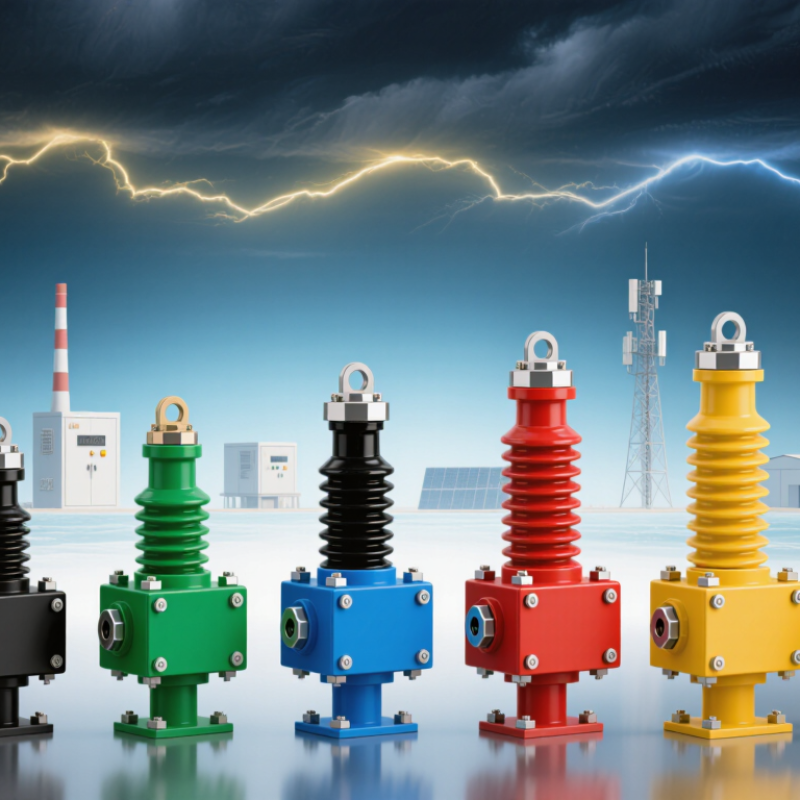
Lightning arrestors, often called surge protective devices, limit dangerous voltage spikes before they reach sensitive equipment. Lightning can travel through power, data, and grounding networks. The World Meteorological Organization reports that lightning occurs globally many times each second, creating a persistent risk for buildings, factories, and outdoor infrastructure.
An arrestor normally diverts excess current toward earth through a controlled discharge path. Its metal-oxide varistor changes behavior during a surge, then returns to a high-resistance state. IEC 61643-11 defines key performance requirements for low-voltage surge protective devices. Buyers should compare maximum continuous operating voltage, nominal discharge current, maximum discharge current, and voltage protection level. A lower protection level usually offers stronger equipment protection.
Installation matters greatly. A well-rated device can fail when grounding conductors are too long, loose, or poorly bonded. The National Electrical Code recommends short, direct connections, while IEC guidance supports coordinated Type 1, Type 2, and Type 3 protection. Type 1 devices handle high-energy incoming surges. Type 2 units protect distribution boards. Type 3 devices serve sensitive loads near the outlet.
Look beyond impressive numbers. A 2024 Allianz Risk Barometer survey identifies cyber incidents and business interruption among major global business concerns, but physical surge damage can trigger both. In field inspections, overlooked signal lines often become the weak point. No arrestor is magic. Local lightning density, system voltage, earthing quality, and maintenance records should shape the final choice.
Choosing a lightning arrestor starts with the application, not the product photo. Metal-oxide arrestors suit utility lines because they respond quickly and limit high-energy surges. Air terminals, often called lightning rods, protect exposed structures by providing a controlled discharge path. They need proper bonding and grounding to work safely.
Low-voltage surge protective devices fit electrical panels, workshops, and commercial buildings. Type 1 units handle external lightning currents near the service entrance. Type 2 units protect downstream circuits from switching and residual surges. Type 3 units add local protection for sensitive equipment. Data-line arrestors protect communication cables, while photovoltaic arrestors are designed for DC systems and rooftop exposure. Each type has different voltage, current, and connection requirements.
Choosing among the 7 best lightning arrestors for global buyers requires more than comparing price or discharge current. The essential features depend on the electrical system, installation location, and local weather exposure. Check the rated voltage and maximum continuous operating voltage first. A poor match can cause premature failure or weak protection. Confirm whether the unit suits low-voltage panels, communication lines, solar equipment, or medium-voltage networks.
Compare nominal discharge current, maximum discharge current, and voltage protection level. These ratings describe different stresses, so one large kA figure does not tell the whole story. Response time matters near sensitive electronics. Proper grounding matters even more. A short, straight grounding path usually reduces residual voltage. During site inspections, I also check conductor length, terminal tightness, and signs of heat damage. Small installation errors can defeat an otherwise capable arrestor.
Look for recognized test certification, clear wiring diagrams, and durable enclosure ratings. Outdoor units may need protection against rain, dust, ultraviolet exposure, and temperature changes. A visual status indicator helps maintenance teams identify a failed module quickly. Remote alarm contacts can support monitoring in factories or data rooms. Modular replacement can reduce downtime, but only when compatible parts remain available. Some buyers overlook coordination between upstream and downstream protection devices. I have found this comparison difficult when technical sheets use different test conditions. Independent verification is worth the extra time, especially when suppliers describe similar performance with unequal evidence.
Essential features to compare before choosing a lightning arrestor
The chart compares seven commonly specified arrester configurations by their representative lightning-current test rating. Low-voltage and photovoltaic Type 2 devices are commonly specified with an 8/20 μs nominal discharge current of 20 kA, while medium- and high-voltage metal-oxide arresters commonly use 10 kA class ratings. Type 1+2 devices are shown with a representative 12.5 kA 10/350 μs impulse-current rating. Actual selection should also verify system voltage, maximum continuous operating voltage, protection level, grounding arrangement, short-circuit withstand capability, and applicable IEC or local standards.
Seven leading lightning arrestors serve different electrical environments and risk levels. Metal-oxide station-class arrestors suit substations with high fault currents and demanding insulation coordination. Distribution-class arrestors protect transformers, feeders, and rural poles at lower system costs. Polymer-housed arrestors resist moisture and reduce breakage during transport. Porcelain-housed designs remain useful where rigid construction and familiar inspection practices matter. Line arrestors help shield overhead conductors, especially in exposed mountain or coastal areas. Low-voltage surge protective devices protect control panels, meters, and sensitive electronics. Separately installed grounding and bonding accessories complete the protection path.
Selection should begin with system voltage, temporary overvoltage, discharge current, and available short-circuit current. Check certified test data against IEC 60099-4 or applicable IEEE requirements. Housing distance also matters. A small cabinet may need compact protection, while a substation requires visible clearance and safe venting. In humid regions, examine sealing, pollution performance, and leakage-current behavior. In dusty regions, surface tracking deserves attention.
Field inspections often reveal a simple mistake: buyers compare price before checking energy duty. That approach can fail quickly. One project specified adequate voltage but ignored repeated switching surges. The arrestors operated, yet their service life was shorter than expected. I would also question vague claims such as “universal protection.” No arrestor fits every network. Review site records, grounding resistance, altitude, and maintenance access before ordering. Even good specifications need local verification.
7 Best Lightning Arrestors for Global Buyers
Installation, maintenance, and safety deserve more attention than the product label. The World Meteorological Organization reports over 2,000 lightning deaths worldwide each year. A correctly selected arrestor can reduce surge energy, but it cannot replace a complete protection system.
Install the arrestor near the equipment entrance, with the shortest, straightest grounding path possible. Sharp bends increase impedance during fast transient currents. IEC 62305 recommends coordinated external and internal lightning protection, including bonding and surge protection devices. NFPA 780 also stresses proper grounding, bonding, and inspection practices. Local electrical rules still control the final design.
Check connections for corrosion, looseness, heat marks, and water entry at least annually. Coastal, tropical, and high-altitude sites may need more frequent inspections. Replace units after a confirmed major strike or when their status indicator changes. The U.S. National Weather Service records millions of lightning events each year, so “rare” exposure is often a poor assumption.
Use insulated tools and isolate power before servicing. Never inspect during a storm. No checklist is perfect. Soil resistance, hidden corrosion, and rushed workmanship can defeat a good arrestor. Buyers should request test records, installation guidance, and evidence of compliance with recognized standards. A low purchase price becomes expensive when downtime, fire risk, or damaged controls follows.
| No. | Arrestor Type | Typical Voltage or Application Range | Recommended Use | Applicable Standards | Key Installation Requirements | Maintenance Guidance | Main Safety Considerations |
|---|---|---|---|---|---|---|---|
| 1 | Distribution-Class Metal-Oxide Arrestor | Typically used on medium-voltage systems from approximately 3 kV to 36 kV; select MCOV according to the system grounding and continuous operating voltage. | Utility distribution poles, feeders, capacitor banks, and medium-voltage equipment exposed to direct or induced lightning surges. | IEC 60099-4; IEEE C62.11; local utility specifications. | Install as close as practical to the protected equipment. Keep phase and ground leads short and straight, provide a low-impedance earth connection, and maintain required clearances. | Inspect after major storms and at scheduled intervals. Check for cracks, tracking, contamination, loose connections, corrosion, or thermal-disconnector operation. | De-energize and verify absence of voltage before work. Never use the arrester earth terminal as a normal operating-current return path. |
| 2 | Station-Class Metal-Oxide Arrestor | Commonly applied on high-voltage substations and transmission equipment from approximately 36 kV upward, with ratings selected by system studies. | Power transformers, busbars, generator step-up transformers, cable terminations, and high-value substation assets. | IEC 60099-4; IEEE C62.11; applicable transmission-system requirements. | Mount on a rigid structure with adequate mechanical support. Connect directly to the station grounding grid and minimize the distance between the arrester and transformer or cable terminal. | Use visual inspection, leakage-current monitoring where specified, thermographic inspection, and periodic review of surge-event records. | Follow substation switching, isolation, grounding, and approach-distance procedures. Stored energy and induced voltages may remain after disconnection. |
| 3 | Intermediate-Class Metal-Oxide Arrestor | Typically selected for medium- and high-voltage substations where protection performance is required between distribution and station-class applications. | Industrial substations, feeder entrances, switchgear, motor control centers, and medium-voltage transformer protection. | IEC 60099-4; IEEE C62.11; national electrical installation rules. | Coordinate the rated voltage, MCOV, discharge-current capability, and energy rating with the system fault conditions and insulation-coordination study. | Check housing condition, terminal tightness, grounding continuity, contamination, and signs of moisture ingress during planned outages. | Do not select only by nominal system voltage. Temporary overvoltage, grounding method, and fault-clearing time must also be considered. |
| 4 | Riser-Pole Cable-Termination Arrestor | Commonly used on medium-voltage overhead-to-underground transitions, generally within approximately 3 kV to 36 kV systems. | Protection of underground cables, pole-mounted transformers, ring-main units, and overhead line-to-cable transition points. | IEC 60099-4; IEEE C62.11; utility construction standards. | Install on the overhead side of the cable termination where practical. Use a dedicated, short grounding conductor routed with minimal bends and bond it to the cable shield and station earth as designed. | Inspect for wildlife damage, weathering, contamination, corrosion, cable-screen bonding problems, and physical movement of pole hardware. | Maintain climbing and working clearances. Treat the cable screen and arrester earth as potentially energized until the circuit is isolated and grounded. |
| 5 | Transformer-Integrated Surge Arrestor | Available for distribution and industrial transformers across low-, medium-, and selected high-voltage applications; rating must match the transformer winding and system. | Compact protection for transformer bushings, dry-type transformers, oil-immersed transformers, and packaged substations. | IEC 60099-4 for high-voltage arresters; IEC 60076 for transformers; IEEE C62.11 where applicable. | Install according to the transformer manufacturer’s connection diagram. Ensure correct phase-to-ground arrangement, clearances, enclosure ventilation, and bonding to the transformer tank earth. | Inspect during transformer maintenance. Check arrester condition, terminal torque, enclosure seals, signs of overheating, and any pressure-relief or disconnect indicator. | Confirm that the arrester does not interfere with transformer protection, neutral grounding, or pressure-relief systems. Follow oil-handling and arc-flash procedures. |
| 6 | Low-Voltage Type 1 or Type 2 Surge Protective Device | For AC systems up to 1,000 V; Type 1 devices are used at service entrances where partial lightning current may enter, while Type 2 devices are commonly installed in distribution boards. | Commercial buildings, industrial control panels, residential service equipment, renewable-energy systems, and sensitive electronic loads. | IEC 61643-11; IEC 60364-4-44; UL 1449 or equivalent national requirements. | Install with short conductors, correct upstream overcurrent protection, suitable backup disconnection, and an effective protective-earth connection. Coordinate multiple SPDs by location and protection level. | Check status indicators, remote alarm contacts, terminal tightness, enclosure condition, and replacement records after known surge events. | Verify the system earthing arrangement and maximum continuous operating voltage. A failed indicator or disconnected earth can leave equipment unprotected. |
| 7 | Photovoltaic DC Surge Protective Device | Designed for photovoltaic DC circuits up to the device’s declared maximum continuous DC voltage, commonly selected for 600 V, 1,000 V, or 1,500 V PV systems. | Solar-string combiner boxes, inverter DC inputs, rooftop arrays, ground-mounted PV plants, and long outdoor DC cable runs. | IEC 61643-31; IEC 60364-7-712; UL 1449 or equivalent PV-specific requirements. | Use a PV-rated device with the correct polarity, UCPV rating, short-circuit withstand capability, and enclosure rating. Install near the array and inverter when cable length or risk assessment requires protection at both ends. | Inspect status indicators, cartridge condition, enclosure seals, cable glands, grounding conductors, and evidence of moisture, overheating, or mechanical damage. | PV circuits can remain energized in daylight even after AC isolation. Cover or isolate modules where permitted, use DC-rated disconnects, and follow arc-flash and lockout procedures. |
If for some reason you did not find the service or product you need, you can always leave a request for a free consultation and get an answer.