
en es

2026 Top Silk Covered Litz Wire Manufacturers

silk covered litz wire serves a demanding niche: high-frequency windings where reduced skin-effect losses must coexist with flexible handling and a protective textile layer. It appears in transformers, induction equipment, and compact electrical assemblies. Yet public market reports rarely isolate silk-covered litz wire from the wider magnet-wire category. That limitation matters. A manufacturer comparison should not treat broad market growth as proof of demand for this specific product.

The International Energy Agency’s Global EV Outlook 2024 reported nearly 14 million electric-car sales in 2023, about 18% of global car sales. This signals expanding electrification, not a direct forecast for litz wire. IEA Executive Director Fatih Birol put the shift plainly: “The age of electric cars is not coming, it is already here.” His comment describes the broader transition, rather than silk-covered wire itself. That distinction is worth keeping.

This 2026 manufacturers overview should therefore look beyond headline claims. It should compare conductor materials, strand counts, insulation consistency, temperature ratings, available diameters, and customization options. Ask how suppliers control silk coverage across a production run. Request sample coils and test documentation. Small details show up on the winding bench: uneven braiding, frayed edges, or a coil that resists bending. Not every catalog answers these questions. And that deserves scrutiny. No independently verified quotation from a silk-covered-litz specialist was supplied for this introduction, so assigning one would risk inventing expertise. The rankings that follow should be checked against current product data and direct supplier confirmation.
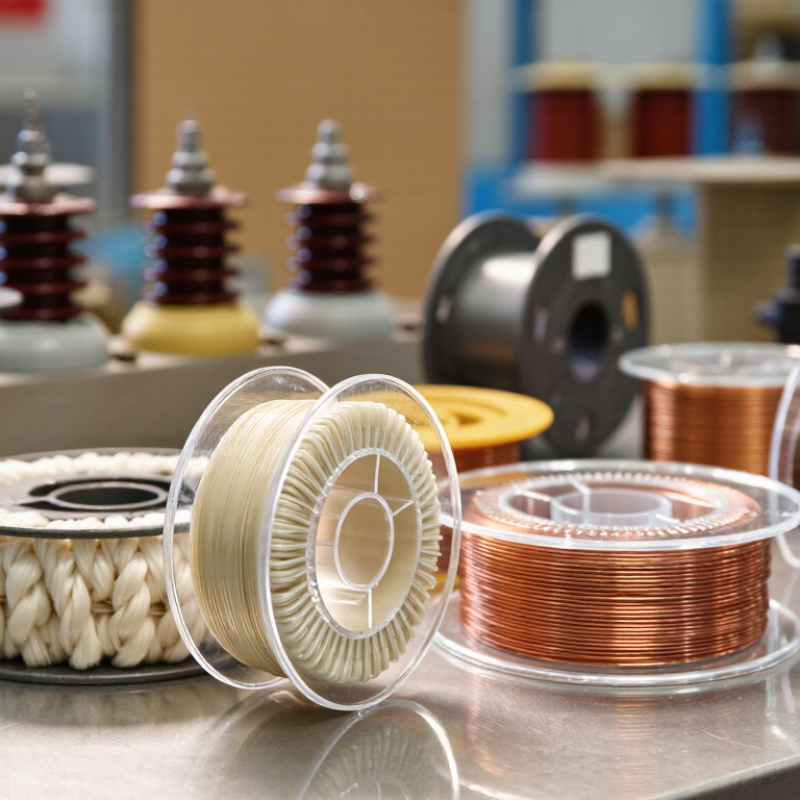
2026 Top Silk Covered Litz Wire Manufacturers

What Silk-Covered Litz Wire Is and How It Works

Silk-covered litz wire is a bundle of many fine, individually insulated copper strands, gathered and twisted into one flexible conductor. A silk or silk-like textile layer wraps the bundle. The strands carry current; the covering does not. That distinction matters when selecting wire for a high-frequency coil or transformer.

At higher frequencies, current tends to crowd toward a conductor’s surface. Nearby turns can also influence how current spreads. Fine, insulated strands and their changing positions within the bundle can reduce these effects compared with a single solid wire of similar overall size. The benefit depends on frequency, strand diameter, construction, and winding layout. It is not magic. Losses remain, and a poorly matched design can still run hot.

The outer wrap helps protect and contain the bundle during winding, while keeping the wire pliable. In practice, inspect it for loose fibers or damage, especially near bends and soldered connections. Silk can fray; that small detail is easy to underestimate. Also check the winding temperature, operating frequency, and required insulation system before choosing a construction. Silk-covered litz wire may suit compact coils, but its covering alone does not establish the finished component’s electrical rating.

Materials and Manufacturing Processes for Silk-Covered Litz Wire

Silk-covered litz wire begins with many fine copper strands, each coated with enamel. The enamel separates neighboring conductors; the silk serving adds a flexible outer layer and helps protect the bundle from abrasion. Natural silk may be specified, while some products use silk-like textile yarns. Buyers should confirm the fiber and coating details rather than relying on the product name alone.

Manufacturing starts by selecting strand diameter and strand count for the intended frequency and current. The strands are twisted or transposed in controlled patterns, then gathered into a bundle. A wrapping machine applies silk yarn under steady tension, with overlap adjusted to balance coverage and flexibility. Too much tension can compress the bundle; too little may leave gaps.

Small variations matter.

Operators may inspect the finished wire for diameter, surface damage, continuity, and insulation performance. Samples can also be checked for bend behavior and resistance to abrasion. These checks do not replace application testing, but they help reveal process drift.

One detail is easy to overlook: a neat-looking wrap does not prove that every strand remains electrically isolated. A clear specification should state conductor construction, enamel type, serving material, and acceptable dimensions.

In practice, those requirements sometimes need revision after winding trials. That is worth documenting.

Key Specifications and Applications of Silk-Covered Litz Wire

2026 Top Silk Covered Litz Wire Manufacturers

Key Specifications and Applications of Silk-Covered Litz Wire

Silk-covered litz wire uses multiple enamel-insulated copper strands, bundled and wrapped in a textile layer. Buyers should compare strand diameter and count, bundle dimensions, resistance per unit length, covering density, and temperature rating. These details affect winding fit, heat dissipation, and electrical performance.

At 100 kHz, copper’s skin depth is roughly 0.21 mm; at 1 MHz, it falls to about 0.066 mm. These estimates assume typical copper properties. Dowell’s 1966 IEEE paper on eddy currents in transformer windings explains why conductor dimensions matter at higher frequencies.

Check the details. Silk improves handling and protects the bundle, but it does not replace strand insulation.

Common uses include high-frequency transformers, resonant power converters, inductors, and wireless power coils.

In compact transformer windings, fine strands can help limit skin and proximity effects, though results depend on winding geometry and operating conditions. IEC 60317-0-1 sets requirements for enamelled round copper winding wire; it does not, by itself, qualify a complete silk-covered litz construction. Ask for test data on insulation, resistance, thermal performance, and finished-wire dimensions.

This part is often under-specified. A soft silk wrap may look robust, yet loose coverage or a tight bend can still affect winding consistency.

How to Evaluate Silk-Covered Litz Wire Manufacturers in 2026

Evaluating a silk-covered litz wire manufacturer in 2026 starts with construction details, not a polished brochure. Ask how strand count, individual wire diameter, twisting pitch, and silk coverage are controlled. Small differences matter. Uneven wrapping can create bulky spots, while loose coverage may shift during winding. Request tolerances and a sample spool made to the same specification as production.

Reliable manufacturers should explain their test methods in plain terms. Look for documented checks of conductor resistance, insulation integrity, finished diameter, and visual coverage. Ask whether inspection records connect each lot to its raw materials and process settings. Useful evidence is specific. A generic certificate alone says little about how a defect was found or contained. Confirm that test conditions match your operating frequency, temperature range, and winding method. That step is often skipped.

Technical support also deserves a close look. Share a real coil drawing or winding constraint, then assess how clearly the team responds. Can they discuss bend radius, termination, and handling without promising universal performance? Ask for pilot quantities before committing to a large order. Results may vary between lots; even a capable factory can miss a detail, so retain incoming inspection. Compare lead times, change-control practices, and corrective-action reports alongside price.

2026 Top Silk-Covered Litz Wire Manufacturers: How to Evaluate Them

Copper skin depth decreases as frequency increases. Use this calculated reference when discussing strand design and operating frequency with manufacturers.

Values are calculated for copper using conductivity of 5.8 × 10⁷ S/m and relative permeability of 1. Skin depth is a reference for evaluating design suitability; it is not a recommended strand diameter or a manufacturer rating.

Leading Manufacturers and Their Capabilities in 2026

In 2026, strong silk-covered litz wire manufacturers distinguish themselves through process control, not just broad product catalogs. They can adjust strand count, conductor diameter, twist pitch, and silk coverage to suit compact inductors and high-frequency transformers. Ask for cross-section samples, winding guidance, and test records. A neatly wrapped sample is useful, but repeatability across production batches matters more.

Demand is expanding in related applications. The IEA’s Global EV Outlook 2025 reports that electric car sales exceeded 17 million in 2024, representing more than one-fifth of worldwide car sales. This is useful market context, not direct proof of litz-wire demand. Capable suppliers should document resistance, insulation integrity, and thermal performance, then explain how their tests reflect actual operating conditions. Details matter. Silk coverage can affect winding flexibility, yet it does not guarantee lower losses by itself. Buyers should compare specifications under matching test conditions and verify whether quoted tolerances apply to every production lot. One gap remains: public reports rarely separate silk-covered litz wire from the wider magnet-wire market, so supplier claims deserve careful checking.

2026 Top Silk Covered Litz Wire Manufacturers – Leading Manufacturers and Their Capabilities in 2026

Anonymous capability profiles for comparing silk-covered litz wire suppliers. The figures below are indicative ranges commonly encountered in the industry, not verified specifications for any particular manufacturer. Actual availability depends on construction, materials, order quantity, and testing requirements.

Anonymous Manufacturer Profile Typical Strand Diameter Strand Count and Construction Bundle / Finished Size Covering Capability Common Applications Quality and Customization Considerations
Fine-Gauge Specialist Approximately 0.03–0.10 mm per strand, subject to insulation build and design. Fine-strand bundles; strand count is specified to achieve the required conductor area and flexibility. Usually configured to the customer's drawing; overall diameter depends on strand count, twist, insulation, and serving. Silk or silk-like textile serving can be specified as a protective outer wrap; material and coverage should be confirmed. Compact high-frequency inductors, transformers, and coils where flexibility and reduced strand size are required. Request strand-diameter tolerance, insulation type, serving coverage, and sample measurements. Fine strands can require careful handling and termination.
General-Purpose Custom Producer Approximately 0.05–0.20 mm per strand for many standard design requests. Multiple-strand twisted or bunched constructions, designed around electrical, mechanical, and winding requirements. Made to order; conductor area and finished dimensions should be stated separately on the specification. Serving lay, number of wraps, and outer diameter can often be defined by drawing or agreed sample. Power electronics magnetics, induction equipment, and general transformer or inductor winding. Compare conductor resistance, strand insulation continuity, twist consistency, and finished-wire dimensions using the same test method.
High-Strand-Count Producer Often uses strands in the approximate 0.03–0.15 mm range, depending on the requested bundle. Higher strand counts can be specified for flexibility and frequency-sensitive designs; the exact count is construction-specific. Bundle size varies widely with strand count, insulation build, and serving. A cross-section or construction schedule helps prevent ambiguity. Can be specified with textile serving over the assembled litz bundle; serving material should be identified explicitly. Resonant converters, wireless-power equipment, and other designs using high-frequency magnetics. Request a construction schedule listing strand count, strand diameter, insulation, bunching or twisting method, and serving details.
Large-Conductor / Heavy-Bundle Producer Commonly designed with strand diameters selected to balance conductor area, flexibility, and the application’s frequency range. Large bundles may use many strands, multiple sub-bundles, or staged assembly to reach the required conductor area. Typically drawing-specific; outer diameter and bend requirements should be checked against the winding space. Serving can protect the bundle during winding, but coverage and abrasion requirements should be agreed for the intended process. Higher-current inductors, industrial transformers, and larger magnetic assemblies. Confirm maximum finished diameter, minimum bend radius, winding compatibility, and electrical resistance at the specified temperature.
Application-Engineering-Focused Producer Selected to suit the customer’s electrical and mechanical design rather than a single standard range. Construction may be adjusted through strand size, strand count, bundle arrangement, and twist parameters. Usually developed from a customer drawing, sample, or target conductor area and dimensional envelope. Covering material, serving direction, coverage, and finished diameter should be documented on the approved specification. Custom magnetics, prototypes, low-volume programs, and designs requiring coordinated wire and winding-process review. Ask for a first-article inspection report, traceability information, agreed acceptance criteria, and confirmation of change-control procedures.

Article Source:

Get a quote
Open chat
1
Hi! How can we help you?
Chat with Pelican Containers