
Choosing the right planetary mixer in 2026 requires more than comparing online prices. The Mp330 Planetary Concrete Mixer attracts attention because its compact design may suit precast plants, repair yards, and smaller construction projects. Yet a low listing price can hide shipping charges, missing wear parts, or limited after-sales support. A serious buying decision begins with verified specifications. Look closely.
Check mixing capacity, discharge height, motor power, liner materials, and cycle time. These details affect output, maintenance intervals, and the consistency of each batch. For example, a mixer producing uniform concrete at a controlled moisture level can reduce rework around forms and molds. However, performance depends on aggregate size, mix design, loading sequence, and operator training. A product page alone cannot prove field results. Ask for test records, videos, warranty terms, and references from comparable users. That step is often skipped.
This guide examines the 2026 Mp330 Planetary Concrete Mixer market through practical purchasing criteria. It considers machine construction, mixing quality, energy use, safety features, spare-part access, and total ownership cost. Supplier credibility matters as much as machine specifications. Buyers should confirm factory details, inspection procedures, delivery conditions, and technical support before payment. Some published figures may need clarification. Treat them as starting points, not promises. The best choice is not automatically the cheapest mixer. It is the model that matches your materials, production targets, site conditions, and long-term maintenance plan.
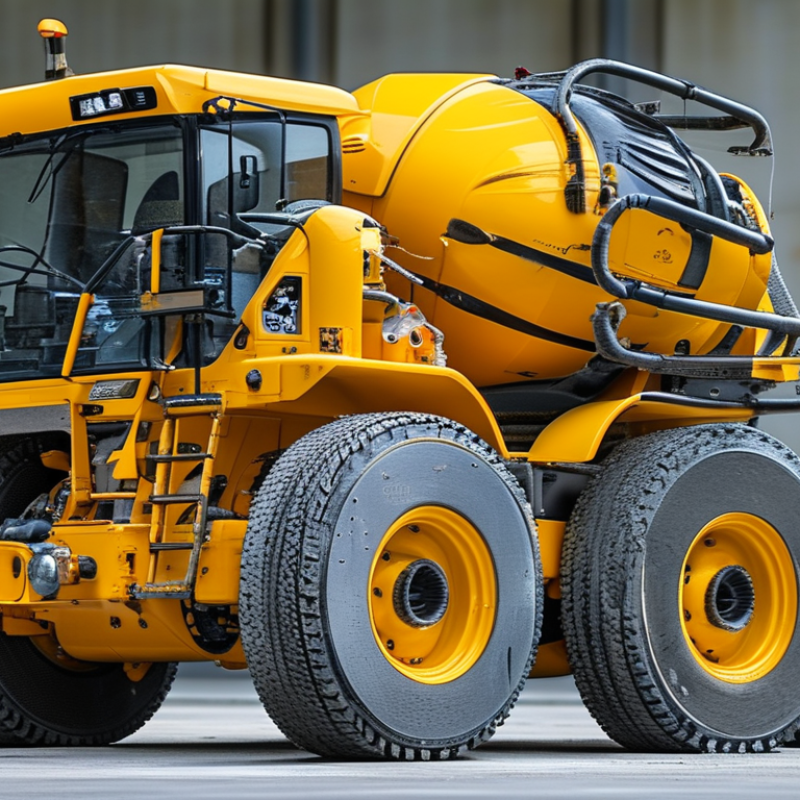
2026 Best MP330 Planetary Concrete Mixer for Sale?
The MP330 planetary concrete mixer uses a fixed mixing pan and rotating planetary tools. This arrangement creates overlapping movement across the full batch. It helps reduce dead zones near the pan wall. A central mixing star works with satellite paddles, while scrapers keep material moving from the edges. The structure suits dry, stiff, and fiber-reinforced mixes. Its compact frame also supports easier installation in confined production areas.
The Global Cement and Concrete Association reports that about 14 billion cubic meters of concrete are produced worldwide each year. This scale increases demand for consistent mixing and measurable quality control. The MP330 design can support that goal when operators control water, aggregate grading, and mixing time. A reinforced gearbox, wear-resistant liners, and accessible inspection doors matter during daily use. Yet, no mixer solves poor batching. That remains an operator issue.
Tips: Check the actual pan volume, discharge height, motor power, and liner thickness before purchase. Ask for test-batch records using your own recipe. Observe whether the mix leaves dry pockets after discharge. This small check often reveals more than a brochure. Also, review cleaning access carefully. I would not trust impressive output figures without confirming the working volume and cycle time under real site conditions.
2026 Best MP330 Planetary Concrete Mixer for Sale?
The MP330 planetary mixing system uses a fixed mixing pan and rotating tools. A central drive turns the mixing star, while each tool rotates around its own axis. This creates overlapping movement across the entire batch. Unlike a simple drum, the system pushes material upward, outward, and back toward the center. Cement paste reaches aggregate surfaces more evenly. This matters when producing dry, stiff, or fiber-reinforced concrete.
In practical operation, the loading sequence affects the final texture. I usually add part of the aggregate, then cement, water, and remaining materials. The MP330 should not be judged by motor power alone. Mixing time, moisture accuracy, tool condition, and batch size also control consistency. A worn scraper can leave material near the pan wall. Small residue becomes a bigger error.
Not every batch needs maximum speed. Slow rotation helps during loading and reduces unnecessary dust. Higher speed can improve dispersion, but it may increase wear and energy use. Operators should check the discharge gate, mixing arms, and liners after regular production cycles. I would also record moisture changes during the shift. This step is easy to skip. That is a weakness. A reliable mixing process depends on measured adjustments, not assumptions.
| Data Dimension | MP330 Reference | How the Planetary Mixing System Works | Practical Benefit |
|---|---|---|---|
| Mixer type | Vertical-shaft planetary concrete mixer | Mixing tools rotate around their own axes while orbiting around a central axis inside a stationary pan. | Produces intensive three-dimensional mixing in a relatively compact chamber. |
| Nominal pan volume | 330 litres | The pan provides the fixed internal space in which cement, aggregates, water and admixtures are blended. | Useful for small-to-medium concrete batches where controlled portioning is important. |
| Recommended working fill | Approximately 70–80% of nominal volume, depending on the mix | Leaving free space allows the material to circulate, lift and fall without excessive spillage or dead zones. | A practical batch volume is approximately 0.23–0.26 m³ before recipe and loading limitations are considered. |
| Mixing tools | Planetary mixing arms, blades and wall scrapers | The blades move material across the pan while scrapers return material from the wall toward the active mixing zone. | Helps reduce unmixed material around the pan perimeter. |
| Aggregate handling | Designed for sand, gravel, cement, water and approved admixtures | Orbital blade movement repeatedly separates and recombines aggregate particles with the cement paste. | Supports uniform distribution of coarse and fine aggregates when the mix is correctly proportioned. |
| Mixing sequence | Typical sequence: aggregates and cement, followed by water and admixtures | Dry components are distributed first; liquid is then introduced gradually to coat particles and form cement paste. | Gradual charging can reduce dry pockets, dust release and paste balls. |
| Typical mixing time | Approximately 45–90 seconds after all materials enter the pan | The actual time depends on aggregate size, slump, moisture, admixture dosage and required uniformity. | Short cycles are possible, but trial batches should determine the correct production time. |
| Discharge method | Bottom discharge through a controlled opening | Opening the discharge gate allows gravity to remove the mixed concrete from the stationary pan. | Enables fast transfer to a bucket, conveyor, mould or placing system. |
| Concrete consistency | Suitable for low-slump, normal-slump and many specialty concrete mixes | High mechanical agitation helps distribute stiff mixtures that may be difficult for simpler mixing arrangements. | Can support precast, block, paver and general concrete production when the recipe is properly designed. |
| Mix quality control | Depends on accurate weighing, moisture correction and repeatable cycle control | The planetary mechanism improves movement, but it cannot compensate for incorrect proportions or excessive water. | Consistent batching and moisture measurement are essential for stable strength and workability. |
| Wear components | Mixing blades, scrapers, liners, seals and discharge-gate components | Abrasive aggregates gradually wear surfaces that contact the concrete during rotation and discharge. | Routine inspection and timely replacement help maintain mixing performance and reduce downtime. |
| Best-use evaluation | A suitable choice when intensive mixing and repeatable small-batch production are required | The combined orbital and axial movement increases contact between the mixing tools and the entire batch. | Before purchase, verify actual output, motor rating, aggregate size limit, discharge layout and local electrical requirements. |
Note: Capacity and operating figures are engineering reference values. Actual production performance depends on the concrete recipe, moisture content, loading method, mixing time, discharge time and site conditions.
Before buying an MP330 mixer, compare usable batch capacity, not only the advertised drum volume. A planetary mixer should produce uniform concrete around the blades, even with stiff aggregate. Check the rated output in cubic metres per hour, mixing speed, motor power, and discharge height. ASTM C94/C94M guidance stresses consistent batching and mixing for ready-mixed concrete. The 2023 IEA cement report also links efficient production with lower energy demand and emissions. A lower-power motor may save electricity, but it can struggle with dense mixes. That trade-off deserves testing.
Inspect the frame, gearbox, blade material, and access doors closely. A heavy steel frame reduces vibration beside a rough jobsite floor. Ask for noise, overload, and cleaning data under real operating conditions. The U.S. Bureau of Labor Statistics recorded over 1,000 fatal work injuries in construction during 2022, so guarded moving parts and emergency stops are not optional details. Service access matters too. Ten minutes saved during daily cleaning becomes meaningful over a full season. I would not trust a capacity claim without seeing the test conditions.
Request a wet-concrete trial with your normal aggregate size. Measure batch time, discharge residue, power consumption, and operator visibility. Compare warranty coverage, spare-part availability, and delivery weight. A compact mixer may fit a narrow gate, but its smaller hopper could increase loading cycles. That is easy to underestimate.
The MP330 planetary concrete mixer suits precast panels, paving blocks, repair mortar, and small structural batches. Its planetary motion helps distribute cement, aggregates, water, and admixtures evenly. That matters when batch consistency affects strength and surface finish. The Global Cement and Concrete Association identifies concrete as the world’s most widely used construction material. Demand remains high, but quality cannot depend on volume alone. In daily work, operators should inspect mixing arms, scrapers, seals, and discharge gates before production. Small faults become expensive quickly.
Operating conditions require disciplined control. Follow the manufacturer’s rated batch volume, never overload the pan, and add materials in a repeatable sequence. Keep aggregate moisture records, because wet sand can quietly change the water-cement ratio. The MP330 should stand on a level, stable foundation with guarded moving parts and an accessible emergency stop. OSHA limits respirable crystalline silica exposure to 50 micrograms per cubic meter over eight hours. Dust extraction, enclosed charging, and suitable respiratory protection remain practical requirements. Wear eye, hearing, hand, and foot protection.
The International Energy Agency reports that cement production creates about seven percent of global energy-related emissions. Efficient mixing can reduce rejected batches, although it cannot solve every environmental problem. I would not promise perfect uniformity from any mixer. Poor calibration, rushed loading, or inconsistent aggregates still cause weak results. Operators should record cycle time, slump, moisture, and discharge condition. Review those records weekly. That habit often reveals problems before customers do.
Finding the best MP330 planetary concrete mixer starts with a verified industrial equipment supplier. Search authorized distributors, established machinery marketplaces, and factory-direct sales channels with inspection support. Ask for a complete quotation, not only the machine price. Freight, installation, spare parts, and training can change the final cost significantly.
Mordor Intelligence reports that the global concrete mixers market is expanding steadily, supported by urban construction and infrastructure investment. This growth creates more purchasing options, but also more inconsistent listings. Request the mixer’s technical sheet, production date, mixing capacity, motor specification, warranty terms, and service response time. Confirm whether the MP330 configuration matches your materials and daily output. Small details matter.
A serious supplier should provide operating videos, reference projects, and a clear inspection process. Check weld quality, gearbox noise, discharge-gate movement, and emergency-stop functions during a live demonstration. Independent inspection is worth considering before payment. It may feel slow. That delay can prevent expensive surprises.
Industry buyers should also compare lifecycle costs. A lower offer may hide weak wear protection, limited local support, or unavailable replacement parts. Ask for prices on mixing arms, liners, seals, and electrical components. Research and Markets identifies maintenance capability as an important factor in construction equipment purchasing decisions. Still, reports cannot replace hands-on verification. A supplier with documented experience, transparent data, and practical after-sales support is usually the safer place to find an MP330 mixer in 2026.
If for some reason you did not find the service or product you need, you can always leave a request for a free consultation and get an answer.