
The 2026 Best Industrial Grippers for Global Buyers guide examines a small component with a major production role. A gripper may touch every part, from a warm cast-metal housing to a delicate medical tray. Its performance affects cycle time, product damage, operator safety, and maintenance costs.
The International Federation of Robotics reported 541,302 industrial robot installations worldwide in 2023. It also recorded more than 4.28 million industrial robots operating globally. These figures show why reliable end-of-arm tooling deserves closer evaluation. However, robot growth does not guarantee gripper suitability. Jaw force, payload, stroke, grip geometry, air consumption, and sensor feedback must match the real application. A fast gripper can still fail on oily surfaces or inconsistent part dimensions.
Application evidence matters more than attractive specifications. ISO 10218 provides a useful safety framework for industrial robot systems, while ISO/TS 15066 offers guidance for collaborative robot applications. Buyers should also review testing records, spare-part availability, technical support, and regional compliance documentation. Supplier claims require verification. No shortlist is flawless.
This guide compares pneumatic, electric, magnetic, vacuum, parallel, and angular designs for global purchasing teams. It considers precision assembly, packaging, machining, logistics, and harsh factory environments. Energy use deserves attention too. The U.S. Department of Energy identifies compressed-air systems as significant industrial energy users, especially when leaks remain unnoticed. A well-selected Industrial Gripper can reduce wasted motion and rejected parts. Yet selection still depends on the product, robot, tooling interface, and production culture. That judgment cannot be automated completely.
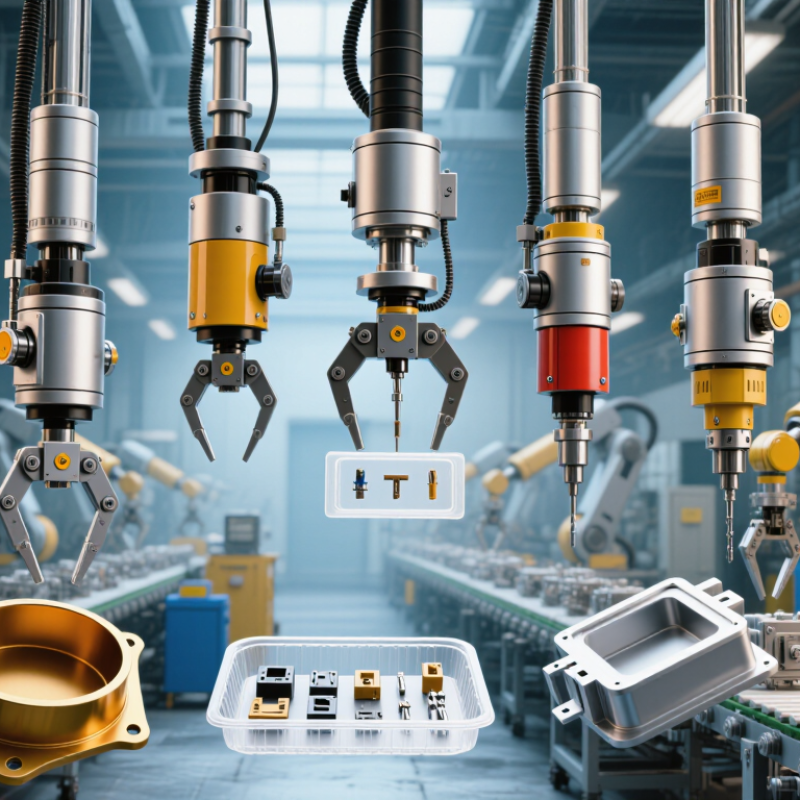
Industrial grippers are not interchangeable tools.
The best choice depends on part geometry, surface condition, payload, cycle speed, and failure risk. A 2-jaw gripper suits rectangular parts and general pick-and-place work. Its simple layout makes setup easier. A 3-jaw gripper centers round components more evenly, especially during machining or inspection. However, extra jaws can reduce access around the workpiece.
Vacuum grippers handle smooth, sealed surfaces such as glass, panels, and cartons. They are lightweight and fast, but dust, oil, or textured materials can weaken the seal. Add vacuum monitoring and a suitable backup system when a dropped load could damage equipment.
Magnetic grippers work well with ferrous steel sheets and rough surfaces. They do not suit aluminum, plastic, or non-magnetic alloys. Check residual magnetism too, since some parts may need clean release.
Soft grippers protect delicate fruit, packaging, and irregular products through flexible contact. They are useful when hard jaws might leave marks. Yet soft fingers can wear faster and may offer less positional accuracy.
No design wins every time. In real production reviews, buyers often focus on gripping force and overlook jaw stroke, sensor compatibility, and maintenance access. That is a costly mistake.
Confirm the actual payload, center of gravity, air pressure, temperature, and surface finish before ordering. Request test results using your own parts when possible. Safety margins should reflect vibration and acceleration, not just static weight. A compact gripper may appear efficient, but limited clearance can create daily frustration. Reliable selection is practical, documented, and willing to question the first attractive specification.
2026 Best Industrial Grippers for Global Buyers
Industrial grippers should be selected by measured performance, not attractive catalog numbers. A 10 N gripper may suit delicate handling, while demanding fixtures can require up to 10,000 N. Confirm whether the rated force applies per finger or to the complete gripping system. That distinction matters.
Stroke requirements also vary sharply. A compact mechanism may need only 1 mm for stable positioning, while large workpieces may require 500 mm. Leave practical clearance for part variation, jaw wear, and installation errors. A 0.05 mm repeatability rating sounds impressive, but it may depend on speed, load, temperature, and mounting rigidity. Small errors grow.
Experienced buyers should request test conditions, force curves, duty-cycle data, and maintenance intervals. Check performance with the actual material, surface finish, and gripping direction. Pneumatic, electric, and hydraulic designs can behave differently under rapid cycling. Real conditions differ. A gripper that performs well in a clean test cell may lose accuracy beside vibration, dust, or changing temperatures.
I would also challenge overly precise specifications. Repeatability does not guarantee absolute positioning accuracy, and maximum force does not define safe working force. Use a safety margin, then validate the complete assembly through repeated trials. Record opening time, holding force, slip, noise, and temperature rise. The first test may expose an uncomfortable truth: the strongest gripper is not always the most reliable choice.
Choosing an industrial gripper starts with the workpiece, not the catalog. Pneumatic grippers suit fast pick-and-place lines and simple open-close cycles. They are compact, affordable, and easy to maintain. However, compressed air can waste energy, especially across long production shifts. Electric grippers provide controlled stroke, force, and speed. They work well with fragile parts, variable sizes, and data-based quality checks. Their wiring and software require more planning. Hydraulic grippers deliver high force for heavy components. They need strong infrastructure, clean fluid management, and careful leak control. Servo grippers add precise feedback and adjustable motion. They are valuable when alignment, insertion depth, or part variation matters. No drive wins every line.
Tips: Measure real gripping force, not only rated force. Test parts when oily, warm, or slightly misaligned. Check cycle time at the required load. Leave room for jaw wear and future tooling.
In field evaluations, operators often prefer simple pneumatic units for repetitive handling. Engineers may choose electric or servo models when traceability matters. A hydraulic solution can be practical for harsh, force-heavy applications, but maintenance access must be realistic. Supplier documentation should state force curves, duty limits, protection ratings, and replacement procedures. Ask for sample testing with your actual parts. A clean factory trial can hide problems found on the production floor. Noise, cable routing, air quality, and emergency stopping behavior also deserve attention. Small oversights become expensive after installation.
Industrial grippers in 2026 must prove more than lifting strength. Global buyers should verify safety evidence, environmental protection, and integration records before comparing cycle times.
ISO 10218 defines safety requirements for industrial robot systems and applications. ISO/TS 15066 adds guidance for collaborative operation, including contact limits and risk assessment.
A gripper is not automatically collaborative because it uses low force. The complete robot cell needs validation.
IFR World Robotics 2024 reported 541,302 industrial robots installed worldwide in 2023. More installed robots mean more pressure for consistent safety documentation.
CE marking confirms conformity with applicable European requirements, but it is not a universal safety certificate. Importers should request the Declaration of Conformity, technical file references, and test conditions.
IP65
IP65 protection means dust-tight construction and resistance to water jets. It does not guarantee protection against immersion, chemicals, or hot washdown.
In a factory, look for sealed connectors, protected sensors, and visible gasket inspection points. Small gaps often become expensive failures.
Tips:
Match the gripper’s IP rating to the real cleaning routine. Ask whether ISO 10218 and ISO/TS 15066 assessments cover the entire cell. Check payload at the longest jaw extension, not only at the catalog’s ideal position.
Keep records of validation tests. Documentation is sometimes treated as paperwork, yet it can reveal weak assumptions before installation.
No standard replaces a site-specific risk assessment.
Choosing the best industrial gripper in 2026 requires more than checking maximum payload. In factory trials, a gripper lifting 8 kilograms may fail when acceleration, offset load, and emergency stops are added. Apply a safety margin of 20–30%, then verify force at the actual jaw position. The International Federation of Robotics reported 541,302 industrial robot installations worldwide in 2023. That scale makes dependable end-of-arm tooling a practical purchasing issue, not a minor accessory decision.
Cycle life needs evidence. Ask for tested cycles, jaw wear limits, seal replacement intervals, and performance after contamination. A specification sheet alone is weak evidence. During acceptance testing, record grip force, repeatability, and dropped-part events over several shifts. Energy use also deserves attention. The U.S. Department of Energy notes that compressed-air systems can represent 10–30% of industrial electricity use, while leakage can waste a significant share of output. Electric grippers may reduce air demand, but their standby consumption and maintenance costs still require measurement.
Compatibility affects hidden costs. Check robot payload, flange standards, control protocols, cable routing, guarding, and available spare parts before ordering. Total cost of ownership should include tooling, installation, air preparation, electricity, downtime, and technician hours. The cheapest unit may become expensive after one unplanned stoppage. I would still avoid promising a universal winner. Production dust, fragile surfaces, and irregular parts can overturn laboratory results. Test with real components, not clean samples.
If for some reason you did not find the service or product you need, you can always leave a request for a free consultation and get an answer.