
Choosing the best Ceramic Ball Filler in 2026 requires more than comparing catalog prices. Global buyers must examine raw material consistency, crushing strength, surface area, bulk density, and documented quality control. A ball that looks uniform may still produce excessive pressure drop or uneven flow inside a packed bed.
Dr. José M. F. Ferreira, a respected ceramic materials researcher, offers a useful principle: “Processing controls structure, and structure controls performance.” This idea matters when evaluating alumina, zirconia, mullite, or mixed-ceramic fillers. Manufacturing temperature, pore structure, firing stability, and dimensional accuracy can influence service life. Ask for current test reports, not old brochures. Request samples.
Real buying decisions often happen around a loading bay, where chipped edges, dusty packaging, or inconsistent sizes become visible immediately. A reliable supplier should explain inspection methods, batch traceability, moisture protection, and export packaging. Certifications may support confidence, but they do not replace technical verification. This is where many comparisons become imperfect.
Price still matters. It simply should not lead the decision.
For international projects, buyers also need practical data. Confirm available diameters, minimum order quantities, lead times, pallet dimensions, and shipping documents. Check whether the filler suits the intended temperature, chemical environment, and operating pressure. One product cannot fit every application. That assumption deserves scrutiny.
This guide examines leading Ceramic Ball Filler options for 2026, focusing on measurable performance, supplier transparency, and total operating value. The final choice should come from verified evidence, realistic process conditions, and a willingness to question attractive claims.
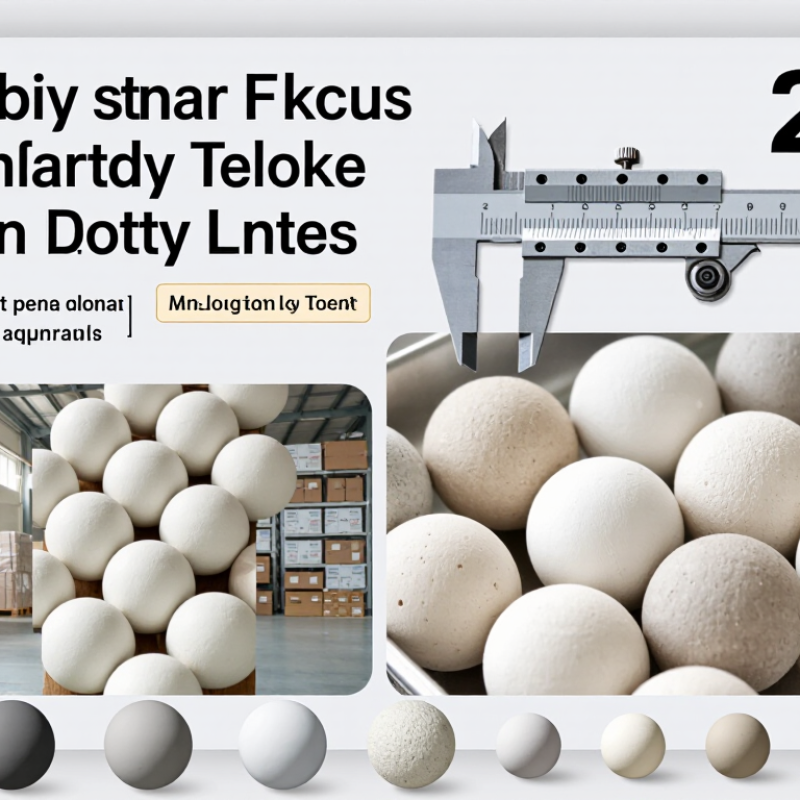
2026 Best Ceramic Ball Filler for Global Buyers?
Ceramic ball filler is a shaped packing material used inside reactors, towers, and heat-transfer beds. It contains alumina, silica, kaolin, zirconia, or blended mineral oxides. Alumina improves hardness and thermal resistance. Silica-rich grades usually offer lower cost and moderate chemical stability. The label “high alumina” sounds precise, but it does not describe every performance risk.
Its core function is practical: it supports catalyst layers, distributes liquid and gas flow, and protects equipment from local turbulence. Uniform spheres can reduce channeling and stabilize pressure drop. Smaller balls provide more contact area, while larger balls reduce resistance and improve drainage. The U.S. Energy Information Administration reported global refinery capacity at about 103.5 million barrels per day in 2023. The IEA’s Oil 2024 report projects oil demand near 105.4 million barrels per day by 2030, keeping packed-process equipment highly relevant.
Global buyers should compare diameter tolerance, crush strength, water absorption, bulk density, thermal-shock resistance, and chemical compatibility. Ask for batch test records, not only a product sheet. In field selection, moisture and handling damage are often underestimated. A stronger ball may still perform poorly if its size distribution is inconsistent. Selection remains partly empirical. Pilot testing is safer than trusting one impressive number.
Selecting the best ceramic ball filler for 2026 applications requires more than comparing prices. Buyers should match the ball material with operating temperature, fluid chemistry, pressure, and bed depth. Alumina-rich ceramics often suit demanding thermal environments, while lower-cost options may fit mild service. Check compressive strength carefully. A small defect can become a serious problem under reactor loading.
Particle size also affects performance. Smaller balls provide better contact support but may increase pressure drop. Larger balls improve flow distribution but can leave unused space. Review bulk density, open porosity, water absorption, and thermal shock resistance. Request batch-level test reports, dimensional tolerances, and safety documentation. A supplier’s technical response should be specific, not copied from a catalog.
Tips: Ask for samples before approval. Test them in the actual fluid when possible. Inspect chipped edges, dust, and size variation. Confirm packaging for long-distance shipping, especially where containers face humidity and vibration. Do not rely only on compressive strength; chemical stability may matter more. A perfect specification rarely exists. Real process conditions are often less predictable than drawings suggest, so include a practical safety margin and record the reason for every selection.
2026 Best Ceramic Ball Filler for Global Buyers?
Key Performance Standards for Global Ceramic Ball Filler Buyers
Global buyers should assess ceramic ball filler by operating conditions, not appearance. In packed reactors, uniform size supports stable gas distribution and protects catalyst layers. The International Energy Agency recorded about 97 million tonnes of global hydrogen production in 2023 (Global Hydrogen Review 2024). That scale increases demand for reliable reactor internals, including inert ceramic support balls.
Pressure resistance is essential. Ask for crush-strength results tested under a documented method, preferably with batch-level records. Water absorption and apparent porosity also matter. ASTM C20 provides recognized procedures for fired refractory materials. Lower porosity often improves chemical resistance, but it may reduce thermal-shock tolerance. This trade-off needs testing.
Size tolerance should be verified through sieve analysis, following ISO 3310-1 principles where applicable. Check bulk density, thermal expansion, acid resistance, and surface defects before shipment. A certificate alone is not enough. Request samples from different production batches. I would also question unusually high strength claims without test temperature and loading details. Real reactors see vibration, cycling, moisture, and uneven packing. Laboratory results can look perfect.
Documentation completes the standard. Buyers need traceable specifications, inspection dates, packing details, and safe handling information. The U.S. Department of Energy’s Industrial Decarbonization Roadmap identifies process heating as a major industrial energy demand. Therefore, thermal performance deserves the same attention as mechanical strength. Small omissions become expensive later.
| Material Category | Typical Alumina Content | Typical Bulk Density | Water Absorption | Typical Crushing Strength | Recommended Operating Range | Common Uses | Key Buyer Verification |
|---|---|---|---|---|---|---|---|
| Low-Alumina Inert Ceramic Ball | 17–25% Al₂O₃ | 1,350–1,550 kg/m³ | Usually ≤10% | Approximately 400–1,200 N/piece, depending on diameter | Generally suitable for moderate-temperature service up to approximately 1,100°C, subject to the supplier’s test data | Support layers, liquid distribution, gas treatment, and general packed-bed applications | Confirm chemical composition, open porosity, dimensional tolerance, and batch crush-strength test results |
| Medium-Alumina Ceramic Ball | 40–60% Al₂O₃ | 1,600–2,000 kg/m³ | Usually ≤5% | Approximately 800–2,500 N/piece, depending on diameter | Commonly selected for moderate-to-high thermal and mechanical loading | Inert bed support, reactors, dryers, absorbers, and packed towers | Request bulk-density measurement method, water-absorption test method, and abrasion-loss data |
| High-Alumina Inert Ceramic Ball | 75–95% Al₂O₃ | 2,500–3,300 kg/m³ | Usually ≤3% | Approximately 1,500–5,000 N/piece, depending on diameter | Suitable for high mechanical load and elevated-temperature service, often above 1,200°C | High-temperature reactors, catalyst support beds, furnace systems, and aggressive process environments | Verify alumina phase, apparent porosity, thermal expansion, thermal-shock resistance, and crushing strength |
| Dense Alumina Ball | 95–99% Al₂O₃ | 3,500–3,800 kg/m³ | Typically ≤1% | Approximately 2,500–8,000 N/piece, depending on diameter | Designed for severe wear, high temperature, and chemically demanding conditions | Grinding media, high-wear process zones, specialty reactors, and precision ceramic applications | Check purity, density, hardness, wear rate, surface finish, and lot-to-lot dimensional consistency |
| Ceramic Support Ball | Typically 17–75% Al₂O₃ | 1,350–2,700 kg/m³ | Typically 1–10% | Must be selected according to bed load and ball diameter | Used beneath catalyst or packing layers; operating temperature depends on composition | Catalyst-bed support, load distribution, prevention of fine-particle migration, and void-volume control | Confirm spherical geometry, size distribution, static load capacity, chemical inertness, and fines generation |
| Small-Diameter Ceramic Filler Ball | Composition-dependent | Approximately 1,400–3,500 kg/m³ | Composition-dependent | Lower force per piece; bed-load calculation is essential | Selected where higher contact area and reduced void size are required | Liquid distribution, packed columns, filtration layers, and laboratory-scale reactors | Evaluate particle-size tolerance, pressure drop, packing density, and risk of flow restriction |
| Large-Diameter Ceramic Filler Ball | Composition-dependent | Approximately 1,400–3,500 kg/m³ | Composition-dependent | Higher individual load capacity; verify with the actual diameter | Selected for lower pressure drop, robust support, and deep packed beds | Large reactors, tower support layers, high-flow systems, and industrial gas-treatment units | Check diameter tolerance, roundness, packed-bed void fraction, impact resistance, and handling losses |
Buyer note: The values shown are typical industry ranges for screening and specification planning, not guaranteed product values. Final selection should be based on the actual process temperature, pressure, chemical exposure, bed depth, ball diameter, loading condition, and independently verified test reports. Crushing strength is strongly affected by ball size, test method, moisture condition, and the number of pieces tested.
2026 Best Ceramic Ball Filler for Global Buyers?
Ceramic ball fillers vary by material, size, porosity, and operating temperature. Inert alumina balls provide stable support in reactors and packed columns. High-alumina grades tolerate stronger heat and chemical exposure. Porous ceramic balls offer greater surface area, but they may absorb liquids and lose strength under repeated cycling. Dense balls remain more resistant to crushing.
Size affects both performance and pressure drop. Small balls, often 3–6 mm, create more contact area and support uniform distribution. They can also restrict flow in narrow channels. Medium sizes, such as 10–13 mm, balance void space and mechanical support. Larger 20–25 mm balls suit lower beds, drainage layers, and applications needing easier gas movement. Measure the bed carefully.
Industrial users place ceramic fillers in catalytic reactors, gas treatment towers, drying systems, and thermal processing equipment. Selection should match temperature, fluid chemistry, load, and replacement access. Check crush strength, water absorption, thermal expansion, and dimensional consistency through supplier test data. Field experience shows that irregular spheres can create uneven packing, even when laboratory results look acceptable. A common mistake is choosing by price alone. In practice, no size works everywhere. Teams should review pressure drop and abrasion after installation, because real operating conditions may expose weaknesses that specifications miss.
Comparing ceramic ball filler types, typical density ranges, sizes, and industrial uses. Density values are representative ranges for common industrial ceramic compositions; exact specifications vary by grade, porosity, and manufacturing process.
Typical sizes: 6–50 mm for packing and catalyst support; smaller grades are also used for grinding. Common in chemical processing, petroleum refining, and heat-transfer beds.
Typical sizes: 10–50 mm. Suitable for catalyst support, kiln furniture applications, and systems requiring lower density and good thermal-shock resistance.
Typical sizes: 3–50 mm. Selected for high-temperature heat transfer, abrasive service, and corrosive chemical environments because of their high thermal conductivity and hardness.
Typical sizes: 0.1–30 mm. Mainly used as high-wear grinding and mixing media in paints, pigments, ceramics, electronics, and advanced materials processing.
For tower packing and catalyst support, alumina and mullite are commonly evaluated first. Silicon carbide is preferred when heat transfer, abrasion, or corrosion resistance is critical, while zirconia is generally selected for high-energy fine grinding rather than conventional packed-bed filling.
Choosing ceramic ball filler requires more than comparing quoted prices. Buyers should confirm chemical composition, purity, bulk density, crushing strength, and size distribution. These values affect pressure drop, loading stability, and service life inside industrial equipment. Request a recent technical datasheet and an independent test report. Then compare them with a production sample. A polished certificate is not proof of uniformity. Inspect several bags from different batches whenever possible. Check moisture, dust, edge damage, and broken pieces. These details often appear after long transport.
Supplier reliability also matters. Review manufacturing experience, batch traceability, quality-control procedures, and export documentation. Ask for sample approval before signing a large contract. A video factory tour helps, but it cannot replace physical inspection. No checklist is perfect. Storage conditions and loading methods may still change performance.
Tips: Define size tolerance, packaging weight, and replacement policy in writing. Confirm the delivery term, such as FOB, CIF, or DAP, and identify who handles freight, insurance, customs documents, and unloading. Ask for the production lead time, not only the shipping time. Use moisture-resistant bags with strong pallets for ocean transport. Include an inspection point before dispatch. Keep payment milestones connected to approved samples and shipping documents. A slightly higher price may be sensible when it reduces breakage, delays, or reloading work.
If for some reason you did not find the service or product you need, you can always leave a request for a free consultation and get an answer.